Loom Scheduling
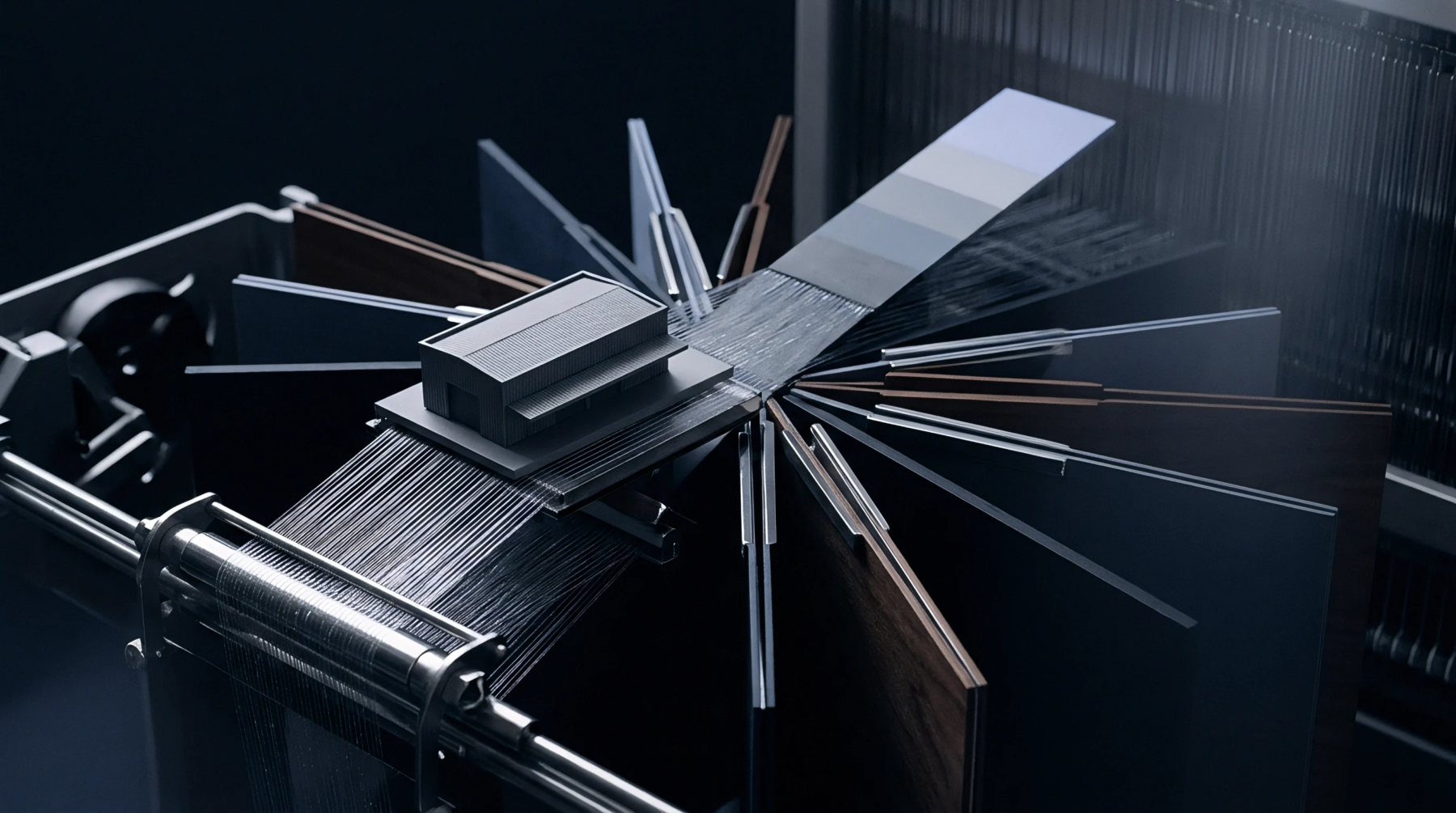
Loom scheduling governs the operational sequence of the shed floor when the mill processes staple spun yarns into grey goods. Production planners calculate harness lift patterns and pick density targets before the warping beam mounts onto the machine frame. Mechanical timing stops applying once the cloth leaves the drop wires and enters the batching roller for quality grading.
Shed Dynamics
Warp tension fluctuations create immediate defects in the finished fabric if the shed geometry fails to clear the moving harness frames. Shed timing controls the exact moment the reed strikes the fell of the cloth against the advancing yarn sheet. Heald shaft displacement follows a harmonic curve designed to minimize frictional wear on delicate warp ends during continuous high-speed cycling.
Pick Insertion
Air jet velocity dictates the flight duration of the filling yarn across the reed channel before the main nozzle shuts off. Proper pressure regulation prevents excessive yarn ballooning during insertion while maintaining consistent pick insertion rates across wide loom widths. Insertion timing failures result in missing picks or reed marks that degrade the structural integrity of the woven fabric.
Cloth Fell
Cloth fell position remains stationary only when the backrest displacement compensates for the gradual reduction of the warp beam diameter. Fabric hand depends on this precise mechanical balance because uneven beat-up force produces density variations along the length of the roll. Modern dobby looms adjust tension dynamically to preserve dimensional stability until the fabric reaches final commercial inspection.