Tensile Force
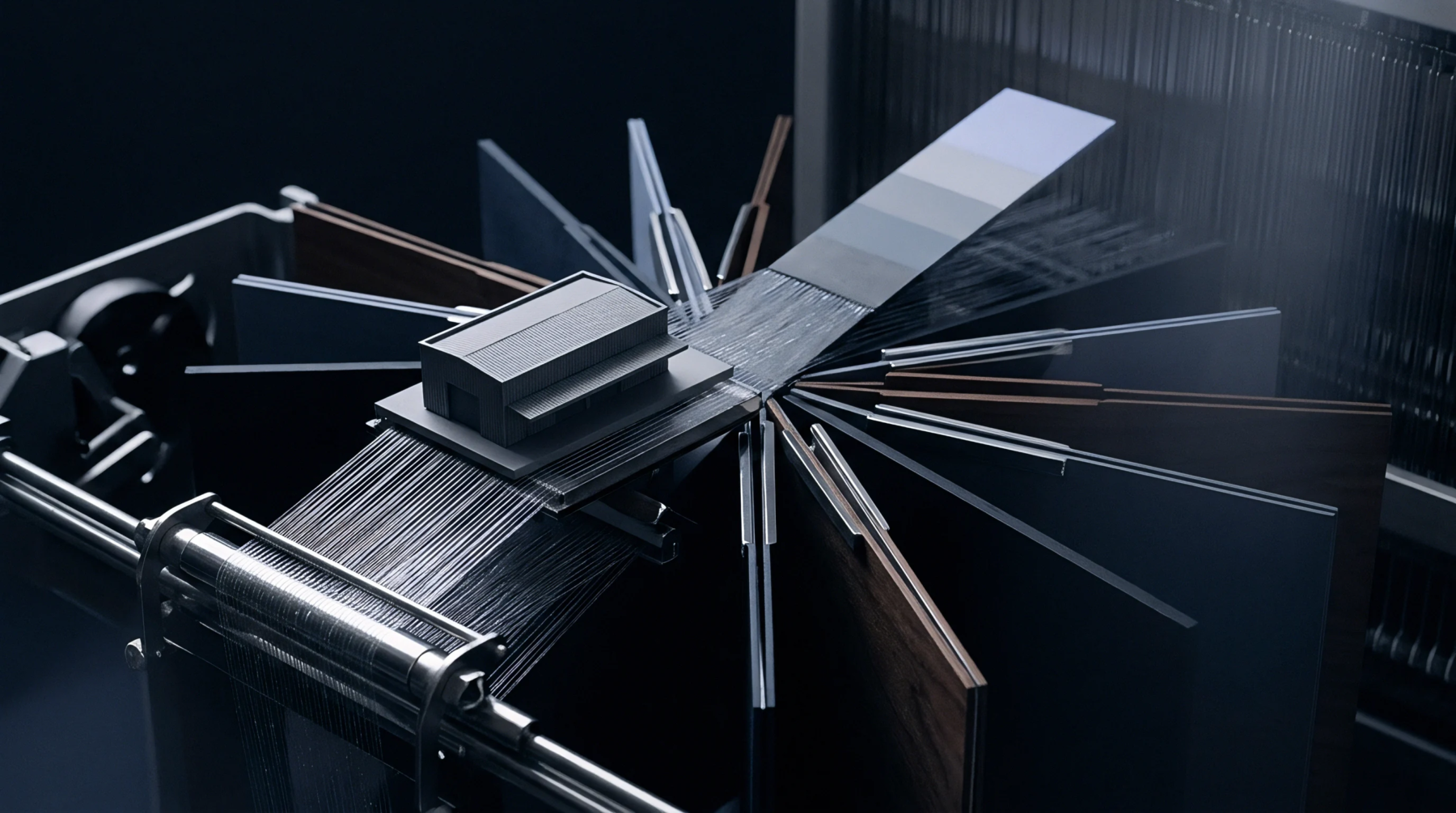
Longitudinal mechanical pulling forces exerted along moving textile strands govern elongation and breakage rates during manufacturing. Production machinery maintains yarn tension within tight boundaries across cone winding, warping, knitting, and loom weft insertion. Measured dynamically in centinewtons or grams-force, this tensile load balances winding friction against strand delivery speeds to ensure uniform package formation.
When tensile forces stray outside optimal thresholds, strands either stretch irreversibly or slacken and snarl. The measurement applies to moving or held yarn strands, ceasing to dictate mechanics once yarns interloop or interlace into rigid fabric structures.
Dynamic Processing Fluctuation
High-speed machinery generates rapid tension variations as yarn packages unwind or travel through mechanical guides and ceramic eyelets. In circular knitting, positive yarn feed units meter precise strand lengths to individual needles, eliminating tension surges that cause loop length variations and fabric barre. Loom insertion mechanisms require electronic weft brakes and accumulator drums to dampen peak tension spikes during insertion across wide reed widths.
If dynamic tension spikes exceed the instantaneous single-end breaking strength, immediate strand rupture halts the production machine. Conversely, excessively low tension allows the yarn strand to balloon excessively or form loose loops that generate fabric surface defects. Modern manufacturing floors install online tensiometers that feed real-time tension data into motor control drives to adjust delivery speeds dynamically.
Structural Fabric Density
Warp and weft tension ratios determine the cover factor and pick density of finished fabrics. Unequal warp yarn tension during shedding produces wavy selvedges and uneven shrinkage during subsequent wet scouring or dyeing processes. Fabric finishing mills inspect incoming greige goods under tensionless conditions to detect tension-induced distortion.
Elastic Limit
Tensile loads exceeding the yield point of the raw fiber cause irreversible plastic deformation and diameter reduction along the strand. When yarn tension surpasses this yield threshold during spooling or warping, synthetic filaments undergo permanent orientation changes that produce patchy dye uptake in downstream dyeing. The parameter ceases to function as a controllable running variable once excessive tension permanently breaks the yarn.