Dynamic Fluid Boundary Layer Resistance Models across Variable Density Plied Cotton Duck Packages
Dynamic fluid boundary layer models balance package winding density and liquor velocity to eliminate core shade variation in heavy plied cotton duck packages.
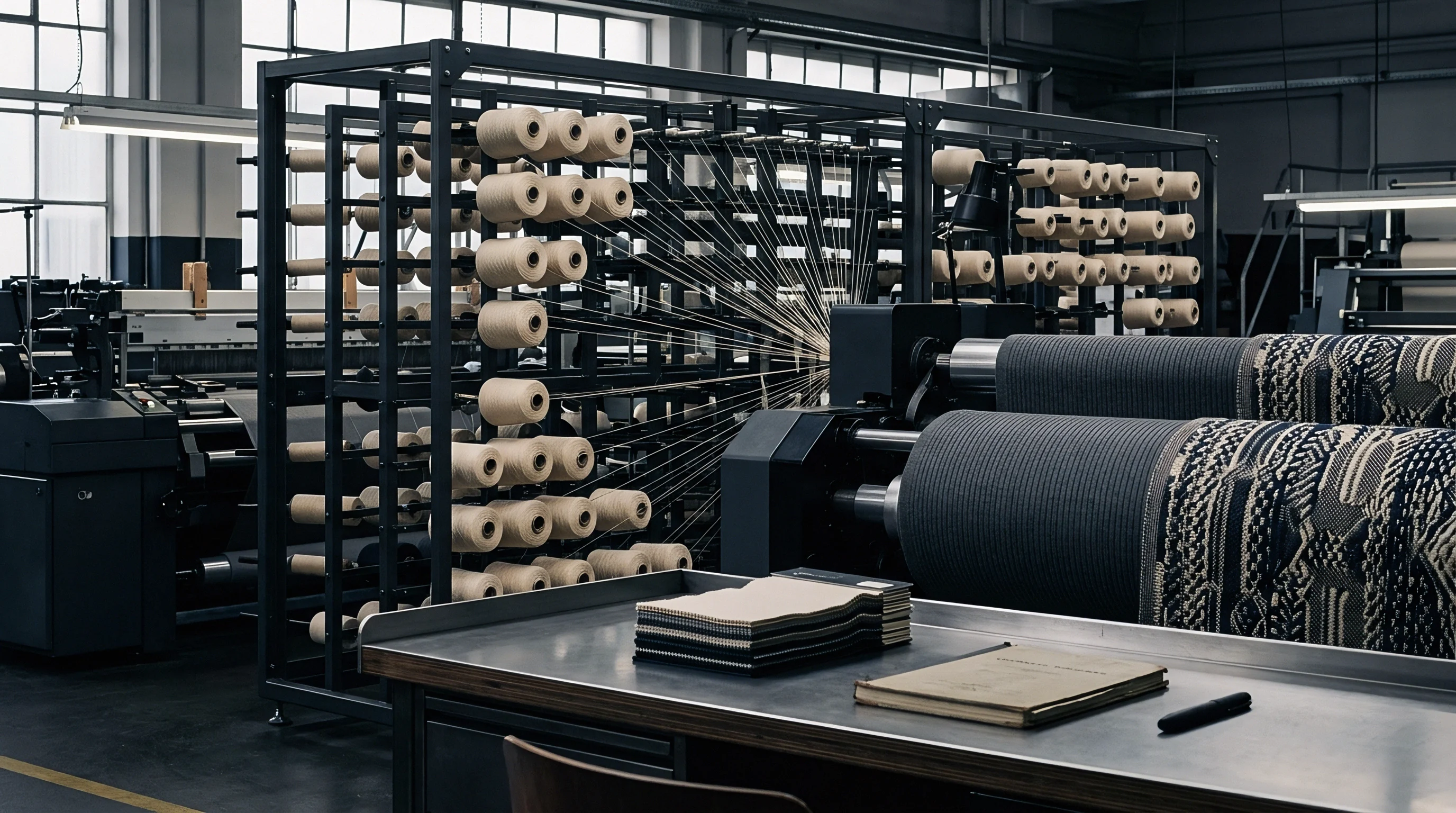

Spindle
Perforated stainless steel tubes loaded into high-pressure yarn package machines host heavy plied cotton duck yarn wound under mechanical tension control. Plied duck yarns, typically constructed from coarse single yarn counts such as 10/1 or 12/1 twisted into 10/2, 10/4, or 12/6 configurations, form dense porous packages with high structural resistance to fluid penetration. Yarn packages wrapped onto perforated centers exhibit distinct spatial variations in mass per unit volume from the inner tube radius to the outer package circumference.
Mechanical winding systems generate radial compression forces during package build, creating a compact core layer immediately adjacent to the tube wall and a progressively softer outer shell.

Package Density Profiles
Winding plied cotton yarns into cylindrical packages creates an anisotropic porous structure with varying local packing fractions. Package density ranges from 0.32 grams per cubic centimeter at the outer package surface to 0.44 grams per cubic centimeter near the perforated core. Plied yarns resist deformation.
High twist multipliers, ranging from 4.2 to 4.8 twist factor, create rigid yarn geometries that do not compress uniformly under standard winding tension. Inter-ply voids within the twisted yarn structure remain intact while intra-package spaces compress under winding pressure, forming dual-porosity networks.
Density drives fluid drag. The spatial distribution of density dictates the spatial variation of hydraulic permeability throughout the yarn package. Higher mass concentration at the inner core restricts the cross-sectional area available for fluid movement, increasing local fluid velocity and dynamic friction.
Conversely, lower package density at the outer boundary permits fluid expansion, leading to velocity decay across the radial distance. Maintaining strict density tolerances across an entire dye column requires continuous feedback between winding speed, yarn tension discs, and package contact pressure.

Yarn Ply Geometry and Void Fractions
Coarse plies create macro voids. In heavy cotton duck constructions, individual yarn plies carry significant structural mass, altering the interstitial void dimensions compared to fine single yarns. Multi-ply yarns feature internal micro-channels between twisted single strands alongside external macro-channels between adjacent package wraps.
Fluid traversing a package of 10/4 plied duck canvas yarn moves simultaneously through these two flow regimes, encountering distinct viscous drag forces in each channel type.
Radial density governs liquor path. When liquid enters the package under pressure, the larger inter-wrap voids offer the path of least resistance. Micro-channels inside the dense 4-ply yarn structure demand higher static pressure thresholds to overcome capillary resistance and surface tension.
If the local packing fraction exceeds 0.40 grams per cubic centimeter, inter-ply fluid transport halts almost entirely, forcing the dye liquor to flow exclusively around the yarn bundles rather than penetrating into the center of the plied fibers.
Unresolved structural questions persist regarding whether real-time pneumatic tension compensation during precision winding can eliminate the inner-to-outer density differential without inducing shoulder collapse during rapid liquor flow reversals.


Resistance
Dye liquor forced through dense yarn packages encounters frictional forces along micro-channels between individual cotton filaments. Dynamic fluid boundary layer models characterize the hydraulic impedance governed by porous media transport equations. Fluid moving through plied yarn arrays experiences both viscous drag and inertial forces.
At lower fluid velocities, viscous forces dominate, allowing Darcy’s law to predict pressure drop per unit thickness. At high pump flow rates necessary for heavy duck yarns, inertial forces become significant, requiring the Darcy-Forchheimer formulation to account for dynamic turbulent boundary layer resistance within package interstitial spaces.
Darcy-Forchheimer Drag Mechanisms
Superficial fluid velocity through the yarn package wall differs substantially from the true interstitial fluid velocity inside the yarn pores. As fluid accelerates through narrowed passages, boundary layers form along the outer surfaces of the cotton fibers. The thickness of these stationary liquid boundary layers depends on fluid viscosity, local velocity, and fiber surface topography.
Natural cotton fibers contain surface convolutions that enhance micro-turbulences, increasing boundary layer thickness compared to synthetic filaments. Thinning this fluid boundary layer is necessary to achieve uniform dye molecule adsorption across every yarn ply.
Pressure drops signal flow impedance. High dynamic fluid friction inside dense 10/4 duck packages causes dramatic pressure drops across the package wall thickness. Hydraulic permeability decreases non-linearly with increasing package density.
The viscous permeability coefficient K_v and the inertial permeability factor beta describe the fluid transport capacity of a given package construction under variable pumping conditions.
| Yarn Construction | Package Density (g/cm³) | Viscous Permeability K_v (10⁻¹¹ m²) | Inertial Factor beta (10⁴ m⁻¹) | Interstitial Reynolds Number |
|---|---|---|---|---|
| 10/2 Plied Duck | 0.34 | 3.45 | 1.12 | 14.2 |
| 10/2 Plied Duck | 0.40 | 2.10 | 2.85 | 8.6 |
| 10/4 Plied Duck | 0.34 | 2.80 | 1.95 | 11.4 |
| 10/4 Plied Duck | 0.40 | 1.45 | 4.30 | 5.8 |
| 12/6 Heavy Duck | 0.36 | 1.85 | 3.20 | 7.1 |
| 12/6 Heavy Duck | 0.42 | 0.95 | 6.75 | 3.4 |
Liquor Bypass and Stagnation Failure Modes
Boundary layers impede dye transfer. When fluid boundary layer resistance grows too high, dye liquor shifts away from dense yarn regions toward lower-density channels. This uneven fluid distribution creates physical defects that appear during weaving or finishing.
Dense yarn packages exhibit specific vulnerability to boundary layer stagnation where liquid velocity approaches zero, preventing chemical exchange.
- Core Stagnation Zone Dye liquor velocity drops below the threshold needed for boundary layer suppression near inner tube perforations, leaving un-dyed fiber cores inside heavy plied yarns.
- Inter-Ply Void Bypass High-velocity fluid streams skip densely twisted ply interiors, creating ringed shade variations visible after weaving duck canvas goods.
- Viscous Drag Compression Excessive pressure differentials flatten yarn cross-sections, permanently reducing package permeability during the high-temperature dye cycle.
- Fiber Fibrillation High fluid shear forces unseat surface cotton fibers inside low-density channels, forming micro-pills that alter fabric surface hand.
When package winding density varies across a single column, dye liquor consistently seeks the softest package at the expense of dense neighbors.

Hydraulics
Pressurized fluid circulation pumps drive aqueous dye solutions through the package wall at liquor-to-goods ratios between five to one and eight to one. Modern package dyeing machinery relies on axial or centrifugal pumps controlled by variable frequency drives to manage fluid power. Operating parameters vary depending on whether flow direction travels from the inside tube to the package outside (outward flow) or from the outside surface to the inner tube (inward flow).
Outward flow expands the package diameter, slightly increasing void fractions, while inward flow compresses the yarn package against the perforated spindle base.
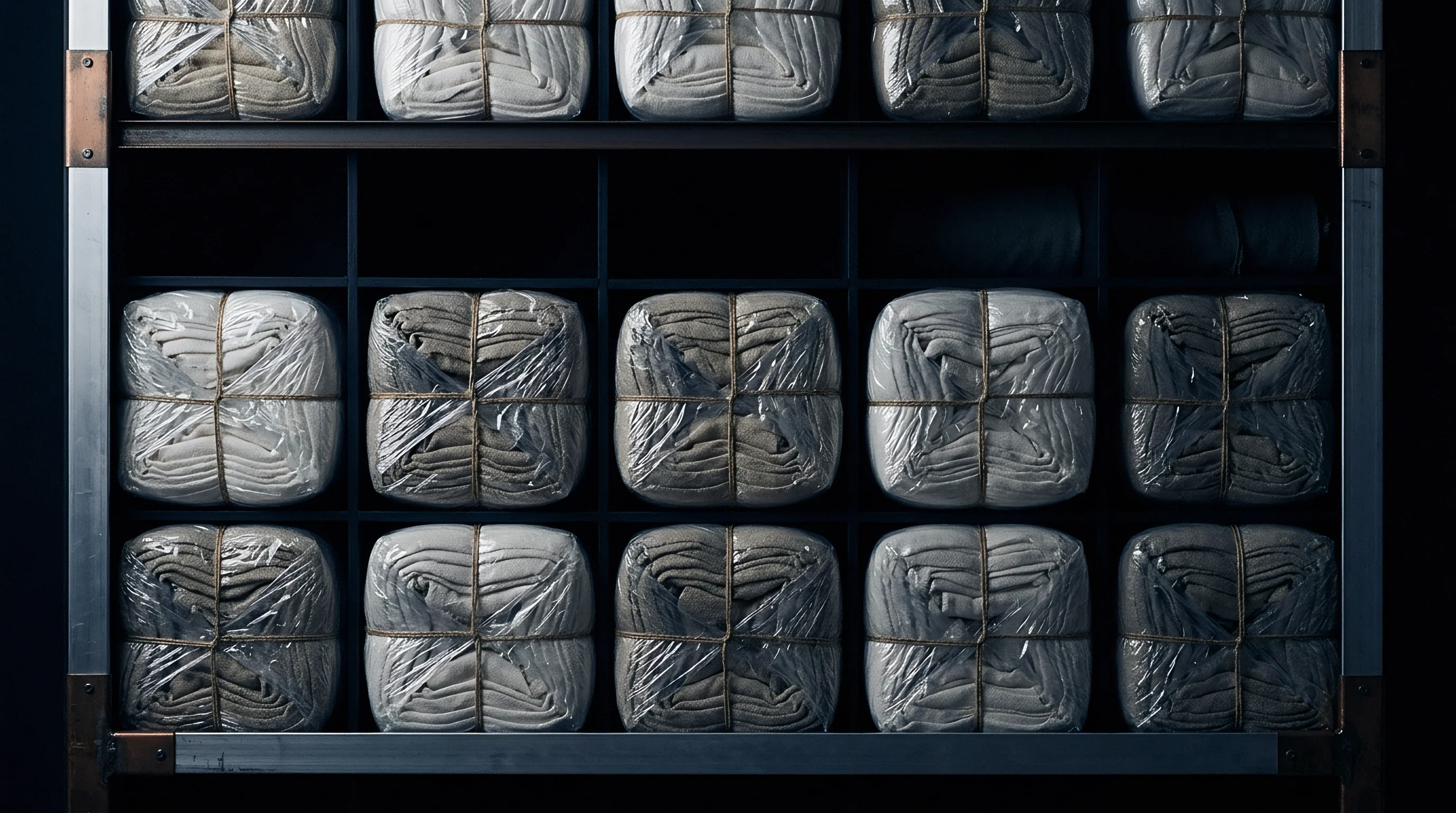
Flow Reversal and Pressure Differentials
Flow reversal cycles maintain shade uniformity across the package radial cross-section. Standard circulation protocols utilize alternating time intervals, such as six minutes of outward flow followed by four minutes of inward flow. During outward flow, the fluid pressure differential forces package layers outward, reducing density near the core while increasing density at the outer diameter.
Reversing the pump flow direction reverses this density gradient, compressing outer layers and relieving pressure around the internal tube perforations.
Pump velocity dictates boundary shear. High volumetric pump delivery elevates dynamic pressure, forcing fluid through stagnant boundary layers around individual cotton fibers. Pumping rates between 35 and 45 liters per kilogram of yarn per minute produce sufficient interstitial kinetic energy to reduce dynamic boundary layer resistance in 10/4 duck packages.
Lower pump rates allow thick boundary layers to persist, causing slower dye exhaustion rates in high-density regions.
A maximum allowable differential pressure drop of 0.4 bar across individual packages on the same carrier determines lot release under automated dyehouse control standards.
Liquor flows follow low resistance. If total differential pressure across the yarn package wall exceeds 3.5 bar, structural package deformation occurs. Shoulder collapse causes the top and bottom corners of the yarn cylinder to round off, exposing perforated tube sections directly to the dye bath.
Direct fluid bypass drops effective differential pressure to near zero, terminating forced liquor movement through the remaining yarn mass.
Operating package dyeing vessels with uncalibrated differential pressure profiles results in bulk shade non-conformities that require complete stripping and redyeing at significant chemical and energy cost.

Channeling
Local variations in winding hardness create path-of-least-resistance fluid streams that bypass high-density yarn zones entirely. Variable density packages act as uneven porous networks where fluid prefers high-permeability pathways. When dye liquor flows preferentially through low-density pockets, interstitial fluid velocity in adjacent high-density pockets drops rapidly, allowing stationary boundary layers to thicken.
Channeling ruins shade levelness. This micro-channeling phenomenon causes severe shade strikes on the surface of low-density regions while dense fiber bundles inside the same package remain under-dyed.
Winding Hardness Variance and Flow Bypass
Precision winding machinery uses electronic tension controls to maintain consistent package density, yet bobbin-to-bobbin variations occur during ring spinning and plying. Variations in yarn hairiness, ply twist tightness, and moisture content alter winding friction coefficients. A two percent variance in yarn package hardness produces up to a twenty percent shift in volumetric fluid flow rate under constant pressure conditions.
High flow rates in loose winding zones accelerate local dye fixation, depleting dye liquor concentration before it reaches tight winding zones.

Can Hydrodynamic Shear Prevent Core Levelness Failure?
Increasing total circulation pump speed elevates overall fluid shear stress inside package pores, which forces dye liquor through high-resistance boundary layers. High fluid velocity increases dynamic pressure against the package inner wall, stripping stagnant boundary liquid away from dense cotton plies. Excessive dynamic shear damages coarse plied yarns.
Pushing pump speeds beyond the mechanical stability threshold of cotton duck yarns unseats surface fibers, causing severe fiber distortion and localized yarn breakage during subsequent weaving processes.

Sequence of Density Collapse Events
Tight winding chokes liquor velocity. When a package contains both low-density shoulders and a tight core, hydraulic pressure forces a specific sequence of structural changes during wet processing.
- Initial Pressure Spike The circulation pump ramps to maximum differential pressure before package wetting completes, forcing fluid into weak outer surface regions.
- Localized Tube Deflection Perforated dye tubes compress non-uniformly under localized hydraulic pressure, widening low-density gap spaces.
- Fluid Short-Circuiting Over eighty percent of total dye liquor flow routes through less than twenty percent of the package cross-sectional area.
- Exhaustion Rate Divergence Rapid dye fixation occurs along high-flow pathways while stagnant high-density regions remain un-dyed.
A soft package winding base always compounds density errors faster than a rigid precision winding program.
Mills frequently claim that shade stripes in plied duck canvas stem from raw cotton micronaire shifts rather than uneven liquor distribution caused by package density gradients.


Calibration
Systematic adjustment of pump velocity curves and flow rates aligns liquor transport dynamics with yarn package permeability. Calculating boundary layer resistance across variable density packages requires evaluating local Reynolds numbers along interstitial channels. Mathematical modeling of dynamic boundary layers uses package density gradients, yarn ply dimensions, fluid temperature, and kinematic viscosity to calculate optimal pump flow curves throughout the dyeing cycle.

Worked Calculation for Plied Duck Package Flow
Assume a 500-kilogram package dyeing vessel loaded with 10/4 plied cotton duck yarn wound on 170-millimeter outer diameter perforated tubes at an average package density of 0.38 grams per cubic centimeter. Total package volume equals 1.25 cubic meters, with an estimated interstitial porosity fraction of 0.58. Operating at a target liquor ratio of six to one produces a total bath volume of 3,000 liters.
Setting the circulation pump to delivered liquor velocity of 35 liters per kilogram per minute establishes a total flow rate of 17,500 liters per minute across 400 individual yarn packages.
The calculated superficial velocity through the package inner wall surface area (0.045 square meters per package) equals 0.162 meters per second. Applying the Darcy-Forchheimer equation with a viscous permeability constant of 1.8 x 10⁻¹¹ square meters yields a theoretical viscous pressure drop of 1.64 bar across the 45-millimeter package wall thickness. When interstitial flow channels narrow by ten percent due to yarn swelling during hot scours, the required differential pressure increases by thirty-three percent to 2.18 bar to maintain equivalent boundary layer shear velocity.

Differential Pressure versus Levelness Metrics
Targeted adjustments to pump delivery frequency compensate for yarn swelling, maintaining fluid velocity above the boundary layer detachment limit without exceeding package deformation thresholds.
| Density Profile Configuration | Pump Differential Pressure (bar) | Superficial Velocity (m/s) | Interstitial Reynolds Number | Inner-Outer Grey Scale Rating |
|---|---|---|---|---|
| Uniform Low (0.32 g/cm³) | 1.2 | 0.210 | 16.8 | 4-5 |
| Gradient Core Tight (0.42 to 0.34 g/cm³) | 2.8 | 0.125 | 6.2 | 2-3 |
| Gradient Outer Tight (0.34 to 0.42 g/cm³) | 2.4 | 0.140 | 7.9 | 3 |
| Optimized Dynamic Curve (0.38 g/cm³) | 1.9 | 0.175 | 11.5 | 4-5 |
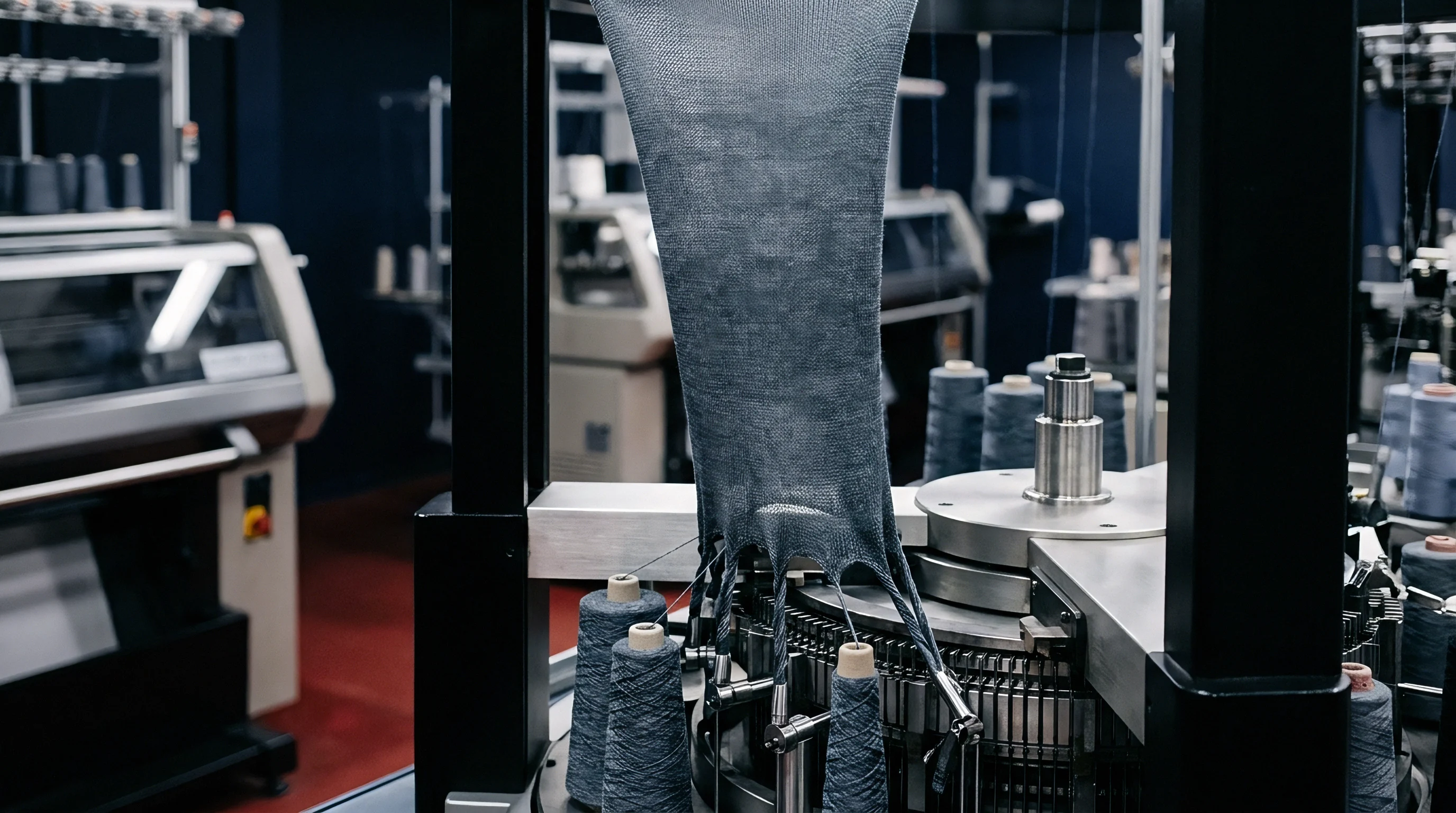
Standard Operating Sequence for Package Permeability Tuning
Flow meters reveal hydraulic bypass. Technical managers apply standardized calibration sequences to establish stable package flow parameters prior to loading production lots.
- Measure greige yarn moisture content and package dimensions across five random samples per winding spindle.
- Mount packages on dye carrier spindles and verify mechanical spring compression torque to prevent stack leakage.
- Initiate cold water pre-flush cycle while recording baseline differential pressure at minimum pump frequency.
- Ramp pump speed until differential pressure reaches the calculated target threshold for the specific yarn ply count.
- Monitor differential pressure transducers throughout the temperature ramp to detect yarn swelling dynamics.
Achieving a delta E shade variance below 0.4 across package inner and outer layers requires maintaining interstitial fluid velocity above 0.12 meters per second at 130 degrees Celsius.
Standard purchasing contract addendum ISO 105-A05 clause 4.2 mandates rejection of cotton duck lots showing intra-package shade variation exceeding grey scale rating 3-4 under daylight illuminants.


Ledger
Financial accounting in industrial yarn dyehouses reflects the operational penalties imposed by inefficient fluid transport dynamics. Electrical energy consumption driven by high-head differential pressure pumping represents a primary cost factor in package dyeing plants. Over-compensating for boundary layer resistance by running circulation pumps at maximum frequency increases electricity consumption by up to 42 percent per dye cycle.
Chemical leveling additions used to slow dye exhaust rates in variable density packages add substantial cost per kilogram of finished yarn.

Energy and Re-Dyeing Cost Drivers
Rewinding increases yarn damage. When package density gradients cause core-to-outside shade variation, dyehouses must strip the dye and re-dye the lot using high-temperature leveling cycles. Re-dyeing doubles direct labor, utility, and dye chemical costs while damaging cotton fibers, reducing single-end tensile strength by 8 to 14 percent.
Yarn damaged during re-dyeing requires rewinding at lower speeds, increasing winding labor costs and creating up to 2.5 percent additional yarn waste from yarn breakages.

Lead-Time Impact on Downstream Duck Weaving
Leveling chemicals raise processing costs. Unplanned re-dyeing cycles add five to nine business days to yarn delivery schedules, stalling rapier or air-jet duck canvas looms. Landed cost of dyed duck yarn increases by up to 18 percent when fluid boundary layer resistance forces extended dye cycles and chemical additions.
Converters specifying heavy cotton duck canvas must integrate package density parameters directly into yarn procurement contracts to prevent downstream production delays.
Tracking landed yarn costs against targeted package density standards protects converter margins against dyehouse energy surcharges and shade rejection penalties.