Dynamic Roll Crown Deflection and Inline Spectrophotometric Feedback across Variable Textile Widths
Real-time spectrophotometric feedback modulates multi-zone hydraulic roll crowns to eliminate edge-to-center shade variation across variable fabric widths.
Nip
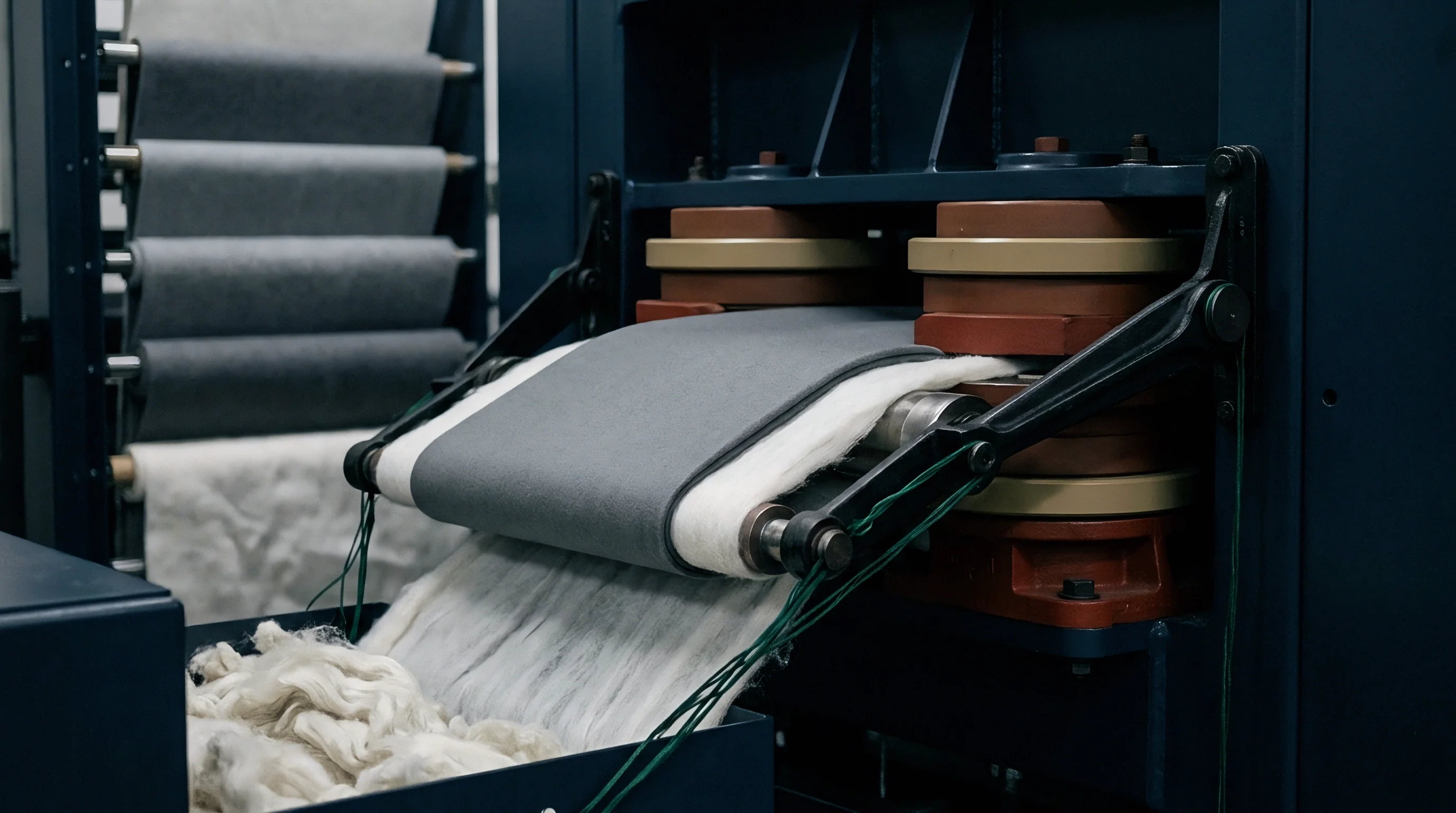
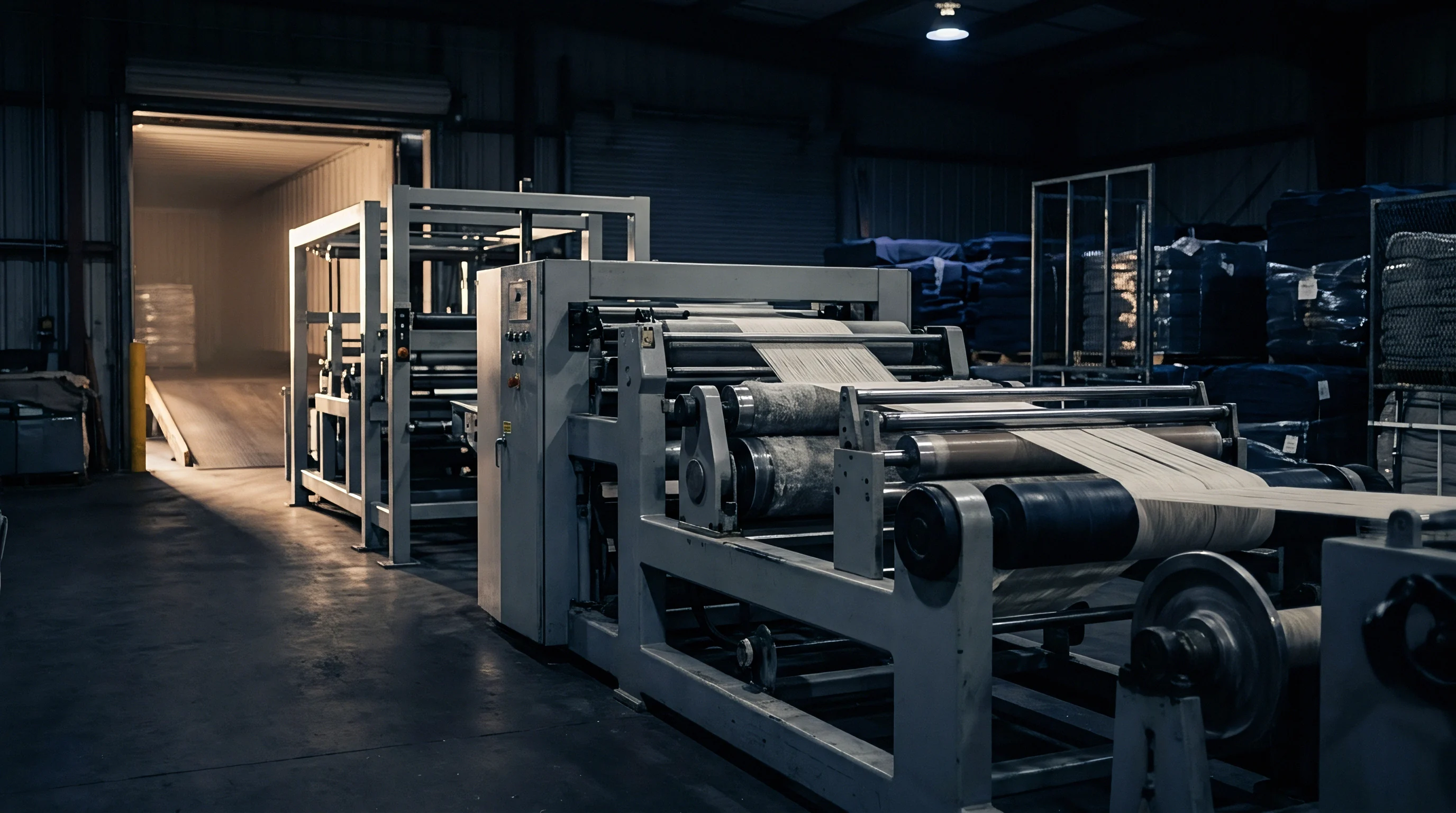
Continuous dye application relies on uniform mechanical contact across the full width of squeegee rolls. When a heavy pad mangle compresses a moving textile web, opposing cylinders exert linear force measured in Newtons per millimetre. Cylinder flex alters fluid uptake.
Mechanical bending along the roll axis shifts the contact profile from a uniform rectangular plane into a parabolic geometry. As a result, the physical gap at the mid-span widens relative to the outer journals, altering fluid shear forces and squeezing kinetics across the moving cloth.
Beam Deflection Physics in Heavy Foulard Cylinders
When linear forces reach forty to eighty Newtons per millimetre, solid steel or elastomer-covered rolls experience bending along their central longitudinal axis. Structural deflection follows classic Euler-Bernoulli beam principles where total displacement varies directly with the fourth power of cylinder face length and inversely with the elastic modulus and moment of inertia. Elastomer hardness affects nip width.
A solid rubber cover rated at 70 Shore A deforms under load, widening the contact area and dampening peak hydraulic pressures inside the fluid gap.
Center pressure drops under load. Peak compressive forces localize near the roll ends where structural supports bear the hydraulic load, generating asymmetric pressure profiles. Across wide-bed foulards spanning 3.4 metres, deflection at the midpoint can exceed 0.45 millimetres under heavy linear loads.
The resulting clearance imbalance modifies the hydrodynamic boundary layer formed between the rotating roll surfaces and the incoming substrate.
Wet Pick-Up Variance across Asymmetric Contact Zones
Hydrodynamic liquid squeezing inside the roll interface governs dye solution retention in the porous yarn matrix. Wet pick-up expresses the mass of liquor retained by dry fabric as a weight percentage. A variance of three percent in liquor retention across a two-metre textile web causes noticeable shade shifts in medium-depth reactive dyeings.
Excess clearance at the roll center reduces mechanical fluid expression, forcing higher volumes of dye solution through the interior core of the fabric web.
| Web Position | Roll Deflection (mm) | Contact Pressure (N/mm²) | Wet Pick-Up (%) | Shade Drift (DE2000) |
|---|---|---|---|---|
| Left Selvedge (0.1 m) | 0.02 | 4.85 | 62.1 | 0.15 |
| Mid-Left (0.6 m) | 0.18 | 4.10 | 64.3 | 0.48 |
| Center (1.2 m) | 0.38 | 3.25 | 67.8 | 1.25 |
| Mid-Right (1.8 m) | 0.19 | 4.05 | 64.5 | 0.52 |
| Right Selvedge (2.3 m) | 0.03 | 4.80 | 62.3 | 0.18 |
Capillary action within spun yarns draws dye liquor into interstitial fiber spaces, but squeezing pressure dictates the final equilibrium between absorbed fluid and surface moisture. When localized squeezing force falls below the threshold required to evacuate inter-yarn voids, unfixed dye mass accumulates at the web center. Subsequent hot-air drying moves this unfixed liquor toward the fabric surface, generating center-to-edge shade variation, known on the finishing floor as listing.
A five percent gradient in wet liquor retention across a two-metre textile web alters final dry color depth by 1.4 DE2000 under D65 illumination.
Ignoring cylinder bending dynamics guarantees edge-to-center shade rejection across bulk runs, leaving finished rolls unsellable to garment manufacturers.

Crown
Variable geometry rolls counteract mechanical bending by applying controlled counter-pressure from inside the roll shell. Fixed-crown cylinders utilize a permanently ground parabolic profile, thickening the center diameter by specific micrometres to offset projected beam deflection at one target linear force. Operating outside that single design point compromises liquor uniformity.
Floating shell architectures feature internal hydraulic mechanisms that alter external profile geometry during continuous production.
Hydraulic Chamber Pressure Modulation in Floating Shells
In a Swimming Roll, oil pressure fills a semicircular compartment beneath a non-rotating stationary axle, supporting the rotating outer cylinder. Pressurized hydraulic fluid pushes directly against the inner circumference of the outer sleeve, transferring counter-bending forces along the line of contact. Oil pumps maintain sleeve elevation.
Multi-zone variable crown designs subdivide this hydraulic chamber into distinct axial compartments, allowing independent force adjustments across center, quarter, and edge sectors.
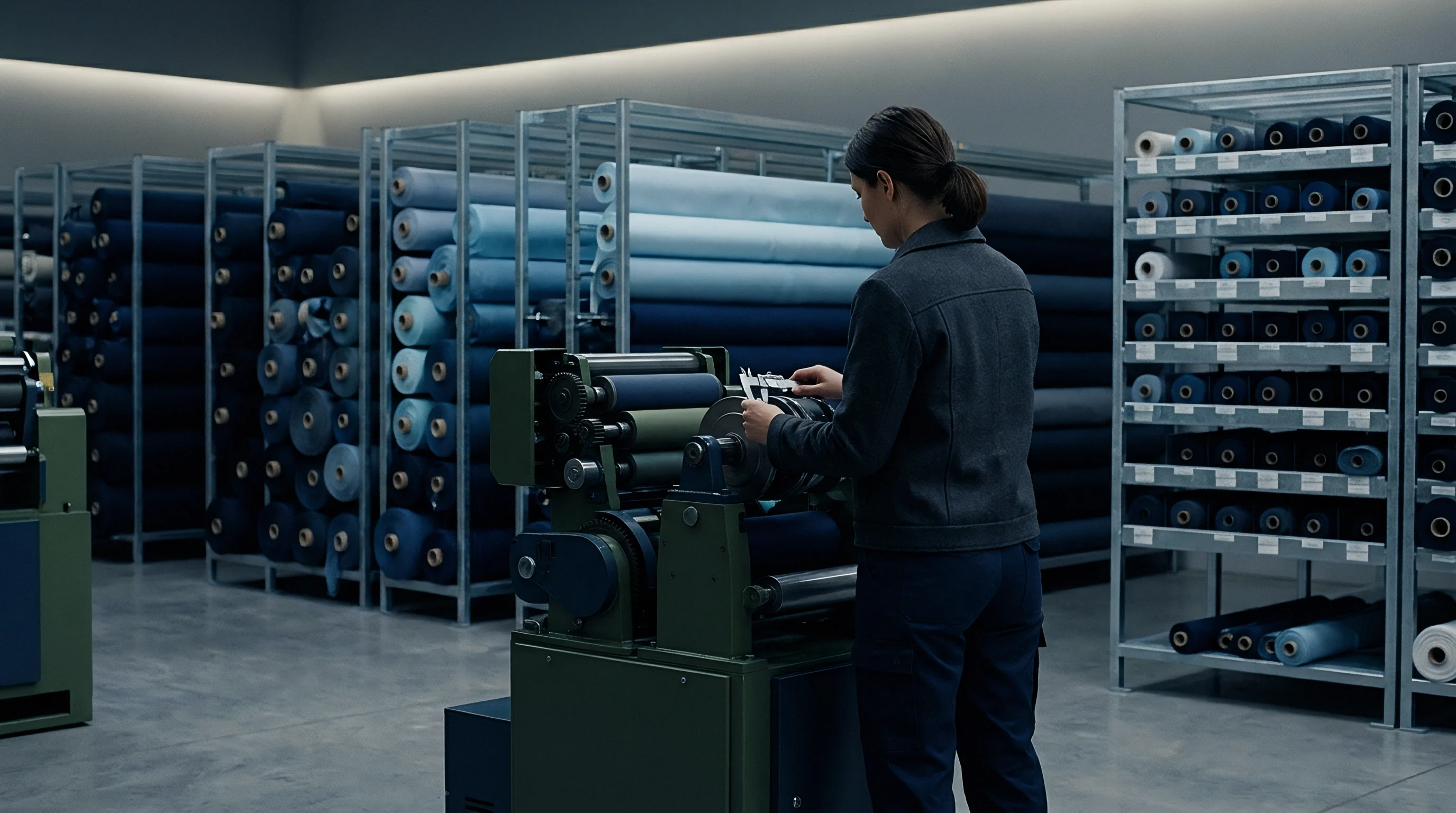
Zone-controlled hydrostatic support elements utilize rows of sliding pistons equipped with capillary lubrication pads. Each piston receives regulated oil pressure, generating a localized pushing force against the inner roll wall. By modulating oil pressure in individual zones from 2 bar up to 25 bar, automated control systems alter the longitudinal curvature of the roll face to match real-time processing demands.
Web Width Transitions and Unloaded Cylinder Ends
Processing narrower cloth on wide foulards causes direct contact between rubber covers beyond the fabric selvedges. Unloaded ends damage rubber rolls. When a 1.8-metre fabric runs through a 3.2-metre pad mangle, outer roll zones lack fabric interposition, creating localized rubber-to-rubber friction and severe pressure spikes along the edges.
Without internal profile compensation, this concentration of edge force starves the active fabric area of necessary squeezing pressure.
- Measure total web width and align cloth centrally on the pad mangle roll bed.
- Input nominal target wet pick-up percentage and fabric mass into the controller.
- Set base internal hydraulic chamber pressure according to total linear squeegee force.
- Deactivate outer hydraulic support zones covering open roller ends.
- Fine-tune intermediate zone pressures until physical wet pick-up test swatches indicate uniform liquor distribution across selvedge and center zones.
Machinery vendors frequently assert that static rubber roll grinding eliminates the need for active internal pressure adjustment across varying cloth widths.
Spectra
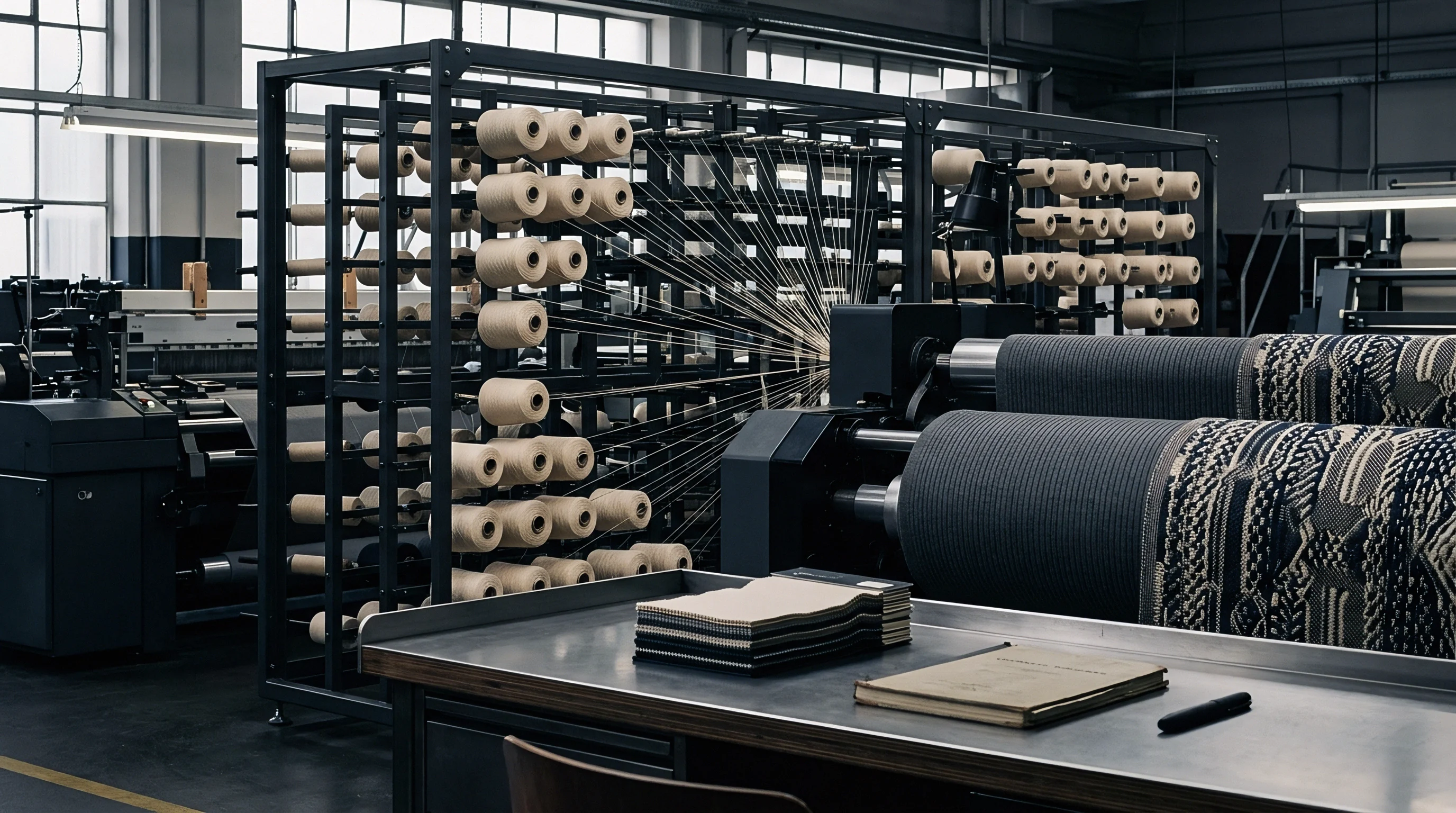
Continuous shade monitoring relies on high-speed optical sensors capable of recording reflectance data without contacting the moving substrate. Mounted over the running web after squeezing or initial drying, spectrophotometers measure light intensity reflected across visible wavelengths from 400 to 700 nanometres. These measurements yield spectral curves translated into color space coordinates (L , a , b ) for automated color control evaluation.
Traversing Optical Geometry and Web Velocity Constraints
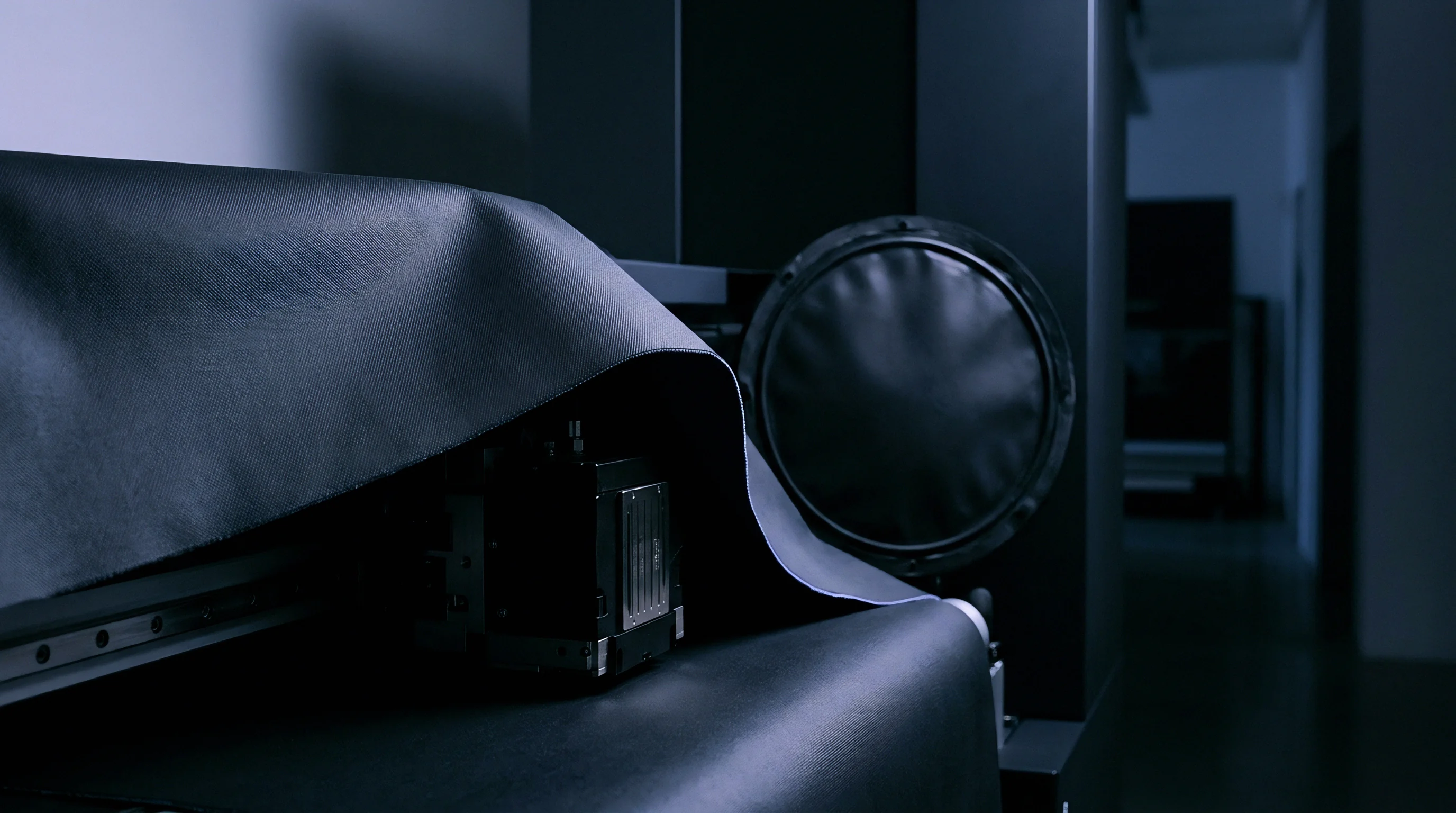
Non-contact optical heads use forty-five degree illumination with zero-degree observer geometry mounted on motor-driven linear tracks. Pulsed Xenon lamps illuminate the web. High-intensity LED arrays or xenon flash tubes emit microsecond light pulses, freezing web motion and eliminating signal noise caused by machine vibration or speed changes up to 120 metres per minute.
The sensor traverses side-to-side, recording spectral data points across discrete width lanes.
Integration times must balance signal-to-noise ratios against transverse displacement speed. Fast scanning rates risk spatial averaging across wide web distances, obscuring sharp selvedge-to-center shade gradients. Modern optical heads utilize spectral sampling windows between 10 and 20 milliseconds, collecting precise reflectance data over a 15-millimetre measurement spot every 50 millimetres of traverse travel.
Wet State Reflectance Conversion to Conditioned Shade Values
Measurements taken immediately after squeegee extraction differ from dried cloth due to surface moisture refraction. Reflectance values shift during drying. Liquid films on unfixed cotton fibers reduce total light scattering, causing wet fabrics to appear darker and more saturated than their dry counterparts.
Real-time feedback loops rely on mathematical transformations based on Kubelka-Munk theory to convert wet reflectance values (Rwet) into predicted dry shade coordinates.
| Moisture Content (%) | Reflectance at 600 nm | Calculated K/S Value | L (Lightness) | a (Red-Green) | b (Yellow-Blue) |
|---|---|---|---|---|---|
| 65 (Wet Pad State) | 0.082 | 5.14 | 34.2 | -2.1 | -28.4 |
| 40 (Pre-Dryer Output) | 0.115 | 3.41 | 40.5 | -3.8 | -24.1 |
| 15 (Tenter Outlet) | 0.148 | 2.45 | 46.8 | -5.2 | -19.8 |
| 6.5 (Conditioned State) | 0.162 | 2.17 | 49.3 | -5.8 | -18.2 |
Calculated absorption-to-scattering ratios (K/S) correlate linearly with active dye concentration on the fiber matrix. By applying empirical calibration matrices built for specific fiber blends, inline processing units compute dry color coordinates (L , a , b ) from wet reflectance data in real time, enabling immediate corrective interventions before wet goods enter fixative heating chambers.
Compliance with ISO 105-J03 mandates that shade differences between center and selvedge swatches shall not exceed 0.8 DE2000 units under standard D65 illuminants.
Higher web speed always requires shorter spectrophotometric integration time and brighter flash illumination to prevent motion blur from distorting color readings.
Signal
Automated color correction systems convert real-time optical variations into adjustment commands for internal hydraulic actuators. Closed-loop control software reads cross-web shade profiles, compares measured spectral data to stored shade targets, and calculates required roll profile adjustments. When center-to-edge shade differences drift beyond set tolerances, proportional valves modulate hydraulic fluid flow to specific internal pressure zones.
Closed Loop Actuation Latency and Hydraulic Valve Control
A physical delay exists between liquid application at the pad mangle and spectral reading after the infrared pre-dryer. Transport lag delays corrective control. If fabric travels fifteen metres from the pad nip to the optical sensor head at forty metres per minute, twenty-two seconds elapse before the optical head detects a pressure change effect.
Direct proportional feedback under these conditions causes system instability and pressure hunting.
Control algorithms use Smith Predictor models to estimate system dead time and prevent over-correction. Software calculates the predicted shade change resulting from a hydraulic adjustment, suppressing further valve movements until the physical fabric zone reaches the optical sensor. Servovalves adjust hydraulic oil delivery in increments as small as 0.1 bar, altering roll deflection gradually without destabilizing the running web.
Could Dynamic Hydraulic Adjustments Introduce Secondary Color Banding?
Rapid pressure step changes across adjacent internal roll zones create localized liquid displacement waves. Phase lags cause controller instability. When adjacent hydraulic zones operate under extreme pressure differentials, the outer sleeve of the variable crown roll undergoes S-shaped micro-bending along its surface.
This localized deformation alters squeezing forces abruptly over a narrow width zone, producing visible longitudinal color stripes in the dyed fabric.
- Hydraulic hunting occurs when proportional controller gains drive rapid pressure oscillations between adjacent roll zones.
- Thermal drift of sensor LEDs shifts spectral output readings over extended continuous production shifts.
- Web flutter destabilizes the optical measuring distance, introducing reflectance noise into the control algorithm.
- Moisture non-uniformity downstream from infrared pre-dryers creates false shade signals unrelated to pad squeeze pressure.
Smooth spatial interpolation across adjacent hydraulic zones prevents sharp pressure steps. Control software applies cubic-spline smoothing routines across zone target values, generating continuous, gradual force transitions along the full cylinder face.
Transport lag between liquid application and optical verification dictates the response speed of automated shade correction loops.
Whether inline high-speed NIR moisture sensors can be fully integrated with RGB spectral arrays to isolate moisture fluctuations from true dye mass variation in real time remains a subject of ongoing industrial trials.

Width
Dyehouse profitability hinges on processing diverse fabric dimensions on single continuous dyeing lines without manual roll changes. Running variable widths on wide machinery demands precise mechanical and optical re-calibration. Narrow webs shift bending moments.
Center-aligned fabrics leave open rubber surfaces at both ends of the foulard rolls, altering internal hydraulic resistance and thermal expansion characteristics of the roll shell.
Zone Pressure Calculations for Asymmetric Web Placements
Positioning a narrow fabric off-center shifts bending moments toward one side of the machine frame. When fabric tracks off-axis by even fifty millimetres, symmetrical internal pressure profiles generate severe cross-web shade gradients. Multi-zone hydraulic systems counter this asymmetry by applying skewed pressure profiles, increasing fluid pressure on the side carrying higher mechanical loads.
| Web Width (m) | Active Zones | Center Zone (bar) | Intermediate Zone (bar) | Edge Zone (bar) | Max ECR Delta E2000 |
|---|---|---|---|---|---|
| 1.6 (Narrow) | 3 of 7 | 14.2 | 8.5 | 1.5 | 0.42 |
| 2.4 (Medium) | 5 of 7 | 12.8 | 11.2 | 2.0 | 0.35 |
| 3.2 (Full Width) | 7 of 7 | 10.5 | 10.5 | 9.8 | 0.28 |
Automated width detection systems feed edge-position coordinates directly into the hydraulic controller. Laser distance meters or ultrasonic web edge sensors map substrate boundaries continuously. The control software maps these physical dimensions against internal hydraulic zone locations, automatically zeroing pressure in un-covered edge compartments while adjusting active zones to maintain uniform squeezing force across fabric selvedges.
Edge Wear Mitigation and Hydraulic Boundary Seals
Continuous contact between un-cushioned rubber roll edges under load accelerates elastomer degradation and surface grooving. Tapered shoulders reduce edge pinch. Machinery builders apply shallow relief tapers to rubber roll ends, grinding a 0.5-millimetre taper over the outer 150 millimetres of the roll face.
This structural relief prevents destructive rubber-to-rubber nipping when processing narrow fabric lots.
- Verify web center alignment prior to engaging pneumatic selvedge tracking guides.
- Select pre-calculated zone profile files matched specifically to target cloth format and weave density.
- Cross-check spectrophotometer calibration tiles before initiating continuous dye bath feeding.
- Monitor oil temperature in internal hydraulic loops to prevent viscosity changes from altering zone pressure accuracy.
Hydraulic boundary seals inside floating shell rolls require continuous lubrication pressure to prevent internal oil leakage between adjacent zones. Internal pressure leakage flattens designed pressure steps, reducing the system’s ability to correct sharp selvedge-to-center shade variances on narrow web runs.
Standard procurement contracts requiring strict compliance with AATCC EP9 specify that center-to-edge shade variation across variable fabric runs shall be evaluated over a minimum of five sampling points.
Audit
Verification of continuous roll compensation performance demands systematic physical testing alongside inline optical data logging. Spectrophotometers track color movement continuously. Internal hydraulic sensors record pressure curves continuously across every production roll.
Dyehouse technical personnel must cross-check these digital sensor records against physical laboratory measurements to confirm calibration accuracy and machine stability.

Standard Color Difference Metrics for Continuous Dyeing
Industrial shade acceptance relies on the CIEDE2000 formula to evaluate perceptual differences in lightness, chroma, and hue. The CIEDE2000 equation incorporates weighting functions (SL, SC, SH) and an interactive rotation term (RT) that accounts for non-linear human visual perception in blue spectral regions. Tolerances for high-grade uniform apparel fabrics demand cross-web shade variation (Δ E00) remaining below 0.6 units across the entire usable width.
Older color difference equations, such as CMC 2:1, allow wider elliptical acceptance zones in saturated hues, which can pass visually noticeable listing defects. Technical specifications for continuous pad dyeing mandate CIEDE2000 evaluation under D65, TL84, and A illuminants to detect potential metamerism introduced by asymmetric dye bath depletion or uneven liquor pickup.
Verification Routines for Closed Loop Calibration
Physical swatches cut across left, center, and right web positions undergo bench spectrophotometer analysis to validate inline readings. Bench meters validate inline readings. Technicians cut swatches immediately following thermofixation, conditioning them at 20°C and 65% relative humidity for four hours before taking laboratory color measurements.
Inline sensors must agree with benchtop instruments within a tolerance of 0.2 Δ E00.
Gravimetric wet pick-up audits confirm mechanical liquid expression accuracy. Operators weigh dry fabric samples, pass them through the pad mangle under active hydraulic crown control without heating, and immediately re-weigh the wet swatches in sealed glass containers. Calculating physical pick-up values across left, middle, and right web zones verifies that internal hydraulic pressure modulations yield uniform mechanical fluid extraction across variable web runs.
Continuous inline optical monitoring provides early detection of liquor pickup drift before physical shade defects reach the finished roll storage frame.
Routine maintenance schedules require periodic recalibration of internal pressure transducers and optical spectrophotometer light source outputs. Degraded internal seals allow oil leakage between hydraulic zones, blunting dynamic profile adjustments and causing unrecorded shade variations across bulk production lots.