Thermomigration and Core Fastness Control during High Temperature Finishing of Heavy Duck
Core fastness on heavy duck requires deep initial dye penetration, aggressive reduction clearing, and stepped stenter cooling to prevent finish-driven migration.
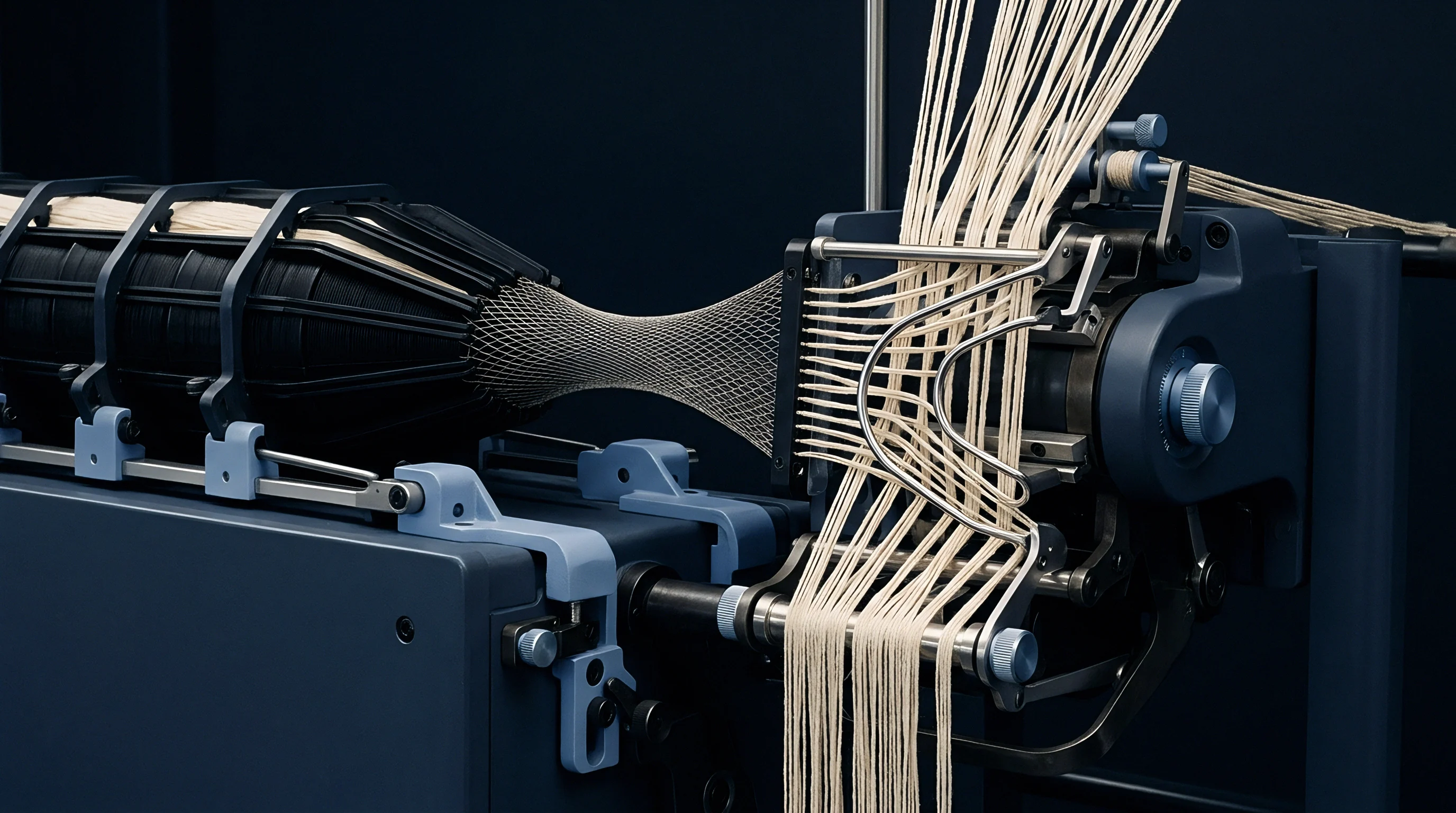
Plies
Heavy duck substrates specified between 340 and 610 grams per square meter concentrate tremendous yarn volume within tightly packed plain interlacings. Achieving acceptable colorfastness on these dense materials requires total dye penetration to the innermost fiber bundles during continuous or jig dyeing, followed by strict thermal regulation during chemical finishing. When heavy duck constructed from coarse plied ring-spun yarns enters a high-temperature stenter for water-repellent or flame-retardant application, dye molecules migrate outward toward the yarn perimeters if those yarns were merely ring-dyed during coloration.
Coarse plies resist uniform liquor penetration. The tight twist multiples typical of Number 4 through Number 10 duck builds prevent pad liquors from entering the yarn axis under standard production dwell times.
The greige build fixes the physical boundary conditions for all subsequent wet processing. Numbered duck builds utilize two-ply or three-ply ring-spun yarns in both warp and weft directions, yielding cover factors exceeding 28 on the Campbell scale. Under continuous pad-steam operations, an immersion time of three seconds through a standard pad trough fails to displace entrained air within the inner yarn twist.
The dye liquor coats the outer sheath of the plied structure, creating a steep concentration gradient between the yarn surface and the dry, uncolored center. Heavy weights retard thermal transfer. When this material later encounters temperatures between 170 and 195 degrees Celsius inside a finishing oven, disperse dyes in synthetic components or unvatted pigments in cellulosic components mobilize along moisture and thermal gradients, migrating toward the hot perimeter where finishing chemicals form a continuous polymer film.
Ring-dyed plied cotton-polyester duck at 480 grams per square meter loses two full gray-scale grades in Martindale abrasion staining when yarn penetration falls below sixty percent of the radial bundle axis.
Drying mechanics in heavy plain builds differ fundamentally from open apparel constructions. The high thermal mass of a 500-gram duck substrate slows heat transfer to the inner filaments, prolonging the liquid evaporation phase during drying. Water carries soluble dyes, dispersants, and finishing auxiliaries toward the external evaporation surfaces via capillary action.
If the dyehouse runs rapid drying cylinders before the stenter pass, capillary flow concentrates unfixed dyestuffs on the crown of the warp and filling knuckles. Subsequent dry heat exposure in the curing chamber causes the concentrated surface dye to sublimate or dissolve into the applied fluorochemical or polyurethane finish, degrading dry and wet crocking fastness below merchantable grades.
| Commercial Designation | Finished Mass (g/m²) | Yarn Count (Warp × Weft) | Sett (Ends × Picks / 10 cm) | Thermal Penetration Lag (s at 180°C) | Minimum Liquor Pick-Up (%) |
|---|---|---|---|---|---|
| Number 4 Duck | 610 | 7/2 Ne × 7/2 Ne | 140 × 95 | 14.2 | 75 |
| Number 8 Duck | 540 | 10/3 Ne × 10/3 Ne | 180 × 110 | 11.8 | 70 |
| Number 10 Duck | 460 | 12/2 Ne × 12/2 Ne | 210 × 130 | 9.4 | 65 |
| Army Duck | 340 | 14/2 Ne × 14/2 Ne | 230 × 165 | 7.1 | 60 |
Laboratory pad mangles with small-diameter rollers give misleadingly optimistic penetration readings because their narrow contact width exerts intense localized pressure. Production-scale padders equipped with 300-millimeter diameter bowls deliver a broader nip footprint with lower instantaneous hydraulic pressure, which allows the dense yarn bundle to bridge the gap without forcing liquor into the center. Modifying the yarn structure remains the most reliable mechanical intervention.
Specifying a lower twist multiplier on the singles yarn coupled with a balanced ply twist creates microscopic interstitial voids that admit dye liquor under standard wet processing pressures. Converters frequently explain the white centers of heavy plied yarns as an unavoidable outcome of rapid continuous processing lines.
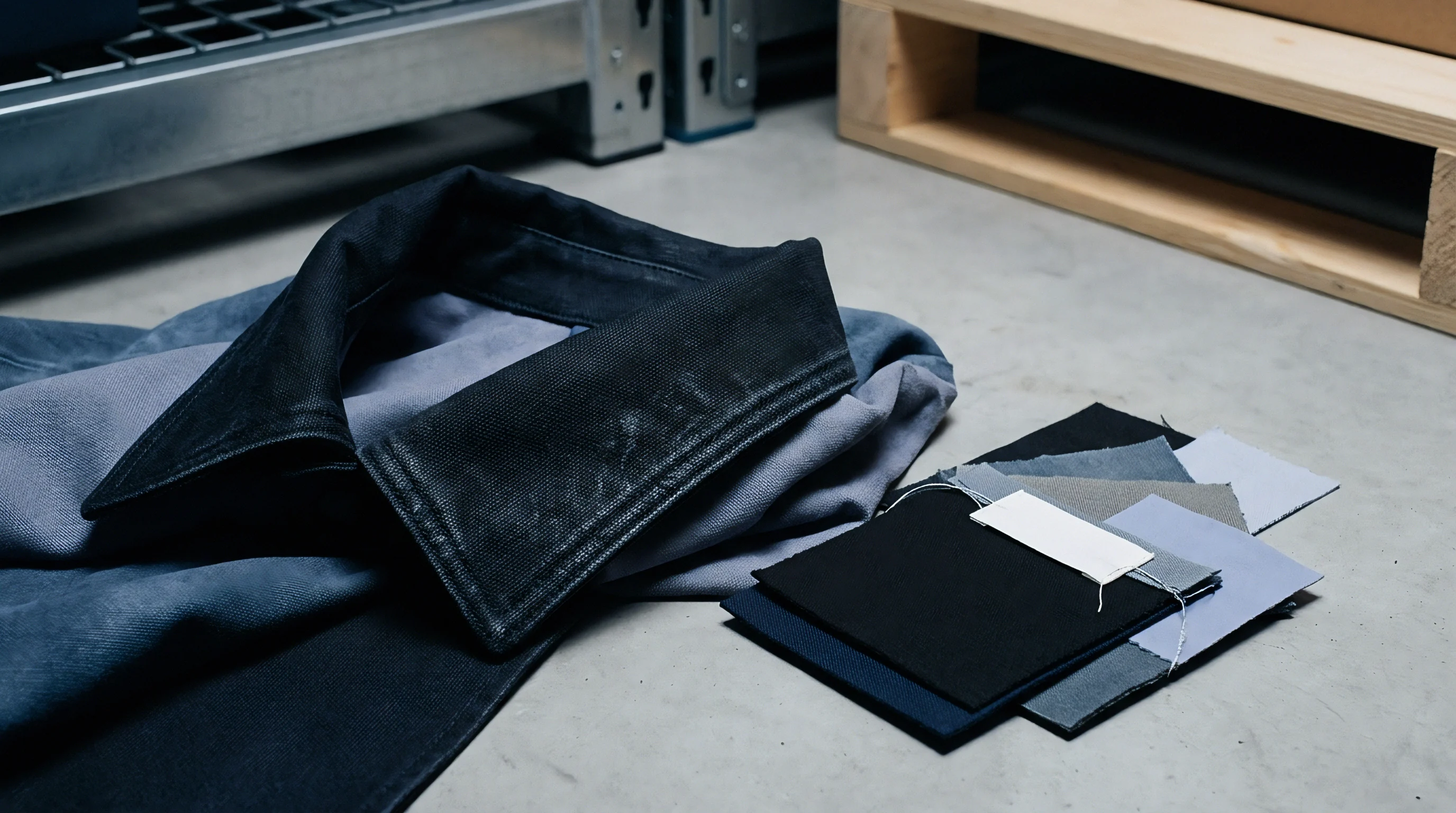

Solvation
Thermal energy applied during stenter exposure activates the molecular mobility of disperse dyes held within synthetic fiber matrices. Below 140 degrees Celsius, disperse dye molecules remain trapped within the amorphous regions of polyester or polyamide fibers. Once ambient stenter temperatures cross 170 degrees Celsius, the polymer chains relax, permitting dye molecules to diffuse outward toward the fiber boundary.
Dry heat mobilizes disperse molecules. This movement accelerates when the outer perimeter of the fiber is surrounded by hydrophobic finishing chemistries, including C6 fluorocarbon water repellents, paraffin emulsions, and silicone softeners.
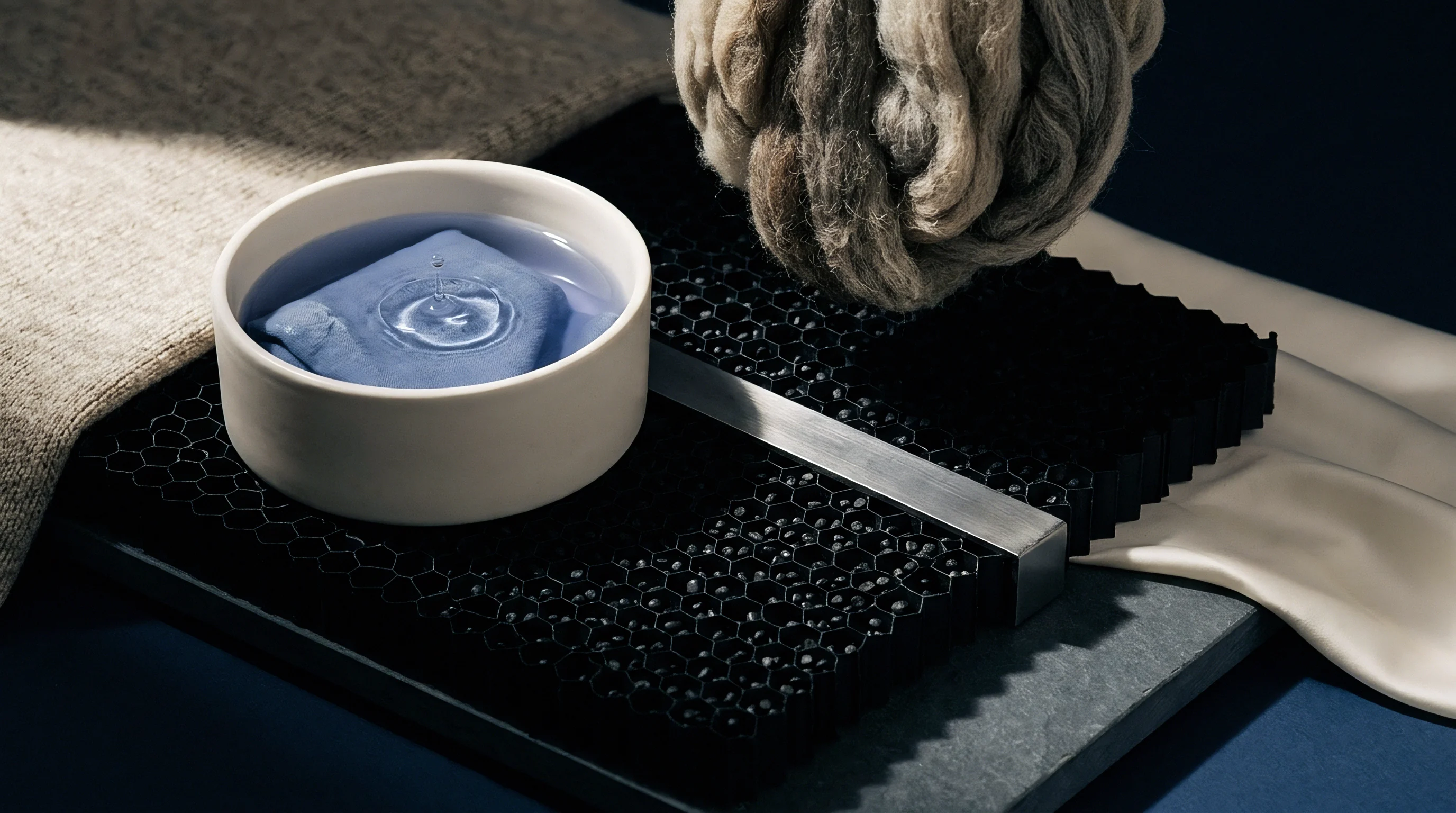
What Accelerates Disperse Dye Desorption into Topical Finishes?
Nonionic surfactants present in fluorochemical bath concentrates act as active extraction media when stenter metal reaches 175 degrees Celsius. These surface-active agents soften and solubilize disperse dye particles that have migrated to the fiber exterior. The dye dissolves into the molten finish matrix rather than remaining anchored in the fiber substrate.
Upon cooling, the dissolved dye stays trapped inside the superficial chemical coating. Washing, dry cleaning, or physical rubbing readily dislodges this superficial dye, producing dramatic drops in fastness ratings despite flawless initial dyehouse wash-off procedures.
Hydrophobic repellent films act as extraction sinks for disperse dyes whenever line temperatures exceed the glass transition point of the synthetic filament.
The molecular weight and constitution of the chosen dyestuffs determine their susceptibility to thermal extraction. Low-energy disperse dyes possessing low molecular weights and high vapor pressures migrate rapidly under thermal finishing regimes. High-energy disperse dyes containing polar substituents such as cyano, nitro, or ester groups resist vaporization and exhibit lower solubility in fluorochemical matrices.
Heavy duck products composed of polyester-cotton intimate mixtures demand high-energy dyes with molecular weights exceeding 400 grams per mole to withstand subsequent resin fixation.
- Hydrophobic Partitioning Coefficients favor migration into liquid-phase topical finishes over retention in synthetic polymer matrices during high-temperature dwell cycles.
- Emulsifier Cloud Point Phenomena cause surfactants to precipitate onto yarn surfaces at elevated temperatures, generating a high-solvency boundary layer.
- Residual Spinning Oils retained in unwashed duck yarns act as secondary solvents that accelerate dye transport under hot finishing conditions.
- Curing Exotherms in Dense Cloth elevate interior roll temperatures beyond set stenter parameters when goods are batched hot from the machine exit.
Evaluating migration tendencies requires standardized bench testing before committing bulk yardage to chemical impregnation. Thermomigration testing under ISO 105-P01 dry heat fixation protocols demonstrates that dye loss correlates directly with finish formulation oil values. Disperse dyes migrate along temperature gradients.
When finishing heavy duck with melamine formaldehyde crosslinkers alongside fluorochemicals, the acidic catalyst systems further perturb dye stability by accelerating hydrolytic cleavage of azo linkages in sensitive chromophores. Underestimating the solubility of high-energy disperse dyes inside oil-repellent polymers yields tens of thousands of meters of rejected piece goods during commercial laundering checks.

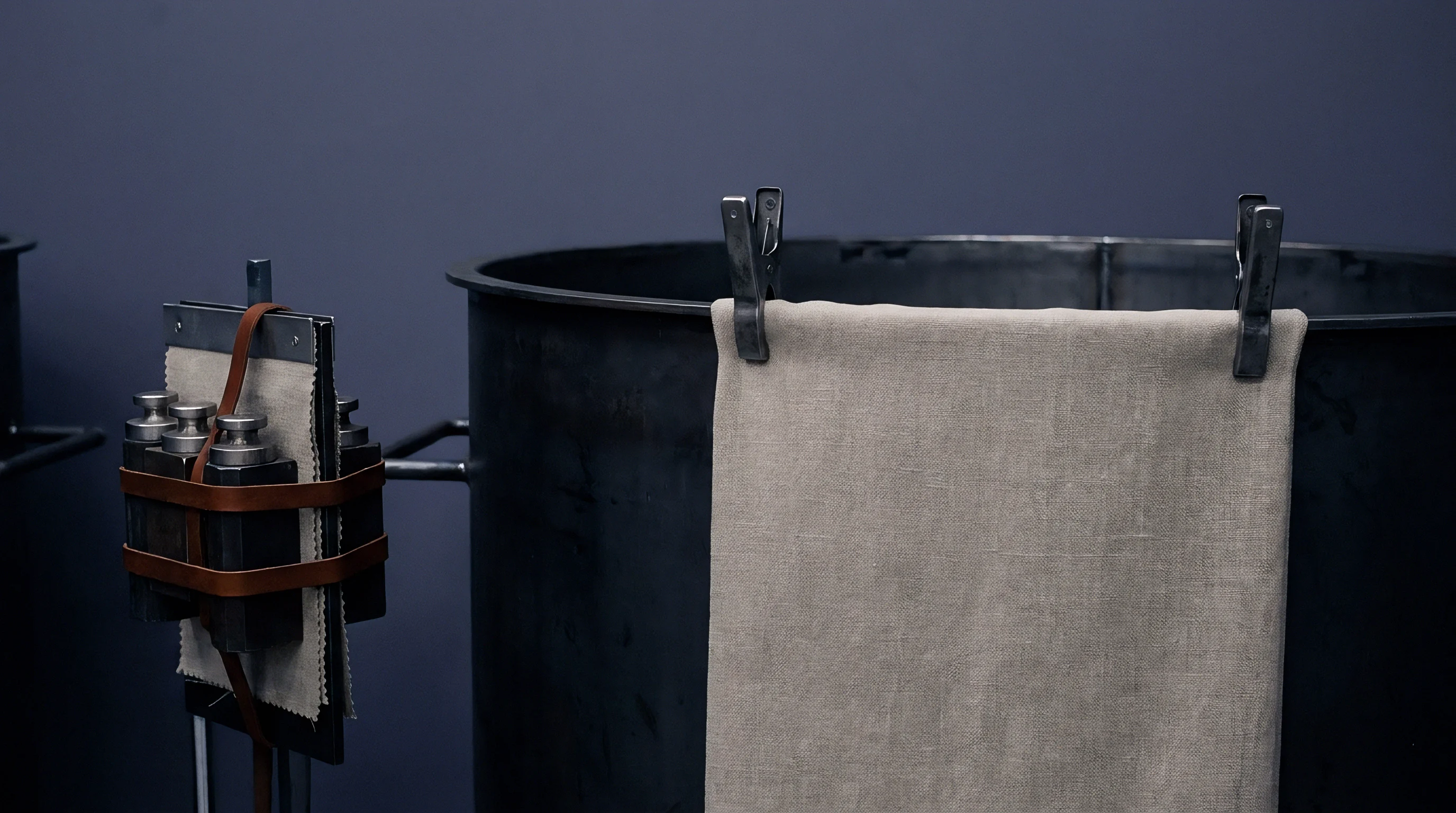
Reduction
Chemical stripping of unfixed surface dyestuffs clears the pathway toward stable wash and dry-cleaning ratings on heavy duck. Following disperse dyeing on polyester-cellulosic blends, substantial amounts of unreacted or desorbed dye adhere loosely to yarn perimeters. Conventional reduction clearing utilizes sodium hydrosulfite and sodium hydroxide at 70 to 80 degrees Celsius to convert insoluble disperse dyes into water-soluble leuco compounds, which wash away in subsequent rinsing boxes.
Incomplete reduction leaves rings on plies. On dense, heavy plain-woven goods, standard reduction dwell times of twenty seconds in continuous wash ranges fail to penetrate past the outer yarn layers.
Alkaline hydrosulfite destroys surface disperse dye. However, heavy duck constructions retain high volumes of trapped air that rapidly oxidize sodium hydrosulfite, depleting the chemical bath before the active reducing species reaches the inner yarn plies. Increasing the concentration of sodium hydrosulfite beyond six grams per liter often proves futile without the addition of non-foaming deaerating wetting agents.
Formamidine sulfinic acid and sulfinic acid derivatives offer enhanced thermal stability compared to sodium hydrosulfite, maintaining reducing potential across prolonged dwell times in jigger processing.
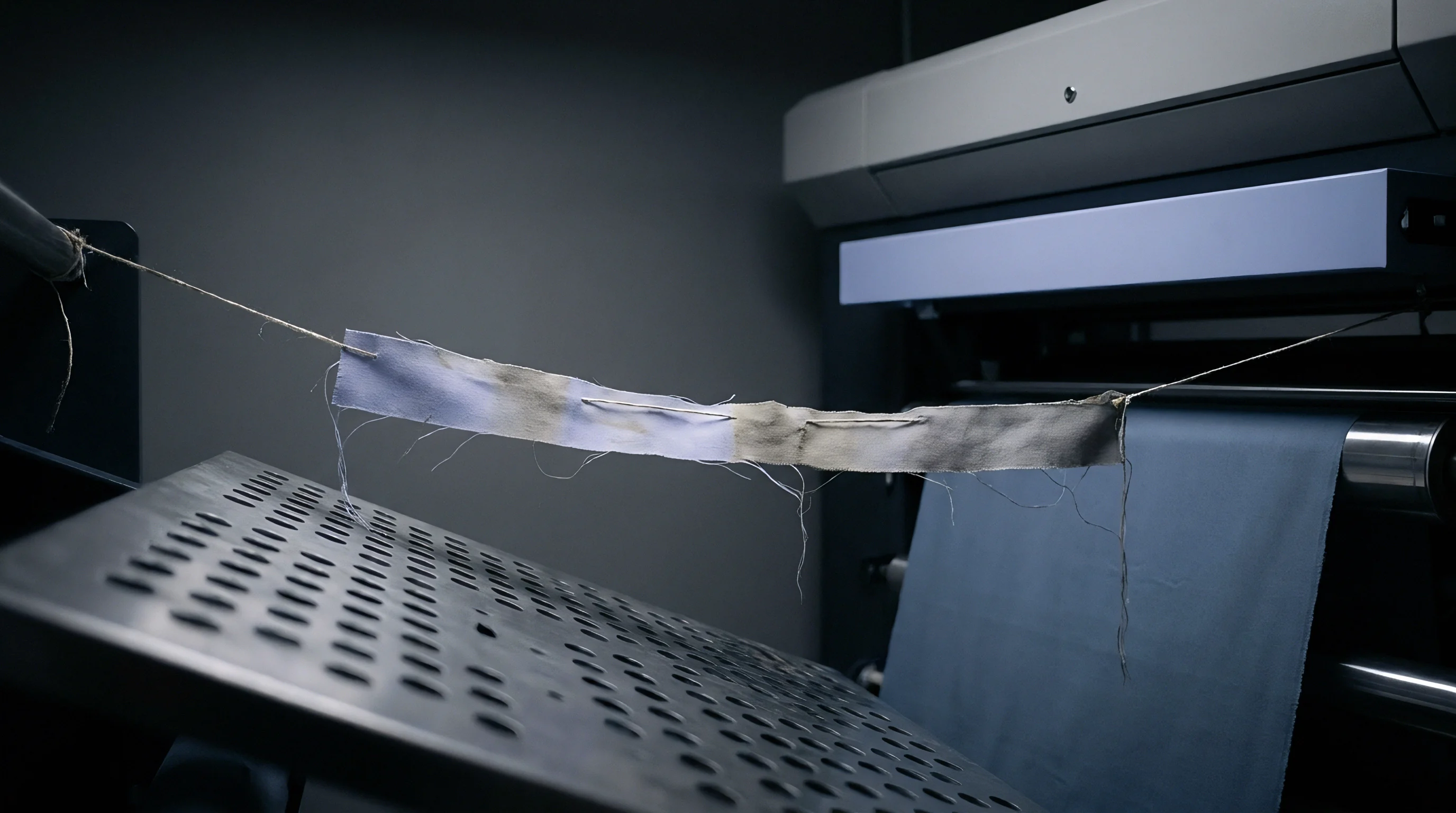
Surface clearing agents cannot remediate shading variances rooted in unpenetrated yarn bundles.
Dense twills trap unreacted dye aggregates. For continuous processing of heavy duck goods, configuring the reduction wash range requires precise mechanical and chemical synchronization:
- Pre-wet the dyed duck with two grams per liter of an ethoxylated alcohol deaerator at 60 degrees Celsius to displace trapped yarn air before entering the chemical reduction tank.
- Apply an alkaline reduction bath containing five grams per liter sodium hydrosulfite and four grams per liter active sodium hydroxide at 75 degrees Celsius for a minimum immersion time of forty-five seconds.
- Transport the substrate through a high-vacuum extraction slot running at thirty kilopascals to pull the exhausted reduction liquor directly through the yarn plies.
- Execute two successive counter-current overflow washes at 85 degrees Celsius, followed by neutralization with acetic acid to achieve an internal pH between 5.5 and 6.5 across the entire substrate mass.
Sublimation fastness governs shade retention. Failure to neutralize the residual alkalinity within heavy duck plies leads to severe shade alteration during subsequent stenter finishing, as alkaline residues catalyze disperse dye breakdown under hot, dry conditions. Thorough chemical clearing of dense yarn bundles always demands active caustic alkalinity throughout the entire rinse sequence.
Cure
Fixation ovens operating between 160 and 195 degrees Celsius drive crosslinking reactions across fluorochemical emulsions and blocked polyisocyanates. Heavy duck structures act as massive heat sinks that distort nominal machine temperature profiles. When a stenter runs at twenty meters per minute, the surface of a 550-gram duck may attain the nominal air temperature of 185 degrees Celsius, while the yarn centers lag behind at 145 degrees Celsius.
Slower line speeds increase dwell time. Prolonging exposure to ensure deep crosslinking overheats the exterior face, driving disperse dye thermomigration and degrading the water-repellent finish through thermal oxidation.
Will Stepped Zone Temperatures Suppress Dye Extraction?
Dividing a six-compartment finishing oven into progressive thermal stages prevents surface flash-off and localized resin pooling. If wet-impregnated duck encounters maximum air velocities and peak heat in the initial drying zones, the rapid evaporation of water forces both finish chemicals and unfixed dyes to the knuckle surfaces. Initiating drying at 115 degrees Celsius in zones one and two allows water to evaporate steadily without generating steam blisters or surface crusting.
Zones three and four elevate the substrate to 140 degrees Celsius for intermediate drying, while zones five and six deliver the target curing temperature of 165 degrees Celsius for forty seconds. Curing temperatures drive molecular desorption.
| Stenter Zone | Nominal Air Temp (°C) | Air Velocity (m/s) | Substrate Surface Temp (°C) | Target Process Function |
|---|---|---|---|---|
| Zone 1 | 120 | 15 | 85 | Gentle Evaporation and Deaeration |
| Zone 2 | 130 | 18 | 105 | Constant-Rate Drying Phase |
| Zone 3 | 145 | 22 | 125 | Falling-Rate Moisture Removal |
| Zone 4 | 155 | 22 | 145 | Polymer Film Coalescence |
| Zone 5 | 165 | 20 | 165 | Crosslinker Activation |
| Zone 6 | 165 | 18 | 165 | Condensation and Network Curing |
Water repellents dissolve dispersed dye particles. Cooling management upon stenter exit represents an equally critical control point. Heavy duck retains immense sensible heat when exiting the curing chamber.
If goods are wound onto batching rollers at temperatures exceeding 60 degrees Celsius, the trapped thermal energy sustains dye diffusion inside the tightly wound roll for hours. Running the cured cloth over high-capacity water-cooled cans operating at 15 degrees Celsius immediately before the winder drops the surface temperature below 35 degrees Celsius, freezing dye diffusion and preventing transfer between adjoining layers.
- Zone Temperature Profiling maintains low evaporation rates across initial chambers to restrict capillary migration of dissolved dyes to yarn exteriors.
- Exhaust Air Velocity Calibration prevents mechanical blowing of surface finishes toward one face of the heavy woven structure.
- Cooling Can Integration rapidly drops substrate temperatures below the polymer glass transition point directly upon oven exit.
- Moisture Sensor Regulation prevents over-drying the cotton component below four percent moisture regain, which causes fiber embrittlement.
Steaming fixes reactive dye lots. Whether low-temperature crosslinking catalysts can fully replace melamine resin durability across repeated industrial laundering cycles without promoting shade drift remains unresolved across current finish chemistry trials.
Tolerance
Commercial contracts governing technical heavy duck establish strict numeric gates for color transfer under ISO 105 protocols. Sourcing organizations frequently face disputes when laboratory dip approvals fail to match bulk finishing fastness. A formulation that achieves a grade 4-5 in wash fastness under ISO 105-C06 condition A1S can drop to grade 2-3 when subjected to industrial laundering condition C2S following a high-temperature water-repellent pass.
The difference stems entirely from finishing-line thermomigration that went undetected during small-scale swatch trials.
| Test Protocol | Target Property | Standard Specification | Thermomigration Reject Gate | Tolerance Band (Gray Scale) |
|---|---|---|---|---|
| ISO 105-C06:C2S | 60°C Wash Staining (Polyester) | Grade 4 | Below Grade 3 | ± 0.5 Grade |
| ISO 105-X12 | Dry Rubbing Fastness | Grade 4-5 | Below Grade 4 | ± 0.5 Grade |
| ISO 105-X12 | Wet Rubbing Fastness | Grade 3-4 | Below Grade 2-3 | ± 0.5 Grade |
| ISO 105-D01 | Dry Cleaning Staining | Grade 4 | Below Grade 3 | ± 0.5 Grade |
| ISO 105-B02 | Xenon Arc Light Fastness | Grade 6 | Below Grade 5 | None Allowed |
Laboratory padding nips flatter bulk penetration. Buyer-side audits must inspect both faces and inner plies of slit yarns taken from finished bulk rolls. When auditing dyed duck, inspectors separate the warp and weft yarns, unply the singles, and examine the inner radial cross-section under fifty-times magnification.
An uncolored yarn center occupying more than twenty percent of the cross-sectional area indicates incomplete penetration during coloration. These goods will reliably fail crocking specifications as soon as abrasive field wear strips the thin outer mantle of dyed fibers away from the undyed structural interior.
Contracts specifying ISO 105-X12 wet crocking performance above grade 3-4 on deep shades eliminate unrinsed surfactant residues by penalizing delivery delays at the converter’s expense.
Commercial exposure escalates rapidly when finish recipes fail bulk verification. Re-running heavy duck through an alkaline stripping range to clear migrated surface dyes degrades the water-repellent rating, reduces tensile strength across the filling by up to fifteen percent, and adds two weeks to finishing schedules. Converters attempting to mask low crocking ratings by applying topically applied cationic fixing agents or silicone emulsions merely delay dye release, creating delayed-blooming stains that emerge after three weeks of warehouse storage under hot container shipping conditions.
Incorporating an explicit rejection clause tied to ISO 105-C06 condition C2S staining ratings below grade 4 forces the converter to absorb re-finishing and stripping charges before goods leave the loading bay.