Electrolyte Dosing Rates in Numbered Cotton Duck
Controlled electrolyte dosing on jigs prevents surface ring dyeing, ensuring dye penetration into heavy plied cotton duck yarn cores.

Substrate
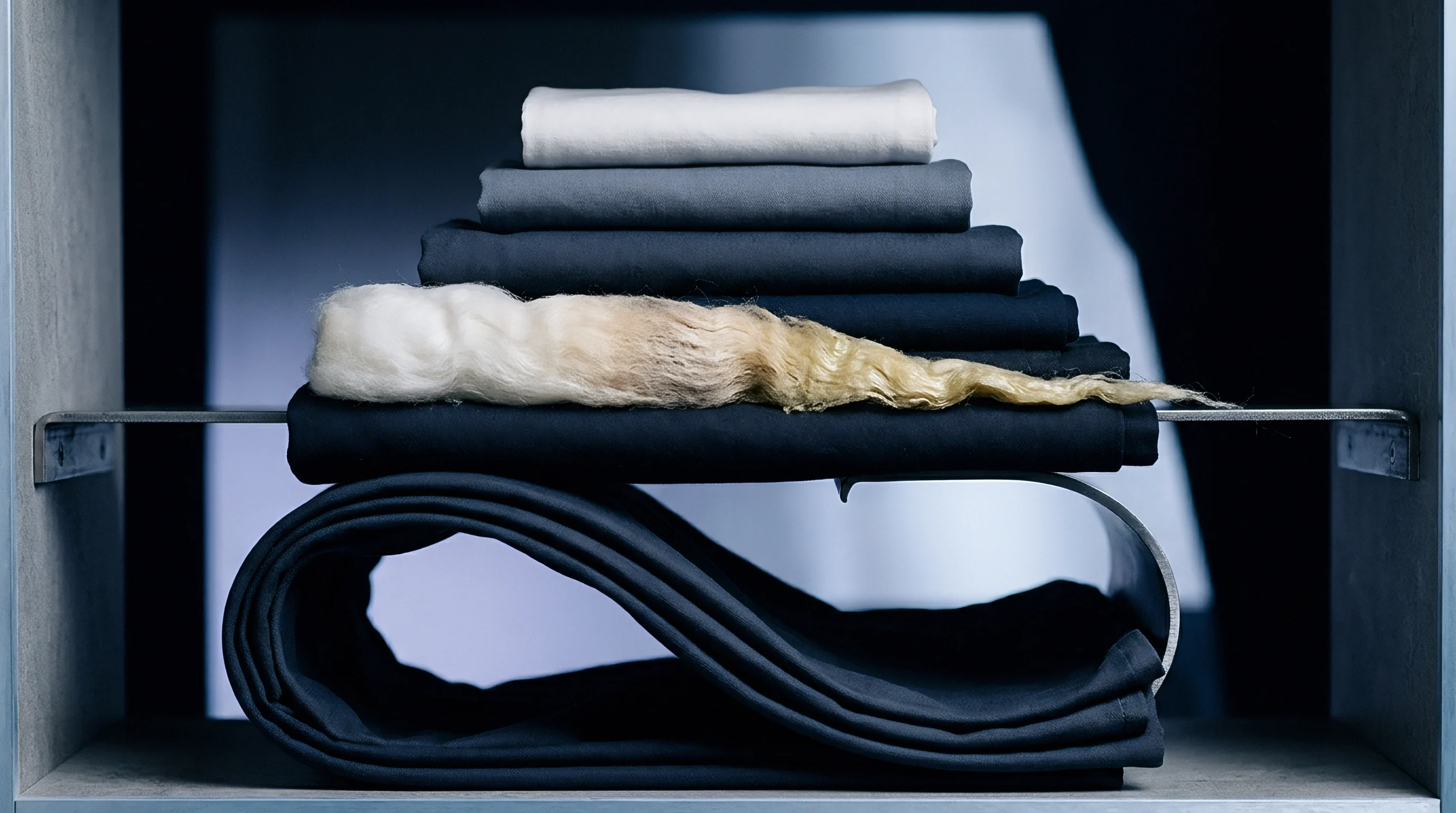
Numbered cotton duck specifies a stiff plain weave woven from heavy plied yarns in both warp and filling. Fabric standard specifications under ASTM D230 establish a numerical sequence where Duck No. 1 represents the heaviest construction at approximately 610 grams per square metre, stepping down to Duck No. 12 at roughly 390 grams per square metre. Unlike light flat cotton poplins or open single jersey knits, numbered duck utilizes multiple structural plies, such as 3-ply or 4-ply ring-spun cotton yarns twisted tightly together, woven at maximum reed density to maximize physical strength and barrier resistance.
Heavy plies restrict liquid movement. This structural density limits bath turnover inside the yarn core during wet processing.
Heavy Cotton Duck Architecture
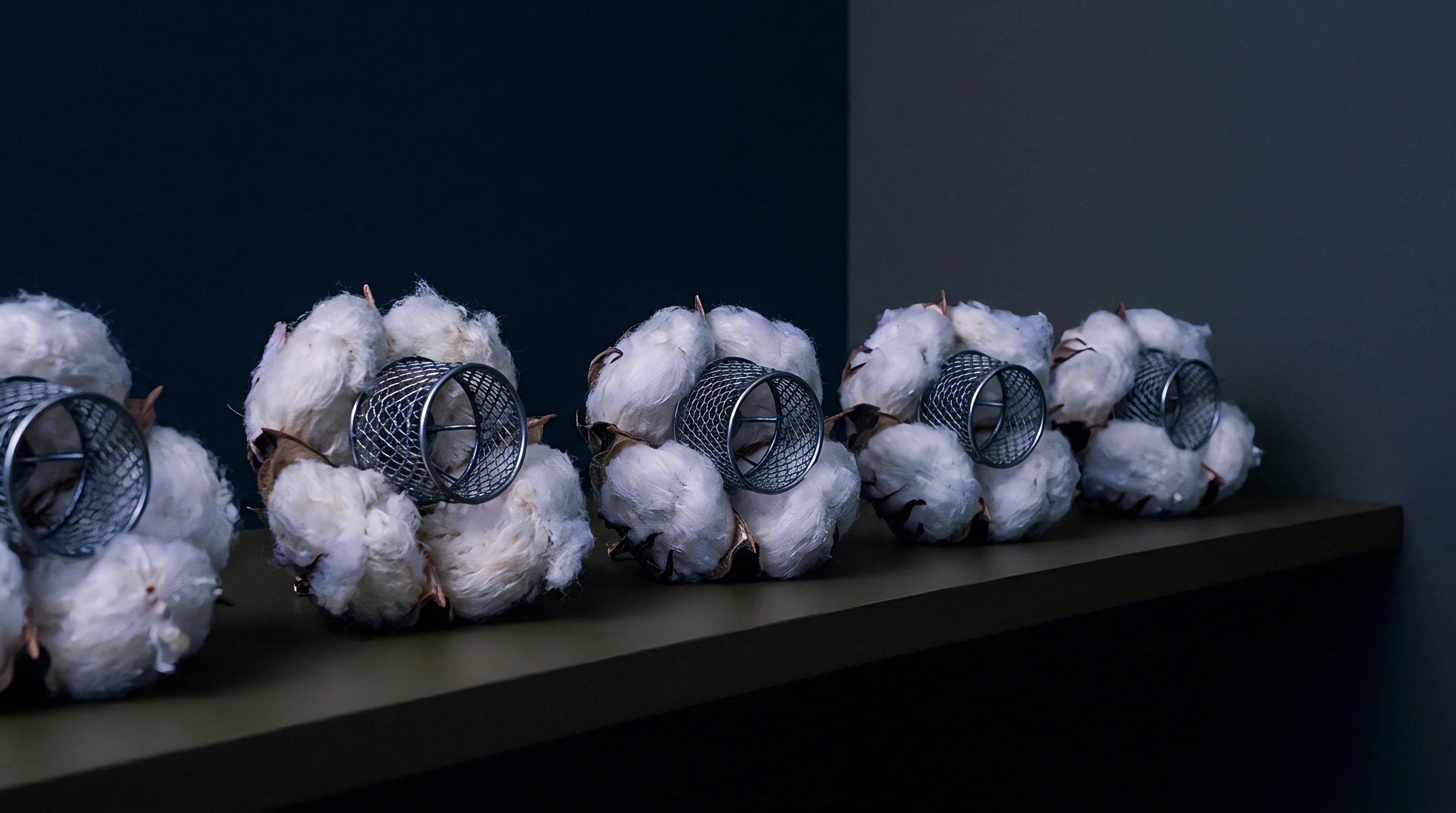
Dense yarn packing creates extreme resistance to aqueous fluid movement through internal interstices. Warp ends and filling picks cross under high mechanical weaving tension, driving cotton fibers into tight physical contact. Duck No. 1 presents extreme structural density.
When submerged in an aqueous bath, cotton cellulose absorbs water, triggering transverse fiber swelling that shrinks inter-fiber capillary channels by 15 to 25 percent within minutes. This rapid reduction in capillary diameter restricts mass transport of dissolved molecules from the bulk liquor into the yarn center.
| Duck Grade | Nominal Weight (g/m²) | Warp Yarn Construction | Weft Yarn Construction | Ends / Picks (per 10 cm) | Air Permeability (L/m²/s at 100 Pa) |
|---|---|---|---|---|---|
| No. 1 | 610 | 13/4 ply | 13/4 ply | 170 / 110 | 12 |
| No. 4 | 510 | 13/3 ply | 13/3 ply | 185 / 125 | 22 |
| No. 6 | 440 | 13/3 ply | 13/2 ply | 195 / 135 | 35 |
| No. 8 | 390 | 13/2 ply | 13/2 ply | 210 / 145 | 48 |
| No. 10 | 340 | 15/2 ply | 15/2 ply | 225 / 155 | 65 |
| No. 12 | 300 | 18/2 ply | 18/2 ply | 240 / 165 | 85 |
Porosity and Intraply Void Dynamics
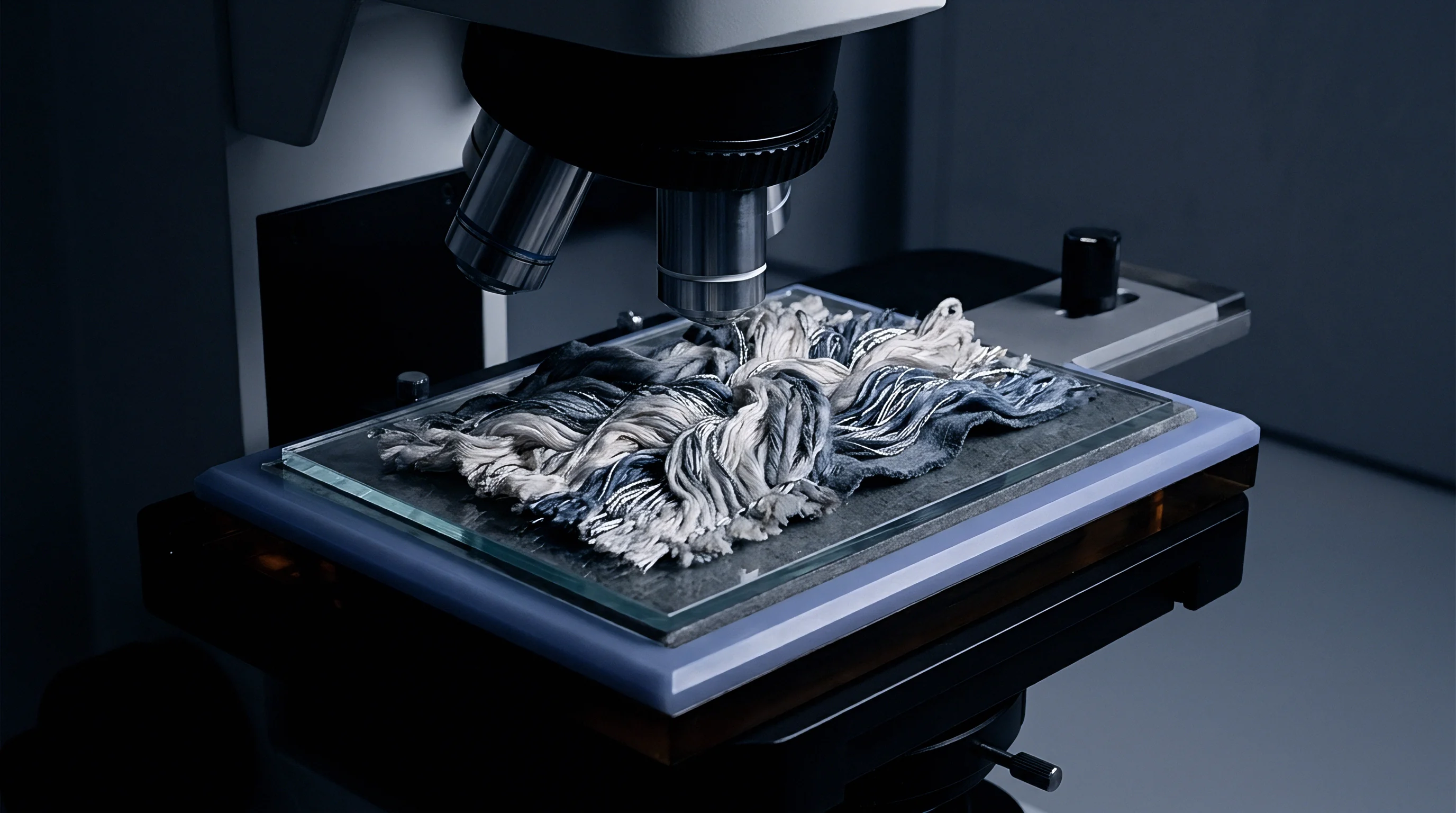
Liquid movement inside plied structures depends on the microscopic spaces between individual cotton fibers. High twist multipliers applied during yarn plying force external fibers to act as a mechanical shield around the core. Plied yarns create tight interstitial channels.
During atmospheric liquor immersion, air trapped within internal void spaces cannot escape rapidly, creating localized back-pressure that fights liquor penetration. If dyestuff molecules exhaust onto outer fiber surfaces before bath chemistry penetrates internal voids, the yarn core remains completely undyed.
Dense cotton duck absorbs aqueous dye liquor unevenly when initial salt concentration exceeds critical strike thresholds.
Liquor movement through thick duck cloth requires adequate dwell time and controlled chemical diffusion dynamics to achieve full wet-out across the entire web thickness.
- Yarn Ply Count multiplies the structural barriers that dyestuff molecules must cross before reaching central fiber bundles within the heavy core.
- Warp Crimp Density forces liquor to take circuitous path lengths through overlapping weave intersections, retarding fluid velocity across the thickness.
- Twist Factor increases compaction within outer yarn layers, severely reducing microscopic pore radii available for aqueous solute transport.
- Sizing Residuals remaining after desizing reduce fiber surface wetting efficiency, creating hydrophobic pockets that reject water absorption.
Chemical processing of numbered duck relies heavily on mechanical agitation, machine liquor pressure, and controlled electrolyte balances to overcome structural flow resistance.

Salt
Inorganic ionic compounds alter the chemical equilibrium between dissolved dyestuff molecules and cotton cellulose. Unmodified cotton fibers acquire a negative surface electrostatic charge, known as the zeta potential, when immersed in neutral or alkaline aqueous solutions. Direct and reactive dyestuff molecules carry anionic functional groups, such as sulfonate salts, to maintain water solubility.
Repulsive forces between the negative cellulose surface charge and anionic dye molecules prevent spontaneous exhaustion. Sodium cations (Na+) provided by added electrolytes suppress the negative zeta potential, screening electrical repulsion and permitting dye molecules to approach within range of short-range hydrogen bonding and van der Waals forces.

Electrolyte Selection and Ionic Charge
Anhydrous sodium sulfate and vacuum-evaporated sodium chloride offer different dissociation characteristics in concentrated dyebaths. Glauber salt dissolves readily at sixty degrees. Sodium sulfate (Na2SO4) yields two sodium ions per mole of dissolved salt, generating high ionic strength without contributing aggressive chloride ions that pit stainless steel dye kettle walls or atmospheric jig tanks.
Sodium chloride (NaCl) provides cost efficiency per kilogram, yet introduces potential pitting corrosion risks on non-molybdenum stainless grades under high-temperature acidic or neutral wash stages.
| Electrolyte Type | Chemical Formula | Purity Grade (%) | Solubility at 20°C (g/L) | Solubility at 60°C (g/L) | Ionic Strength Index (per g/L) |
|---|---|---|---|---|---|
| Anhydrous Sodium Sulfate | Na2SO4 | 99.2 | 195 | 440 | 0.0211 |
| Glauber Salt Decahydrate | Na2SO4 · 10H2O | 98.5 | 215 (hydrated) | 650 (hydrated) | 0.0093 |
| Vacuum Evaporated Salt | NaCl | 99.8 | 358 | 371 | 0.0171 |
| Rock Salt Industrial | NaCl | 97.5 | 340 | 360 | 0.0167 |
Liquor Ratio Volumetric Interactions
Bath volumes on atmospheric jigs typically run between three and five liters per kilogram of dry cloth. Low liquor ratios concentrate dissolved chemicals. At a 4:1 liquor ratio, dosing 60 grams per liter of sodium sulfate delivers 240 grams of electrolyte per kilogram of heavy cotton duck.
High salt concentrations accelerate initial strike. Rapid shifts in electrolyte level cause dye aggregation in the bulk solution, generating multi-molecular clusters too large to navigate small spaces between tightly plied fibers.
At 60 degrees Celsius with 60 grams per liter sodium sulfate, reactive dye exhaustion reaches 78 percent within 20 minutes on numbered duck.
When electrolyte concentration jumps too quickly, dyestuff drops out of solution onto outer fiber perimeters, causing severe surface ring dyeing while leaving inner plies undyed.
- Sodium Sulfate Purity prevents unwanted heavy metal contamination that causes catalytic shade degradation or premature dye precipitation during heating cycles.
- Sodium Chloride Corrosivity mandates strict vessel metallurgy verification, requiring 316L stainless steel alloys to prevent localized crevice corrosion over long production campaigns.
- Dissolution Temperature Profile governs how rapidly salt crystals dissolve upon vessel addition, preventing localized high-concentration electrolyte plumes in the liquor.
- Impurity Content Limits restrict calcium and magnesium hardness ions below 50 parts per million to protect dyestuff solubility in low-liquor jig baths.
Higher twist levels in heavy cotton duck require low salt concentrations during early machine turns to preserve dye solubility while liquor passes through dense yarn structures.


Dosing
Progressive addition profiles control the exhaustion speed of reactive dye chemistry during atmospheric wet processing. Rather than dumping the entire electrolyte mass into the vessel before heating, modern dyehouse procedures divide total salt volume into specific increments aligned with machine pass counts. Linear metering smooths exhaustion rate curves.
Controlling strike velocity prevents rapid shade exhaustion on roll face edges, ensuring that dyestuff diffuses uniformly across the entire length and thickness of heavy cotton duck rolls.
Can Metered Linear Dosing Prevent Ring Dyeing?
Uncontrolled electrolyte introduction forces dyestuff to deposit rapidly on outer yarn perimeters before penetrating inner plies. Linear dosing maintains open paths. Metering salt continuously through a dosing pump over 30 to 45 minutes maintains a predictable, gradual shift in bath ionic strength.
Dyestuff molecules remain dispersed in liquor long enough to penetrate deep into plied yarn cores before electrostatic screening forces them out of solution onto cellulose hydroxyl binding sites.
| Duck Grade | Shade Depth (%) | Electrolyte Type | Total Salt Dose (g/L) | Dosing Schedule Type | Dosing Duration (Min / Passes) | Fixation Soda Ash (g/L) |
|---|---|---|---|---|---|---|
| No. 1 | 4.0 (Pale) | Na2SO4 | 35 | Progressive (10-20-30-40%) | 40 min / 4 passes | 10 |
| No. 1 | 1.5 (Medium) | Na2SO4 | 55 | Progressive (5-15-30-50%) | 50 min / 5 passes | 15 |
| No. 1 | 4.0 (Dark) | Na2SO4 | 80 | Linear Metered | 60 min / 6 passes | 20 |
| No. 6 | 4.0 (Dark) | NaCl | 70 | Progressive (10-20-30-40%) | 45 min / 4 passes | 18 |
| No. 12 | 4.0 (Dark) | NaCl | 60 | Linear Metered | 35 min / 4 passes | 15 |
Jig Addition Schedules and End Passes
Atmospheric batch machines transport open-width goods through a small bath volume across sequential turns. Each pass adds electrolyte incrementally. Atmospheric jigs require balanced tension control.
On an atmospheric jig running Duck No. 1, a single pass of a 1,000-metre roll can consume 12 to 15 minutes depending on drive roll speed and mechanical tension limits. Adding salt without considering pass duration causes massive concentration differences between roll heads and roll tails.
Stretching electrolyte addition across multiple passes allows dye molecules to diffuse into inner yarn plies before fixation locks them to outer fibers.
Executing controlled dosing steps across symmetrical pass counts guarantees that both ends of the roll experience identical cumulative ionic exposure prior to alkali fixation.
- Fill the atmospheric jig bath with softened water at 50 degrees Celsius and verify liquor volume accuracy using sight glass calibrations.
- Load open-width numbered duck under controlled mechanical tension and run two complete turns to achieve uniform thermal equilibrium and complete fiber swelling.
- Dose pre-dissolved dyestuff evenly across two consecutive passes without any electrolyte present in the bath.
- Meter ten percent of the total calculated electrolyte mass on the third pass using a low-velocity chemical injection manifold.
- Introduce thirty percent of total electrolyte mass on the fourth pass while holding liquor temperature precisely at target migration level.
- Inject the remaining sixty percent of electrolyte mass divided equally across passes five and six.
- Run two additional migration passes without chemical additions to permit dye diffusion into plied yarn centers before introducing alkali for fixation.
Buyer technical agreements frequently incorporate minimum dosing pass requirements to prevent mills from shortening process schedules at the expense of dye penetration quality. Standard procurement specifications state: ‘Dyestuff migration phases on goods exceeding 450 g/m² shall include a minimum of four distinct electrolyte dosing steps prior to alkali injection, with batch levelness verified by multi-point spectrophotometric reading across head, middle, and tail end cuts.’
Fastness
Color performance under friction depends entirely on how deep dye molecules migrate into individual fiber cores. Ring dyeing concentrates pigment outside. When electrolyte dosing proceeds too aggressively, reactive dyes fix almost exclusively on the surface perimeter of heavy 3-ply and 4-ply yarns.
During abrasion or crocking tests, mechanical rubbing removes this heavily dyed exterior layer, exposing undyed interior cotton fibers underneath. Poor penetration ruins crocking performance. This exposure results in severe color loss and low fastness ratings even when total dye mass per unit weight matches target formulation targets.
Core Penetration and Rubbing Resistance
Surface-bound reactive dyestuff shears off readily under mechanical rubbing force during standard dry and wet testing. Under ISO 105-X12 test protocols, a standard cotton rubbing cloth is moved under a 9-Newton downward force across dyed duck cloth. If dye molecules reside only on yarn perimeters, abrasion transfers color heavily onto the test square, yielding wet crocking scores of Grade 2.0 or lower.
Complete dye penetration into yarn cores distributes color throughout the entire thread volume, preserving surface color appearance under abrasive wear and raising wet crocking resistance to Grade 3.5 or 4.0.
| Dosing Method | Duck Grade Tested | Core Dye Penetration Depth (%) | ISO 105-X12 Dry Crock Rating | ISO 105-X12 Wet Crock Rating | Delta E Levelness (Head-to-Tail) |
|---|---|---|---|---|---|
| Single Salt Dump (Initial) | No. 1 (610 g/m²) | 22 | Grade 3.0 | Grade 1.5 | 2.45 |
| Two-Step Split Dosing | No. 1 (610 g/m²) | 48 | Grade 4.0 | Grade 2.5 | 1.30 |
| Progressive Four-Step Dosing | No. 1 (610 g/m²) | 76 | Grade 4.5 | Grade 3.5 | 0.55 |
| Linear Metered Dosing | No. 1 (610 g/m²) | 91 | Grade 4.5 | Grade 4.0 | 0.32 |
| Linear Metered Dosing | No. 6 (440 g/m²) | 94 | Grade 4.5 | Grade 4.0 | 0.28 |
Shade Levelness Evaluation across Long Rolls
Spectrophotometer measurements across roll boundaries reveal horizontal and vertical color gradients caused by irregular exhaustion rates. Unlevel exhaustion creates visible shade bands. On atmospheric jigs, high salt concentrations cause the bath to deplete rapid dye mass during the first few metres of contact with the cloth roll.
Head-to-tail shade variance occurs when dyestuff depletes faster than the machine complete turn cycle, leaving roll tails noticeably lighter than roll heads.
Mandating ISO 105-X12 wet crocking performance above Grade 3.5 forces dyehouse managers to extend migration time before alkali injection.
Cross-sectional microscopy of dyed yarn bundles confirms whether dyestuff has diffused into the innermost plies or remains trapped on outer fiber walls.
- Microscopic Cross Sectioning cuts dyed yarn bundles into 10-micron slices to calculate the ratio of dyed fiber area against undyed core area.
- Differential Wet Crocking Test measures color transfer under wet rubbing across warp and weft directions to locate surface dye concentrations.
- Multi-Illuminant Spectrophotometry evaluates color levelness across roll head, middle, and tail sections under D65, TL84, and A light sources to detect shade variations.
- Core Penetration Ratio calculates numerical color intensity inside yarn cores relative to exterior yarn perimeters using reflectance values.
Skipping controlled dosing steps leads directly to bulk lot rejections when buyers audit wet crock fastness against strict technical performance contracts.
Ledger
Financial calculations for heavy duck dyeing balance chemical raw material costs against total processing machine time. Extended cycles increase direct machine cost. Operating an atmospheric jig incurs fixed hourly costs for electrical power, heating steam, labor, and machine amortization, running between 45 and 70 USD per hour depending on dyehouse location and facility scale.
Adding 45 minutes to a dosing schedule to ensure deep core penetration increases processing costs by 35 to 55 USD per roll. However, skipping metered dosing risks complete batch failure, where stripping and re-dyeing a rejected 1,000-metre roll of Duck No. 1 costs upwards of 2,800 USD in wasted chemicals, rework labor, and yield loss.
Process Cycle Economics and Capacity
Extended addition schedules increase machine residency hours, raising direct operational expenditure per linear metre. A fast dye cycle running 2.5 hours produces 5 to 6 rolls per jig daily. Extending cycle time to 4.0 hours for progressive salt dosing limits vessel productivity to 3 or 4 rolls daily, reducing overall dyehouse capacity by 30 percent.
Converters must factor this throughput reduction into finished fabric price quotes, adding roughly 0.25 to 0.40 USD per linear metre for heavy duck lines requiring high crocking fastness performance.

Effluent Remediation and Salt Discharge Fees
Environmental discharge standards limit total dissolved solids in wastewater streams leaving textile finishing plants. Salt recycling reduces total dissolved solids. Discharge of heavy inorganic salt loads subjects mills to municipal trade effluent surcharges, which can range from 0.08 to 0.22 USD per cubic metre of untreated wastewater depending on local regional regulations.
Sodium sulfate leaves lower residual chloride. Dyehouses operating zero liquid discharge or reverse osmosis desalination systems incur significant electrical and membrane maintenance expenditures to recover salt ions from exhausted dyebaths, adding direct environmental overhead to every kilogram of processed goods.
Will future environmental compliance thresholds drive heavy cotton duck processing away from traditional inorganic salts toward non-ionic polymeric exhaust aids?