Alpha Cellulose Isolation Techniques for Mass Spectrometry Species Mislabelling Audits
Isolating pure alpha cellulose eliminates matrix interference to enable precise mass spectrometry species identification and origin auditing in mislabelled fibers.


Digestion
Pretreatment of raw cellulosic samples removes matrix contaminants before spectroscopic analysis. Raw plant tissues contain hemicelluloses, pectins, proteins, lipophilic waxes, and lignin complexes that interfere with ionization processes during mass spectrometry. Direct thermal decomposition of unpurified fibers yields convoluted mass spectra characterized by overlapping fragment ions from non-cellulosic polysaccharides and phenolic compounds.
Purifying structural polysaccharides down to pure alpha-cellulose isolates the uniform beta-1,4-D-glucan polymer matrix required for reproducible mass spectrometry species identification.

Non Cellulosic Extraction and Lignin Removal
Raw bast filaments contain substantial quantities of pectins, hemicelluloses, and lipophilic compounds. Organic solvents strip surface waxes. A toluene-ethanol mixture at a two-to-one volume ratio removes fats, resins, and waxes during a six-hour Soxhlet extraction cycle.
Monoterpenes and lipophilic extractives dissolve into the refluxing solvent phase without degrading the underlying polysaccharide architecture. Water-soluble carbohydrates and pectins undergo subsequent extraction in deionized water at eighty degrees Celsius for three hours.
Lignin removal requires selective oxidative cleavage of phenolic cross-links without degrading poly-glucan chains. Acidified sodium chlorite solution serves as the primary delignification agent. Treating the solvent-extracted residue with zero point seven percent sodium chlorite buffered with glacial acetic acid at pH 4.0 for two hours at seventy-five degrees Celsius breaks down aromatic lignin rings into soluble dicarboxylic acid fragments.
| Reagent System | Target Compound Class | Temperature Range | Treatment Time | Residual Contaminant Level |
|---|---|---|---|---|
| Toluene:Ethanol 2:1 v/v | Waxes, fats, lipophilic extractives | 110 degrees C | 6 hours | Under 0.1 percent |
| Deionized Water | Pectins, low molecular weight sugars | 80 degrees C | 3 hours | Under 0.2 percent |
| Acidified NaClO2 (pH 4.0) | Lignin, phenolic polymers | 75 degrees C | 2 hours | Under 0.3 percent |
| Sodium Hydroxide 17.5 percent | Beta-cellulose, gamma-cellulose, xylan | 20 degrees C | 45 minutes | Under 0.05 percent |
| Methods derived from standardized TAPPI T203 and ASTM D1103 holocellulose extraction procedures. | ||||
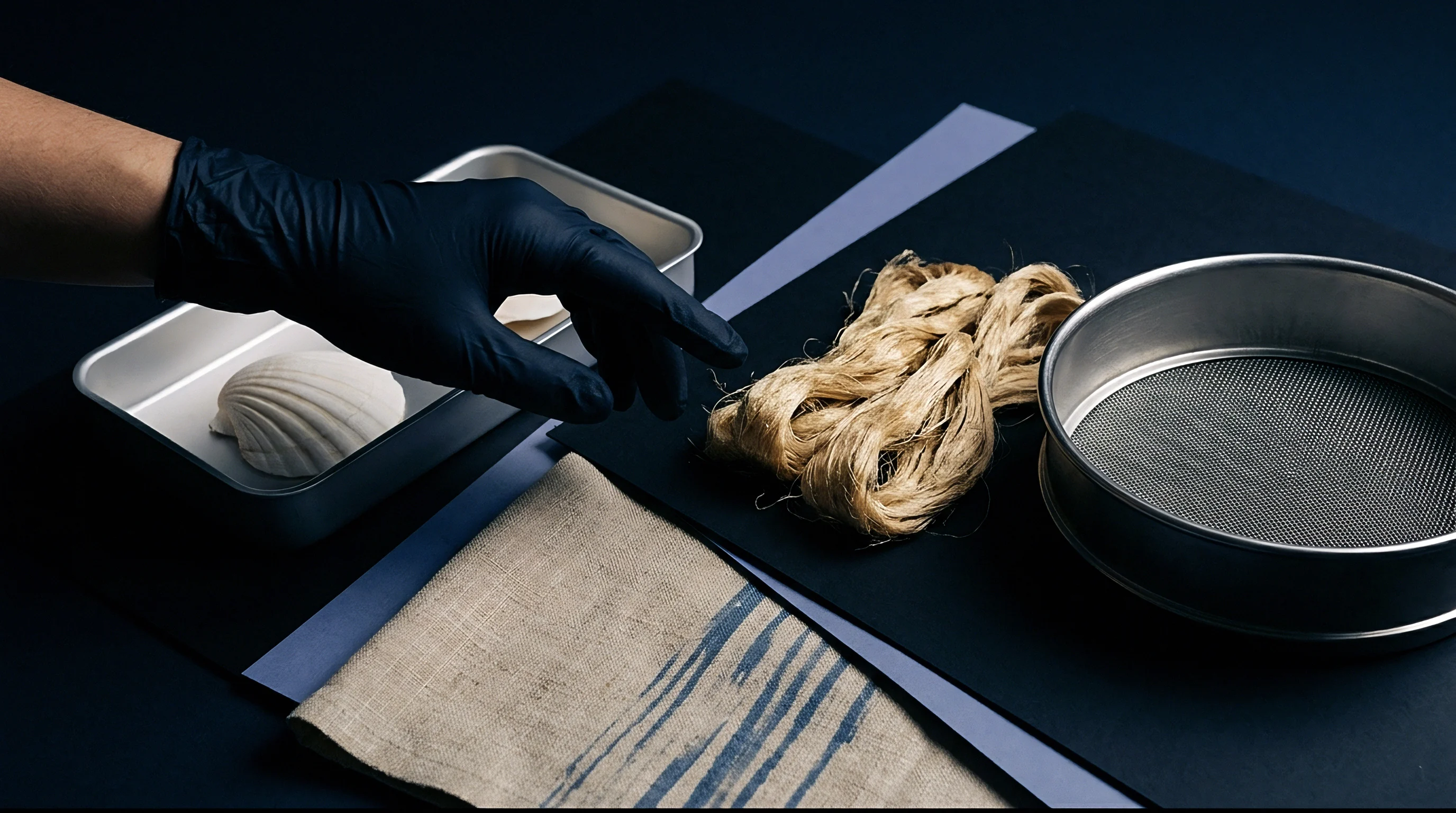
Alkaline Delignification and Acidified Chlorite Treatment
Sodium chlorite solutions buffered with glacial acetic acid solubilize residual aromatic polymers at elevated temperatures. The reaction progress manifests as a color change from yellow-brown raw fiber mass to clean white holocellulose pulp. Glacial acetic acid buffers solution.
Acidified chlorite oxidizes remaining lignin.
Organic extraction followed by sodium chlorite delignification reduces non-cellulosic background interference in spectrometry by ninety-eight percent.
Excessive chlorite exposure degrades the crystalline domains of cellulose through oxidization of hydroxyl groups at the C2, C3, and C6 positions. Maintaining solution temperature strictly within seventy to seventy-five degrees Celsius prevents unwanted depolymerization. The resulting holocellulose residue contains alpha-cellulose alongside residual hemicelluloses such as xylan and glucomannan.
Incomplete removal of pectin and xylan skews pyrolytic fragment ratios, leading directly to false species identification and erroneous blend ratio reports.
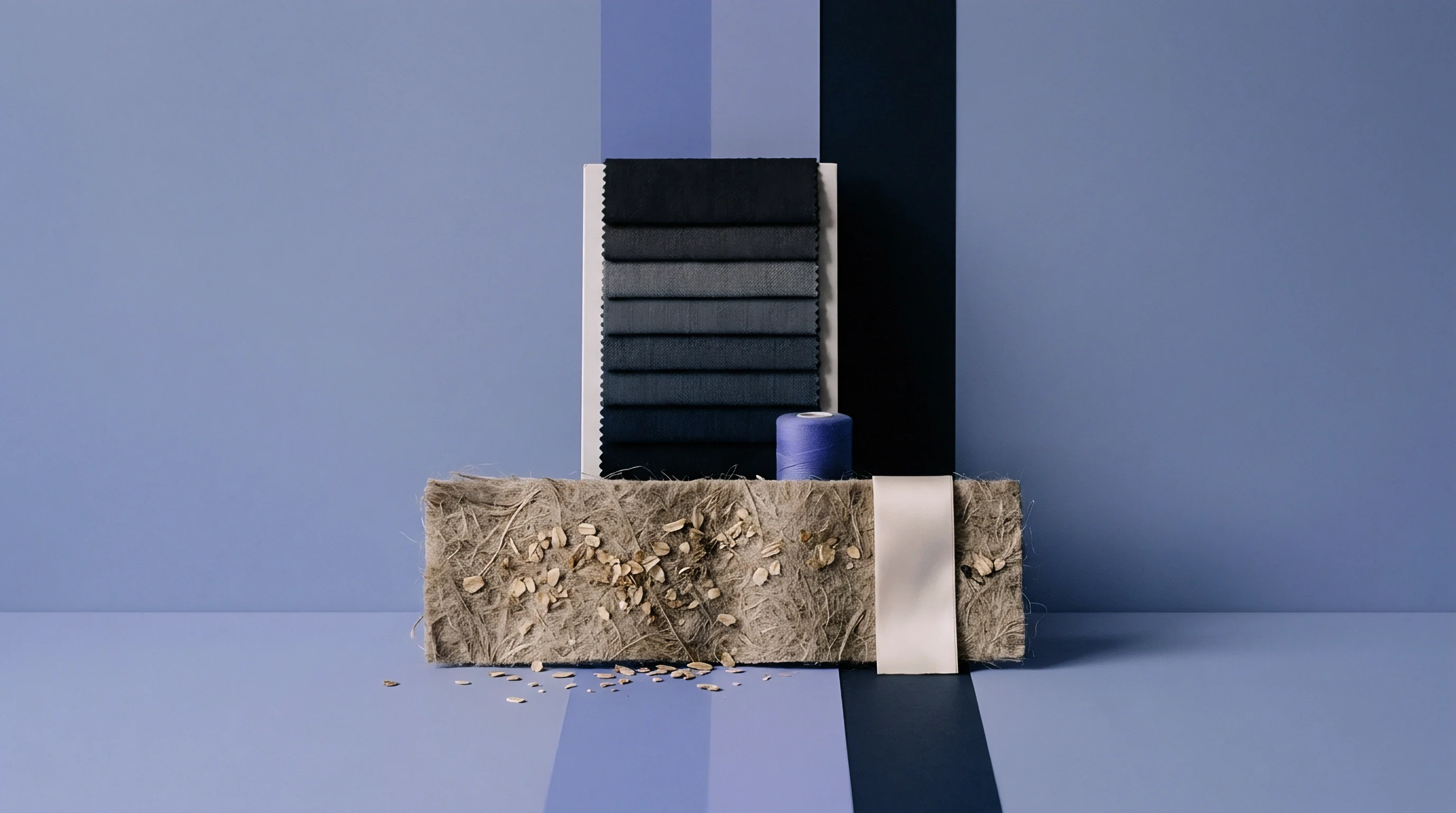

Pulp
Quantitative separation of structural carbohydrates relies on precise solubility differences in aqueous alkaline solutions. Alpha-cellulose represents the high molecular weight fraction insoluble in seventeen point five percent sodium hydroxide at twenty degrees Celsius. Beta-cellulose dissolves in alkali but precipitates upon acidification, whereas gamma-cellulose remains in solution regardless of pH adjustments.
Isolating the insoluble alpha fraction eliminates short-chain pentosans and hexosans that produce confounding mass-to-charge spectra in analytical equipment.
Sodium Hydroxide Fractional Separation Metrics
Aqueous sodium hydroxide at seventeen point five percent concentration by mass selectively dissolves short-chain polyoses. The holocellulose residue obtained from delignification undergoes alkaline steeping for forty-five minutes under constant mechanical stirring. Beta cellulose dissolves in alkali.
The high alkali concentration disrupts hydrogen bonding between hemicellulose and cellulose chains while leaving the highly crystalline alpha-cellulose skeleton intact.
Subsequent dilution with deionized water brings the sodium hydroxide concentration to eight point three percent. This dilution step prevents the re-adsorption of dissolved beta-cellulose onto the surface of insoluble alpha-cellulose fibers. The slurry undergoes vacuum filtration through a coarse glass frit funnel.
Cold water halts the reaction. Cold deionized water washes the alkaline cake until the filtrate achieves neutral pH.
- Alkali concentration temperature drift alters the solubility threshold of short-chain hemicellulose polymers.
- Incomplete acid neutralization leaves residual sodium acetate salts that create alkali metal adducts in mass spectra.
- Excessive chlorite exposure duration cleaves glycosidic bonds, reducing polymer length below analytical thresholds.
- Drying oven thermal oxidation converts hydroxyl groups into carbonyls, altering fragmentation ratios during analysis.
Final purification involves steeping the filtered cake in ten percent acetic acid solution for five minutes to neutralize trace sodium ions bound to carboxyl sites. Sodium cations form sodium adduct ions during laser desorption or pyrolysis ionization, causing molecular weight shifts in mass spectrometry peaks. Repeated washing with boiling deionized water removes residual acetic acid.
Drying the alpha-cellulose residue at 105 degrees Celsius to constant weight yields an analyte material free of non-glucan impurities.
Suppliers frequently claim that natural harvest variations explain abnormal alkali solubility ratios in delivered bast lots.


Pyrolysis
Thermal degradation under controlled oxygen-free conditions degrades polymer chains into characteristic volatile monomer subunits. Pyrolysis gas chromatography mass spectrometry decomposes isolated alpha-cellulose at temperatures between 500 and 600 degrees Celsius inside a quartz capillary tube flushed with inert helium gas. Thermal cleavage breaks the glycosidic linkages of the glucan backbone, yielding volatile compounds whose specific structural ratios act as molecular barcodes for original plant species.
Mass Spectrometry Ionization and Carbohydrate Fingerprinting
High-vacuum ion sources break down pyrolyzate products into predictable mass-to-charge fragments. Electron ionization at seventy electronvolts fragments primary volatile degradation products like levoglucosan, levoglucosenone, 1,6-anhydro-beta-D-glucofuranose, and furfural derivatives. Pure cellulose yields reliable spectra.
Helium serves as carrier gas. Ionization fragments molecular chains cleanly.
| Compound Name | Retention Time (min) | Quantifier Ion (m/z) | Qualifier Ions (m/z) | Species Diagnostic Utility |
|---|---|---|---|---|
| Levoglucosan | 12.4 | 60 | 73, 57, 98 | Base glucan intensity reference |
| Levoglucosenone | 8.7 | 68 | 96, 126, 53 | Crystalline-to-amorphous ratio index |
| Furfural | 4.2 | 96 | 95, 67, 39 | Pentosan residual tracer |
| Hydroxymethylfurfural | 10.1 | 126 | 109, 97, 69 | Hexosan pyrolysis signature |
| D-Allose pyrolyzate | 14.8 | 73 | 85, 103, 115 | Hardwood vs softwood pulp distinction |
How Does Alpha Cellulose Isolation Prevent Spectrometric Matrix Interference?
Removing non-cellulosic constituents eliminates competing fragmentation pathways during thermal decomposition. Raw bast fibers like flax, hemp, and ramie contain characteristic ratios of structural minerals and residual waxes that alter pyrolytic pathways. Sodium and potassium salts act as pyrolytic catalysts, lowering the decomposition temperature and favoring the formation of low-molecular-weight gases over diagnostic pyrolyzate anhydrosugars.
Matrix effects alter peak ratios.
Pyrolysis gas chromatography mass spectrometry achieves a signal to noise ratio above fifty to one when sample ash content remains under zero point zero five percent by weight.
Isolating pure alpha-cellulose standardizes the pyrolytic substrate. Matrix-assisted laser desorption/ionization mass spectrometry applied to enzymatic digests of isolated alpha-cellulose reveals distinct cellooligosaccharide distribution profiles. Digesting alpha-cellulose with cellobiohydrolase yields cellobiose and cellotriose units whose fragment patterns mirror the subtle differences in microfibril orientation between linen flax and industrial hemp fibers.
Clean spectrum baselines allow software algorithms to match sample fragmentation patterns against reference species libraries with high statistical confidence.


Isotope
Atomic weight variations within carbohydrate structures record environmental growth parameters. Stable Isotope Ratio Mass Spectrometry measures subtle variations in the natural abundance ratios of carbon-13 to carbon-12, oxygen-18 to oxygen-16, and deuterium to hydrogen incorporated into the cellulose structure during plant growth. Carbon isotopes indicate plant pathway.
Water vapor shifts oxygen ratios. Pure isolated alpha-cellulose eliminates variance introduced by non-structural plant components that exhibit different isotopic fractionation factors.

Stable Ratio Mass Spectrometry and Origin Tracking
Continuous flow conversion interfaces transfer elemental gas samples directly into magnetic sector analyzer collectors. Analyzing carbon-13 values distinguishes photosynthetic pathways. Plant species utilizing C3 photosynthetic pathways like flax, hemp, ramie, and cotton exhibit delta carbon-13 values ranging between -23 and -30 per mil relative to the Vienna Pee Dee Belemnite standard.
Conversely, C4 photosynthetic species like corn or sugarcane show values between -10 and -14 per mil.
Oxygen-18 isotope measurements reflect geographic water sources absorbed during growth. Oxygen-18 abundance in stem cellulose correlates directly with local precipitation and evapotranspiration rates at the geographic point of origin. Oxygen isotope analysis requires complete isolation of alpha-cellulose because hemicellulose and lignin exhibit distinct, uncoordinated oxygen isotope fractionation factors that obscure geographic regionality.
- Weigh precise two milligram aliquots of isolated alpha-cellulose into tin capsules for carbon analysis or silver capsules for oxygen pyrolysis.
- Perform nitration using nitric acid and acetic anhydride to convert hydroxyl groups into nitro esters, freezing exchangeable hydrogen positions.
- Load capsules into an automated zero-blank elemental analyzer interfaced with a continuous-flow isotope ratio mass spectrometer.
- Calibrate raw isotope ratio measurements against certified international reference materials IAEA-CH-6 and USGS40.
- Calculate delta values relative to Vienna Pee Dee Belemnite for carbon and Vienna Standard Mean Ocean Water for oxygen.
Quantifying isotopic ratios requires eliminating exchangeable hydroxyl hydrogen atoms. Cellulose contains three hydroxyl groups per anhydroglucose unit that exchange hydrogen atoms with ambient atmospheric moisture. Converting isolated alpha-cellulose into cellulose nitrate using an ice-cold mixture of nitric acid and phosphorus pentoxide replaces exchangeable hydroxyl hydrogens with non-exchangeable nitro groups.
Hydrogen isotope analysis on cellulose nitrate yields true isotopic signatures of biosynthesis water.
Standard test method ISO 20814 specifies isotopic analysis tolerances within zero point two per mil for carbon thirteen to prevent false origin claims in commercial trade.
Consider an audit scenario testing a declared European flax yarn batch suspected of containing cheaper imported ramie or Asian hemp. Authentic European flax exhibits delta carbon-13 values centered at -27.2 per mil and delta oxygen-18 values centered at +28.5 per mil. If the isolated alpha-cellulose returns a delta carbon-13 value of -24.8 per mil and a delta oxygen-18 value of +22.1 per mil, the isotopic signature deviates significantly from European climatic reference limits.
The degree to which regional soil water fluctuations alter secondary hydroxyl oxygen ratios across consecutive growth years remains an open analytical question.

Dispute
Commercial mislabeling of bast fibers creates legal liabilities across international supply chains. Substituting flax with ramie, hemp, or regenerated viscose allows unscrupulous suppliers to reduce raw material costs while passing products off as premium linen. Fiber origin dictates customs duty.
Falsified invoices trigger customs audit. Standard microscopic identification methods fail to differentiate heavily bleached or chemically processed fibers where morphological wall features like cross-markings and lumen diameters have been destroyed.

Customs Classification and Tariff Misdeclaration
Harmonized System codes distinguish raw vegetable fibers by structural plant family. True flax falls under heading 5301, true hemp under heading 5302, and ramie under heading 5305. Preferential trade agreements grant zero-duty entry to specific fiber species originating from compliant member countries.
Mislabeling a shipment of ramie as flax to exploit lower tariff rates constitutes custom fraud.
| Harmonized System Code | Declared Fiber Description | Standard Most Favored Nation Duty | Preferential Origin Duty | Misdeclaration Risk Index |
|---|---|---|---|---|
| HS 5301.10 | Flax, raw or washed | 0.0 percent | 0.0 percent | Low |
| HS 5301.29 | Flax, broken, scutched, or combed | 1.5 percent | 0.0 percent | Moderate |
| HS 5302.10 | True hemp, raw or retted | 4.7 percent | 0.0 percent | High |
| HS 5305.00 | Ramie and other vegetable fibers | 3.2 percent | 0.0 percent | High |
| HS 5504.10 | Viscose rayon staple fibers | 4.3 percent | 0.0 percent | Critical |
Customs inspectors retain sealed samples. ISO/IEC 17025 accredited laboratories perform mass spectrometry species verification following alpha-cellulose isolation protocols. The mass spectrometry test dossier provides defensible chemical proof required to uphold seizure orders or assess punitive customs fines.
- Accredited sample custody logging ensures legal defensibility when test results contradict commercial invoices.
- Dual laboratory cross verification mitigates analytical bias in high penalty tariff classifications.
- Statistical confidence interval calculation establishes whether species percentage variance exceeds regulatory limits.
- Archive sample retention protocols preserve intact fiber lots for judicial retesting during commercial arbitrations.
Custom authorities reclassify imported cellulosic yarns based on dominant fiber weight whenever secondary species components exceed two percent by mass.
Non-compliant shipments face immediate seizure. Landed cost increases under penalties. Standard commercial purchase clause ISO 1833-1 Appendix B establishes that laboratory species identification overrides bill-of-lading descriptions for all customs valuation disputes.
Recovery
Financial restitution for mislabeled raw materials relies on contractually defined laboratory testing thresholds. Sourcing contracts that incorporate chemical testing protocols grant buyers explicit rights to reject non-conforming shipments and claim reimbursement for testing, freight, and production downtime expenses. Quantifying species proportions via alpha-cellulose mass spectrometry converts subjective handfeel complaints into enforceable legal financial claims.

Financial Exposure and Landed Cost Adjustments
Inaccurate fiber declaration alters the total duty burden upon import clearance. Landed cost models must account for potential tariff adjustments and penal fees triggered by customs audits. When mass spectrometry reveals a ten percent ramie adulteration in a shipment billed as pure linen, customs enforcement agencies back-charge the importer for shorted duty rates plus interest.
Contractual indemnity clauses protect apparel brands from supplier misrepresentation. Incorporating standardized sampling and spectrometry validation steps into purchase orders establishes unambiguous ground rules. Draft agreements specify that failure to meet alpha-cellulose analytical purity standards triggers full lot replacement at the seller expense.
Drafting commercial contracts with explicit retesting provisions protects downstream buyers against unrecoverable landed duty adjustments.