Non Fluorinated Water Repellent Application Methods in Textile Finishing
Non-fluorinated water repellents achieve surface tensions of 24-28 mN/m through precise acid bath control, surfactant removal, and thermal activation.

Liquor
Non-fluorinated water repellents (C0 finishes) replace per- and polyfluoroalkyl substances using hydrocarbon, silicone, or wax chemistry to lower fiber surface energy. While standard fluorinated finishes drop surface tension as low as 15 mN/m to repel both water and oil, non-fluorinated alternatives reach only 24 to 28 mN/m. This effectively repels water, but leaves fabric vulnerable to oil and hydrocarbon stains.
Choosing the right C0 finish means matching the polymer base to the fiber blend, fabric construction, and laundering requirements.
Alkyl-dendrimer chemistries rely on hyperbranched macromolecules with long-chain hydrocarbon tails. Applied to synthetics like polyester or polyamide, these dendrimers self-organize as they dry, turning their hydrophobic methyl groups outward into a dense crystalline matrix. Modified polyurethane and polyacrylate dispersions use hydrophobic side chains that crosslink under heat.
These backbones offer strong resistance to abrasion ~ common in technical outerwear ~ though high dry-add-on rates can stiffen the hand feel.
| Chemistry Class | Primary Hydrophobic Mechanism | Target Substrates | Standard Dry Add-On Rate | Restricted Residue Risk |
|---|---|---|---|---|
| Hyperbranched Alkyl-Dendrimers | Ordered hydrophobic methyl group orientation | Polyester, Polyamide blends | 1.5% to 3.0% w/w | Alkylphenol ethoxylates in raw emulsifiers |
| Polysiloxanes (Reactive Silicones) | Flexible siloxane backbone with methyl side chains | Cellulosic fibers, Synthetics | 0.8% to 2.0% w/w | Cyclic siloxanes D4, D5, D6 above 0.1% w/w limit |
| Paraffin Wax with Metal Salts | Crystalline wax film stabilized by zirconium or aluminum | Heavy Cotton, Canvas, Workwear | 3.0% to 5.0% w/w | Extractable heavy metal content in waste bath |
| Polyurethane Hydrophobic Hybrids | Film-forming polyurethane with hydrophobic side-chains | Nylon, Polyester, Blends | 2.0% to 4.0% w/w | Free blocked polyisocyanates and organotins |
Polysiloxane emulsions exploit the flexible silicon-oxygen backbone, letting methyl groups rotate freely toward the surface. Paired with organometallic catalysts, reactive siloxanes bond covalently to hydroxyl groups on cellulosic fibers. This yields a soft hand without blocking breathability, though silicone finishes lose durability in home laundering unless tied down with secondary crosslinkers.
Paraffin wax emulsions with metal salts like zirconium acetate offer a traditional, low-cost option for heavy workwear by depositing a hydrophobic layer over coarse yarns, but they break down in dry cleaning solvents and melt under hot pressing.
Siloxanes generate volatile cyclic residues during thermal fixation.
Managing restricted substances changes when switching from fluorinated chemistry. While C0 formulations eliminate perfluorooctanoic acid and perfluorooctane sulfonate risks, they trigger different compliance checks under Zero Discharge of Hazardous Chemicals and OEKO-TEX Standard 100 criteria. Silicone formulations require gas chromatography-mass spectrometry testing to keep cyclic siloxanes (D4, D5, and D6) under the aggregate limit of 1,000 ppm (0.1% by weight).
Emulsifiers for waxes and dendrimers must also be screened to confirm they contain no alkylphenol ethoxylates. Performance degradation in non-fluorinated finishes often stems from improper mill bath preparation rather than poor active ingredient quality within the emulsion.
Foam
Applying non-fluorinated repellents effectively requires tight control over bath preparation, pH, shear stability, and application dynamics. Foulard padding remains the standard approach for continuous finishing, operating at 20 to 80 meters per minute. The liquor requires an acidic pH between 4.5 and 5.5, adjusted with acetic or formic acid.
An alkaline bath destabilizes C0 polymer emulsions, causing premature coagulation, roller wrap, and spotty deposition across the fabric width as wet pickup drives migration.
High shear inside pad nip rolls can easily break unstable emulsions. To prevent this, C0 formulations use non-ionic surfactant packages that withstand continuous pressure without leaving hydrophilic residues on the dried fiber. Wet-on-dry padding for lightweight synthetics typically runs at 40% to 60% wet pick-up, whereas heavy cellulosics require 60% to 80% to ensure the liquor penetrates dense yarn cores.
- Fill the preparation tank with softened water at a conductivity level below 50 microsiemens per centimeter and adjust the temperature to 20°C.
- Add acetic acid slowly until the water reaches a stable pH of 4.8 before introducing any active finishing chemicals.
- Douse non-foaming wetting agents into the bath to accelerate fiber penetration without generating macro-foam during agitation.
- Dilute the concentrated C0 repellent emulsion with cold water at a one-to-three ratio prior to dosing into the main preparation tank.
- Mix the bath under low-shear mechanical stirring for ten minutes to establish uniform dispersion without stripping protective surfactants.
- Pump the finishing liquor into the pad trough continuously, maintaining liquor level controls to preserve a bath turnover time of under fifteen minutes.
Foam application offers an alternative that cuts thermal drying costs by lowering wet pickup to 15% to 30%. Concentrate liquid combines with blowing agents in a generator, mixing compressed air into the liquor at expansion ratios from 5:1 to 15:1. Parabolic applicator heads then press the dynamic foam into the moving fabric surface.
By keeping the repellent on surface fibers rather than driving it into the yarn core, foam delivery reduces chemical use while preserving the natural hand of lightweight goods.
Wetting agents must fully evaporate during stenter drying to prevent residual surface tension decay.
Spray finishing delivers repellents through high-pressure rotor or ultrasonic nozzles above and below the fabric web. Because spray systems exert no contact pressure, they work well for pile fabrics, velours, and elastic weaves that distort in pad rolls. Even coverage requires holding liquid viscosity between 10 and 35 millipascal-seconds and maintaining a consistent droplet spectrum.
Reclamation systems must collect and filter excess liquor to prevent runoff and maintain bath ratios; inadequate filtration quickly clogs nozzles and streaks fabric rolls.

Thermal
Thermal activation converts liquid C0 dispersions into a continuous hydrophobic surface matrix. Stenter frames handle this in two distinct phases: drying off water, then curing the crosslinked polymer. If the fabric enters the curing zone before water fully evaporates, steam bubbles form micro-porosities that degrade repellency, while thermal energy aligns the polymer chains.
How Does Surfactant Carryover Interfere with Hydrophobic Film Alignment?
Residual surfactants from scouring, dyeing, or emulsification interfere with C0 film assembly. As water evaporates in the initial stenter zones at 100°C to 120°C, hydrophilic surfactant molecules migrate alongside the polymers to the interface. If they survive curing, their polar heads remain oriented outward and pull moisture into the weave.
Curing at higher temperatures must decompose or volatilize these residual surfactants, breaking down their tails so hydrophobic methyl groups dominate the fiber surface.
| Substrate Composition | Drying Zone Temp (°C) | Curing Zone Temp (°C) | Dwell Time (Seconds) | Crosslinker Addition (% w/w) | Initial Spray Rating (ISO 4920) |
|---|---|---|---|---|---|
| 100% Woven Polyamide 6.6 | 110 – 120 | 160 – 170 | 45 – 60 | 1.0% Isocyanate | 100 (Grade 5) |
| 100% Recycled Polyester | 115 – 125 | 165 – 175 | 45 – 60 | 1.5% Blocked Isocyanate | 100 (Grade 5) |
| 98% Cotton / 2% Elastane | 100 – 110 | 150 – 160 | 60 – 90 | 2.0% Melamine derivative | 90 (Grade 4) |
| Polyester / Cotton 65/35 | 105 – 115 | 160 – 170 | 60 – 75 | 1.5% Polycarbamate | 90 – 100 |
Film formation depends on reaching the glass transition temperature of the specific resin. Paraffin finishes cure between 130°C and 140°C to spread over fiber scales. Hyperbranched dendrimers and modified polyurethanes need 160°C to 170°C for 45 to 90 seconds.
Exceeding 175°C on sensitive synthetics causes yellowing, loss of tensile strength, and elastane degradation, while dwell time determines final crosslink density.
Secondary crosslinking agents improve wash durability by anchoring polymer chains to reactive fiber sites. Isocyanates react with amino groups on nylon or hydroxyls on cellulose to form insoluble networks. Melamine and polycarbamate crosslinkers offer strong heat resistance, though poorly controlled reactions can off-gas trace formaldehyde.
Imidazole-blocked isocyanates unblock at 140°C, curing at lower temperatures to protect sensitive synthetics while anchoring the finish. Over-curing, however, creates a brittle resin that cuts tear strength and causes premature flexing failure.


Substrate
Fabric preparation dictates final water repellency more than chemical selection. Because C0 finishes have higher surface tension than fluorinated alternatives, surface contamination easily breaks the finish film. Residual sizing, spinning oils, alkali carryover, and dyeing auxiliaries all disrupt film formation.
Scouring must reduce residual oils and synthetic lubricants below 0.1% by weight under Soxhlet ether extraction testing.
Substrate Preparation Variables Impacting C0 Repellent Performance
Alkali carryover from mercerizing or bleaching neutralizes the acidic bath and alters fiber surface charge. Cotton requires thorough rinsing and neutralization to stabilize surface pH between 5.5 and 6.5 prior to finishing. Any remaining alkali precipitates active ingredients, producing splotchy repellency and poor spray scores.
Dynamic wetting agents from dyeing must be rinsed out completely with hot water. Anionic levelling agents remaining on the fabric react with cationic C0 emulsions, breaking the finish bath during padding. Continuous finishing lines often monitor absorbency with online capillary rise tests or a five-second water drop absorption test to verify uniform liquor pickup across the web.
Fiber shape and surface texture alter contact angles along Wenzel and Cassie-Baxter models. Dense filament weaves with smooth, flat yarns encourage uniform film formation, reaching high initial spray ratings with minimal pick-up. Coarse staple yarns with protruding fibers interrupt the film and require higher chemical loads.
Brushed or micro-sanded fabrics create surface anchors that trap water, dropping spray ratings by up to twenty points compared to smooth goods. Calendering before chemical application flattens surface fuzz and can reduce required finish dosing by up to fifteen percent.
Residual spinning oils exceeding 0.2% by weight cause instant failure under rain shower testing.
Outerwear specifications frequently tie mills to strict cleanliness thresholds. A standard purchase order clause requires any fabric lot with extractable organic impurities over 0.15% or a surface pH outside 5.5 to 6.5 to be re-scoured and neutralized at the mill’s expense before C0 application.

Margin
Evaluating non-fluorinated finishes requires checking initial performance along with durability against washing, dry cleaning, and abrasion. Standard spray tests under ISO 4920 and AATCC 22 measure surface wetting under a controlled spray, rating fabrics from 50 (complete wetting) to 100 (no wetting or absorption). While useful for static hydrophobicity, these tests do not predict resistance to kinetic droplet impact or continuous hydrostatic pressure.
Hydrostatic and Dynamic Performance Standards
Dynamic rain tests like ISO 9865 (Bundesmann shower test) and AATCC 35 simulate real-world rainfall. The Bundesmann test exposes swatches to a 200 mL/min shower while wipers rub the underside at 150 rpm, measuring water penetration volume and percentage weight gain. C0 finishes that score a top Grade 5 on spray tests often fail Bundesmann testing if the liquor failed to penetrate the yarn core.
ISO 811 hydrostatic head testing measures the water pressure required to force liquid through fabric. Applied to open wovens, C0 chemistry gives no hydrostatic gain because it cannot bridge yarn voids. Ratings over 1,500 mm water column require combining non-fluorinated finishes with microporous membranes, coatings, or ultra-dense microfilament constructions.
| Test Method | Primary Measurement Parameter | Pass Threshold (Performance Grade) | Laundering Durability Check (ISO 6330) |
|---|---|---|---|
| ISO 4920 / AATCC 22 | Surface wetting pattern against visual chart | Grade 100 Initial / Grade 80 Post-5 Laundry | 5 to 20 Cycles at 40°C with line dry |
| ISO 9865 (Bundesmann) | Water absorption % and penetration volume (mL) | Absorption < 8%, Penetration < 1 mL | 10 Cycles at 40°C with tumble dry activation |
| AATCC 35 (Rain Test) | Mass of water absorbed by blotter paper (g) | Blotter mass gain < 1.0 g at 2-minute shower | 5 Cycles at 40°C with hot pressing |
| ISO 811 (Hydrostatic Head) | Water pressure resistance in millimeters H2O | Substrate dependent (1,500 mm+ for membranes) | 10 Cycles at 40°C prior to testing |
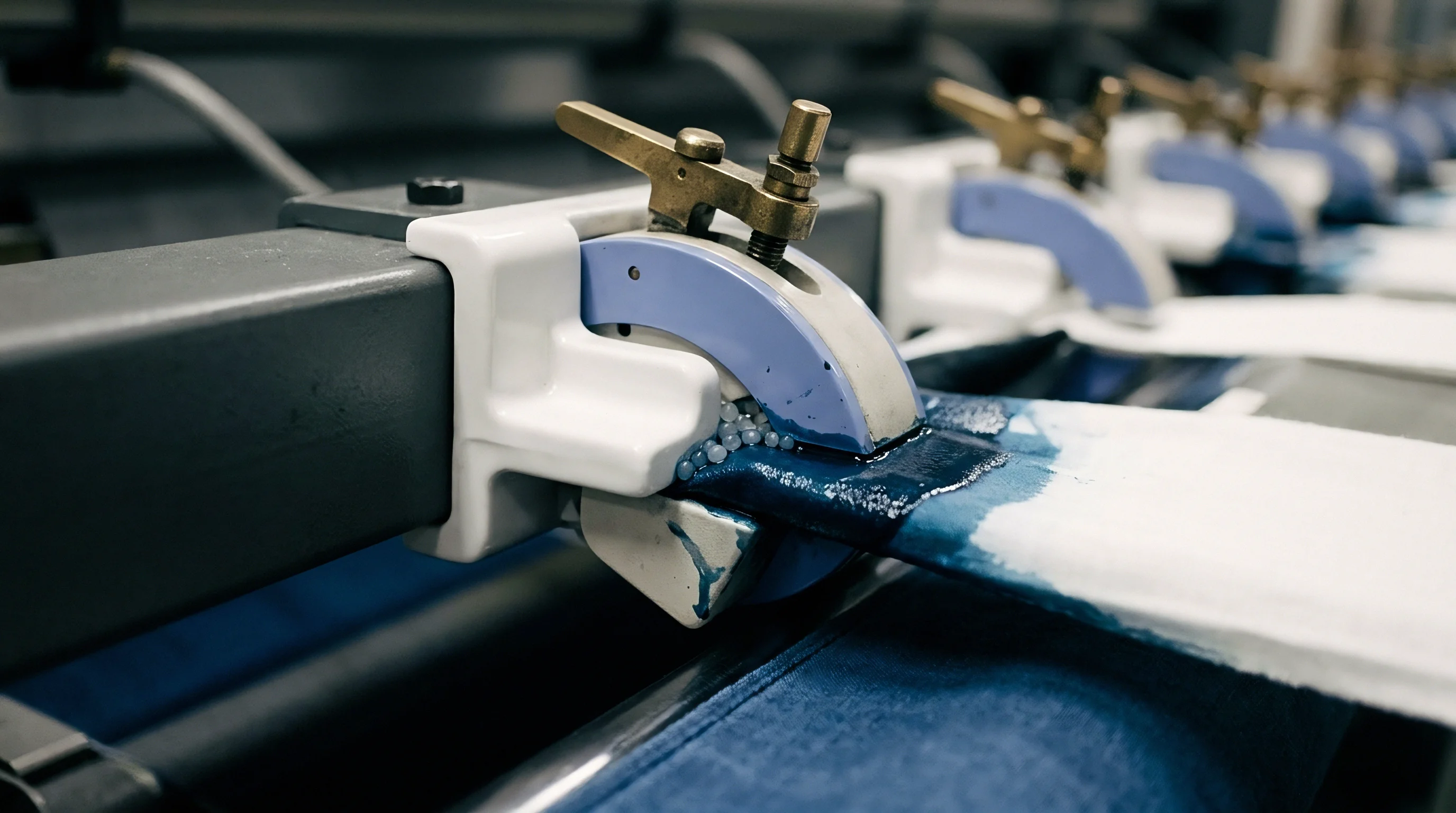
Durability Degradation and Commercial Retest Arithmetic
Non-fluorinated finishes degrade faster in home laundering than older fluorinated types. Detergent surfactants cling to fiber surfaces and mask hydrophobic groups. ISO 6330 protocols require a 40°C wash followed by iron or tumble-dry heat, which realigns disorganized methyl side-chains after washing.
Without heat activation, C0 spray ratings drop sharply ~ frequently falling from Grade 100 down to Grade 70 after just five cycles.
Contracts with finish guarantees need realistic testing allowances and defined retest terms. For example, consider a 50,000-meter lot of woven nylon outerwear specified at Grade 90 after 10 ISO 6330 (Procedure 4N) washes. Spray testing carries a typical inter-laboratory variance of +/- 5 points.
If a buyer’s lab tests three swatches and returns 80, 80, and 90, the average drops to 83.3, triggering a potential lot rejection.
A structured retest clause manages this risk. Standard terms state that if an initial failure falls within 10 points of spec, six fresh swatches are drawn from three rolls (beginning, middle, and end of run). An independent ISO 17025 laboratory retests them using reference detergent free of optical brighteners or softeners.
If five of the six specimens meet or exceed Grade 90, the lot clears for shipment, avoiding detention charges or re-finishing costs.
Commercial exposure also extends to maritime transit. Extended humidity inside ocean containers shifts the surface alignment of paraffin and silicone finishes, temporarily dampening initial spray performance on arrival. Whether destination customs testing should mandate a forty-eight-hour thermal conditioning period at 20°C and 65% relative humidity before testing remains a point of contention between brand compliance teams and freight forwarders.