Split Sample Protocols and Measurement Uncertainty in Textile Quality Disputes
Split sample protocols pair physical swatch division with ISO 10576-1 guardbands to prevent normal laboratory uncertainty from triggering contract disputes.


Cut
Disputes over physical textile performance or chemical residue usually begin at the cutting table. When a brand laboratory finds ten milligrams per kilogram of free formaldehyde above an agreed regulatory threshold, the mill almost always demands a retest. Sending an untested remnant from an open roll guarantees disagreement.
Fabrics vary structurally across roll length, from edge to center, and between separate dye lots. Without an agreed method for dividing swatches into identical, traceable portions, subsequent laboratory evaluations test different physical samples rather than verifying whether the lab results can be reproduced.
A reliable sampling procedure extracts contiguous swatches from the center of a roll, at least one meter inward from the end and ten centimeters clear of the selvage. Technicians divide this representative sample into three identical subsamples: one for the buyer, one for the seller, and a sealed reserve for an independent reference laboratory. Splitting the fabric requires strict orientation control.
- Specimen extraction isolates an 800-millimeter full-width swatch taken two meters inward from the roll head to avoid transport handling contamination, keeping surface soil from biasing trace chemical assays.
- Longitudinal subdivision cleaves the extracted swatch into three parallel warp-direction segments of equal width, ensuring each segment contains identical yarn populations across the fill direction.
- Aqueous isolation encloses the reserve portion inside a four-mil thick multi-layer fluoropolymer barrier film within ten minutes of cutting to prevent atmospheric moisture pickup and volatile compound loss.
- Tamper evidence applies numbered, barcoded security tape across all packaging seams, signed by representatives from both parties. Damaged security tape invalidates the reserve swatch before laboratory dispatch.
Moisture shifts specimen mass directly. Standard conditioning under ISO 139 requires twenty degrees Celsius and sixty-five percent relative humidity for four hours before weighing. Skipping this step introduces a five percent mass error on hygroscopic cellulosic fibers.
Polyester absorbs little water, yet finish oils can still migrate under uneven heat. Chemical testing for extractable heavy metals or per- and polyfluoroalkyl substances demands shears cleaned with acetone between every pass. Uncontrolled tension during batch winding also creates artificial density variations across the width that skew subsequent test cuts.

Dispersion
Analytical numbers look deceptively absolute on a test certificate. An arylamine result of twenty-two parts per million appears to breach a twenty-part limit, but standard analytical methods carry inherent measurement dispersion from instrument calibration, operator dilution steps, and reagent variations. ISO/IEC 17025 accredited laboratories calculate expanded measurement uncertainty to express the band within which the true value resides at a ninety-five percent statistical confidence level.
Ignoring this dispersion turns normal laboratory scatter into contractual breaches.
Chromatographic and tensile evaluations carry distinct dispersion profiles. Physical tensile testing under ISO 13934-1 exhibits typical inter-laboratory variation coefficients near six percent, driven by clamp friction and yarn tension mechanics. Chemical assays like gas chromatography-mass spectrometry for banned azo dyes under EN ISO 14362-1 present relative expanded uncertainties between twelve and twenty percent.
When a laboratory reports a test near twenty milligrams per kilogram, the true concentration sits anywhere between sixteen and twenty-four milligrams per kilogram.
Gas chromatography coupled with mass spectrometry yields an expanded measurement uncertainty of twelve percent at the twenty milligram per kilogram arylamine threshold.
Even when a calibration record shows zero drift, repeatability only reflects intra-laboratory variance under identical conditions over short intervals. Reproducibility reflects inter-laboratory variance across different operators, reagents, and equipment. Contract specifications frequently confuse these concepts, setting commercial rejection thresholds narrower than the reproducibility limits of the reference standard itself.
| Test Parameter | Reference Standard | Target Range | Expanded Uncertainty | Primary Source of Lab Variance |
|---|---|---|---|---|
| Cleavable Arylamines | EN ISO 14362-1 | 20 to 30 mg/kg | ±16 percent | Hydrosulfite reduction efficiency |
| Free Formaldehyde | ISO 14184-1 | 16 to 75 mg/kg | ±14 percent | Water extraction temperature |
| Tensile Breaking Force | ISO 13934-1 | 400 to 1200 N | ±5.5 percent | Jaw face slippage and clamp pressure |
| Aqueous Extract pH | ISO 3071 | 4.0 to 9.0 units | ±0.25 pH units | Electrode drift and water purity |
| Data reflects inter-laboratory reproducibility studies published in standard method precision annexes at k=2 coverage. | ||||
Systematic procedural errors magnify normal statistical scatter.
- Thermal desorption variance occurs when conditioning ovens fluctuate beyond the two-degree limit specified in dry heat test procedures. Uneven chamber airflow produces disparate shrinkage measurements on adjacent specimens.
- Solvent grade purity shifts baseline chromatogram noise during gas chromatography quantification of alkylphenol ethoxylates. Low-purity solvents obscure low-concentration target peaks.
- Jaw face slippage alters elongation curves during tensile pulling tests on synthetic plain weaves. Smooth rubber clamps allow specimen creep that reads falsely as yarn elasticity.
Overlooking analytical uncertainty leads buyers into groundless rejections, generating storage surcharges and unrecoverable freight demurrage at port terminals.

Guardband
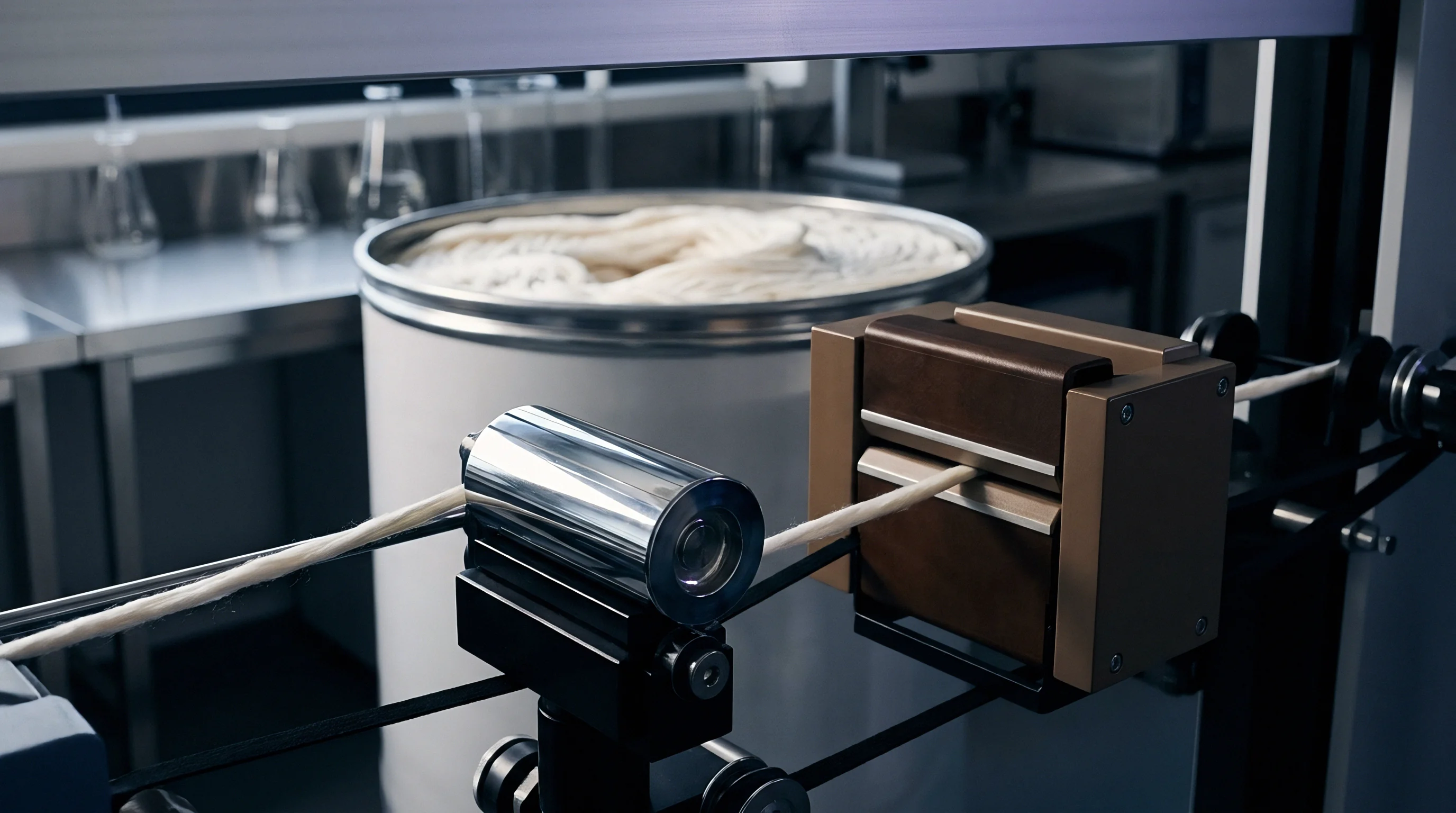
Decision rules determine which party bears the financial burden of analytical dispersion. ISO 10576-1 establishes statistical criteria for verifying conformance with specifications by incorporating expanded uncertainty directly into the acceptance zone. A simple acceptance rule accepts any test result below the specification limit, leaving the buyer exposed to false acceptances when measurement dispersion overlaps the boundary.
A guarded acceptance rule lowers the acceptance threshold by the expanded uncertainty value, transferring false acceptance risk away from the buyer.
Assume an export purchase order covers 50,000 meters of cotton twill. The contract caps free formaldehyde at seventy-five milligrams per kilogram, following OEKO-TEX Standard 100 Class II garments in direct contact with skin. The testing laboratory reports an expanded measurement uncertainty of fourteen percent at this threshold, establishing an absolute uncertainty band of 10.5 milligrams per kilogram.
Under a guarded acceptance rule, the effective acceptance limit drops to 64.5 milligrams per kilogram. A mill test reporting seventy-one milligrams per kilogram satisfies simple acceptance but fails guarded compliance.
Can Shared Guardbands Prevent Retest Gridlock?
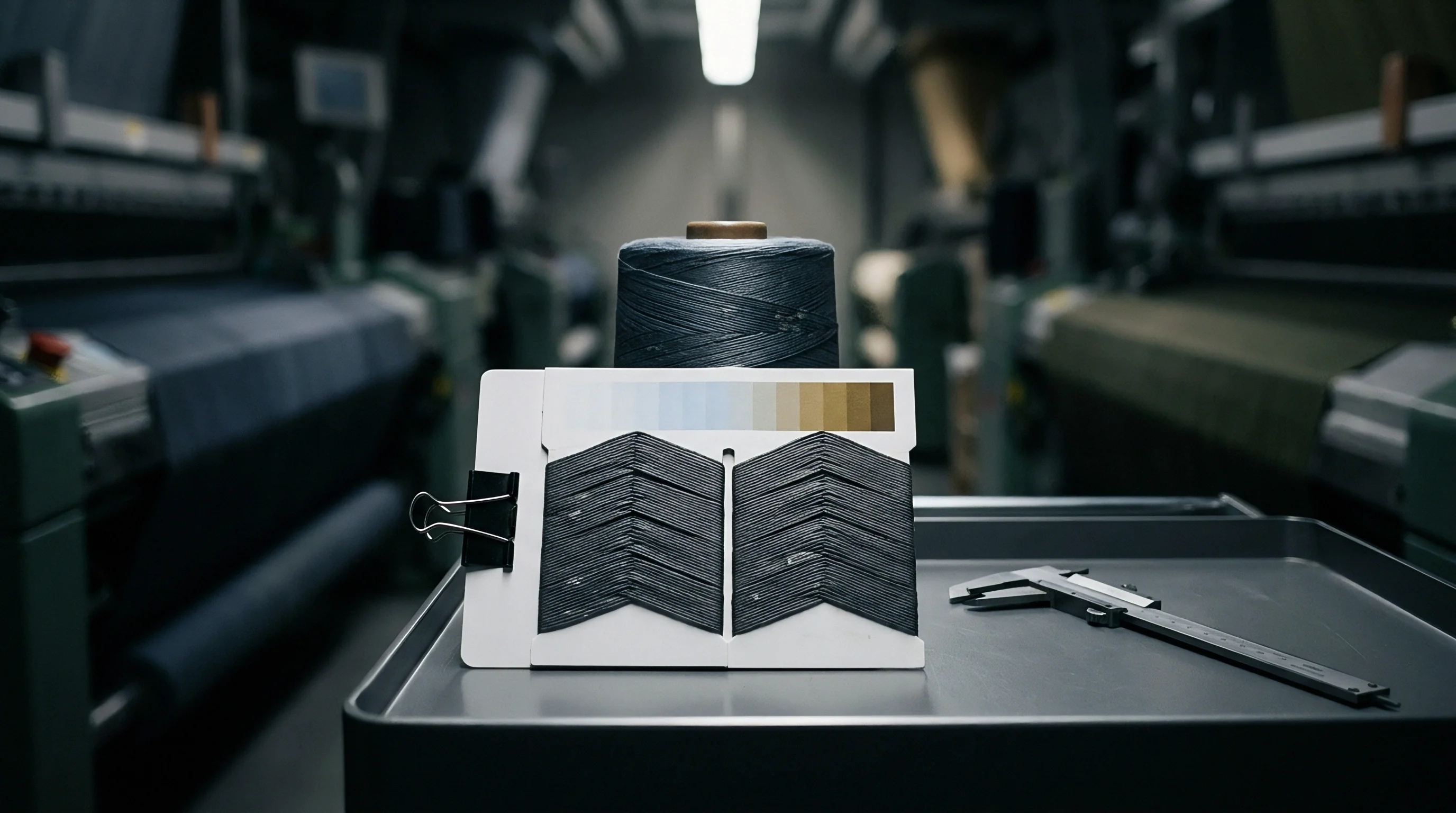
Mutual contracts often allocate risk through shared guardbands. Binary pass-fail systems break down when results fall into the indeterminate region between the guarded threshold and the upper specification limit. ILAC G8 outlines four decision options: simple acceptance, guarded acceptance, guarded rejection, and shared risk.
Under shared risk, buyer and vendor accept that measured results within the uncertainty band do not justify unilateral cancellation.
- Specification boundary definition establishes upper and lower tolerance limits with explicit measurement units. Incomplete boundary parameters leave testing houses free to select differing precision levels.
- Acceptance decision rule selection identifies whether ILAC G8 binary or non-binary criteria govern borderline findings, eliminating post-testing arguments regarding statistical confidence levels.
- Retest qualification criteria dictate minimum numerical variances between primary tests before secondary verification proceeds. Trivial differences inside repeatability parameters receive automatic dismissal.
- Dispute expense allocation assigns lab invoices directly to the losing party based on referee laboratory findings. Clear cost liability curbs frivolous testing requests during delivery crunches.
Adopting ASTM D4849 commercial tolerance terms shifts the burden of freight charges to the mill whenever secondary test deviations remain inside normal instrument scatter.
Centuries ago, medieval mint wardens applied a physical tolerance band called the Remedy to gold coinage during the Trial of the Pyx, recognizing that human metallurgy could never strike coins to mathematical perfection without paralyzing state commerce. Modern textile converters face the same reality when assessing dyestuff concentrations. Incorporating ISO 10576-1 decision rules into supply agreements assigns risk clearly, requiring proof of conformance beyond the expanded measurement uncertainty before clearing lots for cutting.


Umpire
Third-party arbitration resolves testing contradictions between buyer and mill laboratories. When the buyer tests sixty newtons of tear strength on a nylon ripstop against a contract requirement of sixty-five newtons, and the mill reports sixty-eight newtons on its internal bench, neither side yields. The preserved split specimen becomes the sole vehicle for contract adjudication.
The retained third portion travels under unbroken chain-of-custody seals to an agreed referee laboratory holding specific ISO/IEC 17025 accreditation for the disputed test parameter.
Retesting consumes twelve working days. The umpire laboratory tests the sealed reserve sample under identical atmospheric conditioning. Technical agreements must declare whether the umpire result supersedes all previous data or merges into a pooled mean.
In high-stakes transactions, averaging conflicting results creates mathematical absurdity by blending flawed methodology with rigorous testing.
Specimens sealed in barrier foil preserve chemical volatile levels while unprotected swatches drift during parcel shipment.

Whose Laboratory Holds Precedence in Settlement?
Contract wording decides technical precedence. If the buyer drafts an unyielding buyer-lab-governs clause, the mill loses all recourse regardless of technical merit. Balanced supply contracts assign precedence to the accredited referee laboratory whose finding serves as definitive commercial proof.
| Laboratory A Result | Laboratory B Result | Specification Limit | Simple Acceptance Gate | Guardbanded Gate (k=2) |
|---|---|---|---|---|
| 72.0 mg/kg | 78.0 mg/kg | 75.0 mg/kg Max | Dispute Triggered | Conditional Pass Lab A, Fail Lab B |
| 61.0 mg/kg | 63.5 mg/kg | 75.0 mg/kg Max | Accepted Cleanly | Accepted Cleanly Both Labs |
| 68.5 mg/kg | 74.0 mg/kg | 75.0 mg/kg Max | Accepted Cleanly | Indeterminate Result Both Labs |
| 76.0 mg/kg | 81.5 mg/kg | 75.0 mg/kg Max | Rejected Cleanly | Rejected Cleanly Both Labs |
Even when both laboratories use identical gauge lengths, laboratory bias introduces constant mathematical distortion across a test series. A tensile frame with miscalibrated load cell electronics reports systematically depressed results across every batch. Round-robin proficiency testing programs organized by ASTM or regional metrology bodies demonstrate that inter-laboratory bias accounts for up to seventy percent of commercial quality arguments.
When duplicate tests disagree, trust the laboratory that conditioned specimens in controlled air over one that rushed samples through testing.

Ledger
Disputes conclude in financial accounting. When a lot fails umpire evaluation, commercial costs escalate beyond laboratory testing charges. The buyer calculates landed losses: container demurrage, late delivery airfreight penalties from apparel brands, factory idle time, and sorting costs.
A comprehensive quality contract predetermines liability caps and sets transparent remediation mechanisms for substandard inventory.
Assume a converter rejects 20,000 meters of dyed poplin based on an umpire-confirmed water repellency score of seventy points against a specified Bundesmann spray rating of ninety points. The mill cannot cure water repellent chemical finishes without stripping and re-scouring the base substrate, risking dimensional loss. In resolving such claims, the binding umpire report dictates final invoice payments, shipping costs, and test fee allocations.
Physical realities ~ such as how a five percent moisture shift alters tensile yield, how tensile variance can exceed four percent, how dry conditioning requires twenty-four hours, or how formaldehyde volatilizes during unsealed storage ~ mean that accredited thresholds must strictly govern product release.
Unilateral laboratory testing invites litigation whereas joint split protocols force commercial consensus before yarn or cloth hits production tables.
Chemical residue breaches trigger statutory disposal obligations. If an umpire confirms extractable lead in metal zipper trims exceeding the ninety parts per million limit set by the United States Consumer Product Safety Improvement Act, commercial rework stops. The importer enters formal quarantine procedures under federal customs observation, shifting all storage and destruction expenses onto the overseas exporter ledger.
Commercial practice has yet to decide whether rapid non-destructive spectral scans can legally replace destructive chemical assays when third-party arbitration dockets require physical specimen splits.