Water Extract Ph Measurement Standards for Textile Testing Laboratories
Water extract pH compliance demands verifying extraction media, liquor ratios, and destination border standards to prevent costly port detentions.
Reagents
Testing residual bath chemistry in finished goods requires choosing the right extraction solvent to pull out bound acids and bases. The solvent choice directly shifts the dissociation equilibrium of those bound chemical species. ISO 3071 calls for either grade-3 water or a 0.1 mol/L potassium chloride solution, while AATCC TM81 uses only boiling distilled water.
Because the formulations differ, they produce different readings from the same piece of fabric. Bleached cotton twill, for instance, might read at a neutral 6.8 in distilled water but fall to 6.3 in a potassium chloride solution, where salt ions displace bound hydronium from cellulosic hydroxyl and carboxylic acid sites. Relying solely on a water extraction for a compliance pass can easily leave an importer vulnerable to border rejections in countries that require salt-based testing.
Standard Extraction Media Discrepancies
Preparing liquid samples brings labs face to face with conflicting international protocols. The liquor-to-material ratio sets the concentration of dissolved finishing chemistry in the test container. ISO 3071:2020 specifies a 1:20 liquor ratio using water or potassium chloride, shaken mechanically at room temperature for two hours.
AATCC TM81-2016 takes a 1:25 ratio, placing a 10-gram specimen in 250 millilitres of boiling distilled water for ten minutes before decanting. GB/T 7573-2009 follows the ISO parameters, though Chinese regional labs may mandate water or potassium chloride based on the target standard. JIS L 1096 Method 8.24 pre-wets the sample with boiling water before an ambient extraction.
Applied to the same finishing lot, these procedural differences produce contradictory results.
| Test Standard | Extraction Solvent | Liquor Ratio | Thermal Condition | Agitation Method |
|---|---|---|---|---|
| ISO 3071:2020 | Grade 3 water or 0.1 M KCl | 1:20 | Ambient (20 ± 2 °C) | Mechanical shaker, 2 hours |
| AATCC TM81-2016 | Boiling distilled water | 1:25 | Boiling 10 min, cool to 25 °C | Occasional manual swirl |
| GB/T 7573-2009 | Distilled water or 0.1 M KCl | 1:20 or 1:100 for wool | Ambient (20 ± 2 °C) | Mechanical shaker, 2 hours |
| JIS L 1096:2010 (8.24) | Boiling then cooled water | 1:20 | Boil 2 min, soak ambient | Static immersion, 10 min |
Boiling water dissolves water-soluble size while accelerating the saponification of trace spinning oils and hydrolyzing residual acetic acid salts from dyebath neutralization. Ambient extractions with potassium chloride, by contrast, capture the fiber surface’s ionic equilibrium under room conditions. In the 2020 ISO interlaboratory trial across sixteen accredited facilities, water and 0.1 mol/L potassium chloride showed a mean difference of 0.22 pH units on the same scoured woven cotton.
On oxidized cotton with high carboxyl content, that gap widens to 0.5 pH units. Under strict commercial specs, treating these standards as interchangeable is a mistake.
An aqueous extract prepared at twenty degrees Celsius measures approximately 0.4 pH units lower than a parallel extract evaluated at sixty degrees Celsius on the same scoured cotton.
Aqueous Ionic Strength Mechanics
Pure distilled water has negligible electrical conductivity, which destabilizes standard glass sensing bulbs. The electrode requires a minimum ion concentration in the liquid to complete its electrical circuit across the porous reference junction; without enough ionic strength, the junction potential fluctuates and the probe drifts. Adding potassium chloride raises the solvent’s conductivity without introducing unbuffered hydronium or hydroxide ions.
Because potassium and chloride ions move at almost identical rates in aqueous solutions, junction potential errors across the reference sleeve remain minimal.
Pure water extractions leave the liquid junction vulnerable to static electrical interference and slow stabilization curves. Testing high-purity synthetic polyester cloth in distilled water often requires a twelve-minute wait for a stable reading, during which the solution absorbs ambient gases. By contrast, a 0.1 mol/L potassium chloride solution establishes ionic stability within thirty seconds.
Clause 6.2 of ISO 3071 allows adding potassium chloride to resolve glass electrode drift, though doing so can alter the test result by up to 0.4 pH units compared to pure water methods.
Flask
Sample vessels set the physical limits for how textiles release volatile or soluble residues into the liquid phase. Container geometry, headspace volume, and glass composition all influence the final measurement. Standard soda-lime glassware leaches alkaline metal ions into unbuffered test liquors during long shaking cycles, whereas Type I borosilicate Erlenmeyer flasks avoid this interference entirely.
A 250-millilitre flask filled with five grams of cloth and one hundred millilitres of liquid preserves the 1:20 liquor ratio specified by international standards. Changing the specimen mass without adjusting flask volume disrupts mechanical mixing and skews concentration gradients.
Why Do Agitation Cycles Shift Liquor Readouts?
Mechanical action shears the boundary layers next to textile yarns, speeding the diffusion of scouring residues into solution. Static soaking leaves chemistry trapped inside dense yarn bundles, particularly in heavy twills and tight fleeces. Agitation below sixty cycles per minute cannot break up localized chemical pockets, while reciprocating shakers set to one hundred and twenty cycles per minute achieve complete liquor turnover across the specimen matrix.
Ultrasonic baths dissolve residues faster still, but international consensus standards prohibit sonication because extended runs heat the liquor and damage fibers mechanically.
Deviations in vessel handling and mechanical preparation introduce systematic testing bias:
- Uncut Yardage Bundles prevent liquid penetration into yarn interstices, lowering the extraction efficiency of core alkaline residues by forty percent.
- Open Vessel Shaking exposes the liquor to atmospheric exchange, driving unbuffered neutral solutions toward acidic readings.
- High Speed Centrifugation separates particulate finishing pigments prematurely, altering the equilibrium between bound mordants and the aqueous phase.
- Excessive Thermal Dissipation occurs when hot boiled liquors cool without stoppered seals, concentrating volatile acetic acid vapors in the container neck.
Technicians cutting test swatches into five-millimeter squares expose cut yarn cross-sections directly to the liquid phase. Leaving swatches as large five-centimeter squares limits the accessible surface area, which can produce false passes on fabric carrying trapped caustic soda from inadequate post-mercerization washing. Sample preparation in the lab shapes the certified value just as much as the reagents in the flask.
Sealing the digestion container prevents airborne carbon dioxide from driving neutral liquor toward false acidity.

Vessel Seal Integrity during Cooling
Atmospheric carbon dioxide dissolves into unsealed containers at a rate driven by liquid surface area and ambient pressure, forming weak carbonic acid that dissociates into hydrogen and bicarbonate ions. Distilled water absorbs carbon dioxide quickly; in an unstoppered flask with an unbuffered extract, this absorption can pull a neutral 7.0 reading down to 5.6 within forty minutes on the bench. AATCC TM81 requires boiling the liquor to drive off dissolved gases, then cooling it immediately in an ice bath.
The vessel must remain capped with a ground-glass stopper throughout cooling to prevent ambient carbon dioxide from being drawn in as the internal air volume contracts.
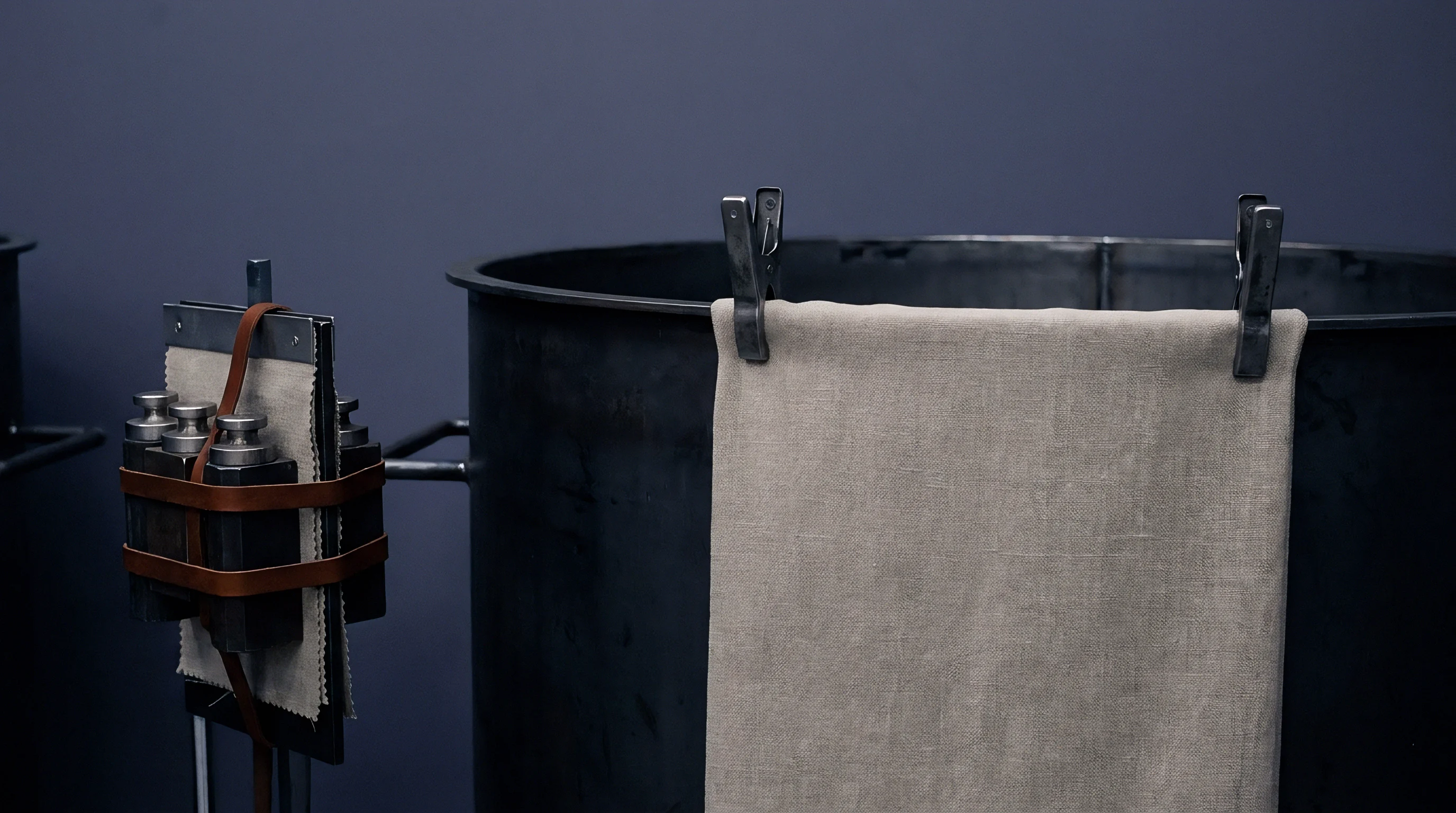
Laboratories in industrial zones encounter higher levels of atmospheric sulfur dioxide and nitrogen oxides, which acidify test liquors faster than carbon dioxide alone. Sealed borosilicate flasks shield the extract until the electrode probe is inserted. While room-air contact during cooling is often blamed for unexpected border test failures, unwashed caustic sizing remains the primary cause.
Buffer
Reference solutions set the calibration baseline for potentiometer hardware before testing begins. Certified calibration standards trace directly to national metrology institutes, defining exact potential targets at specific temperatures. Without proper calibration, compliance data carries no legal weight.
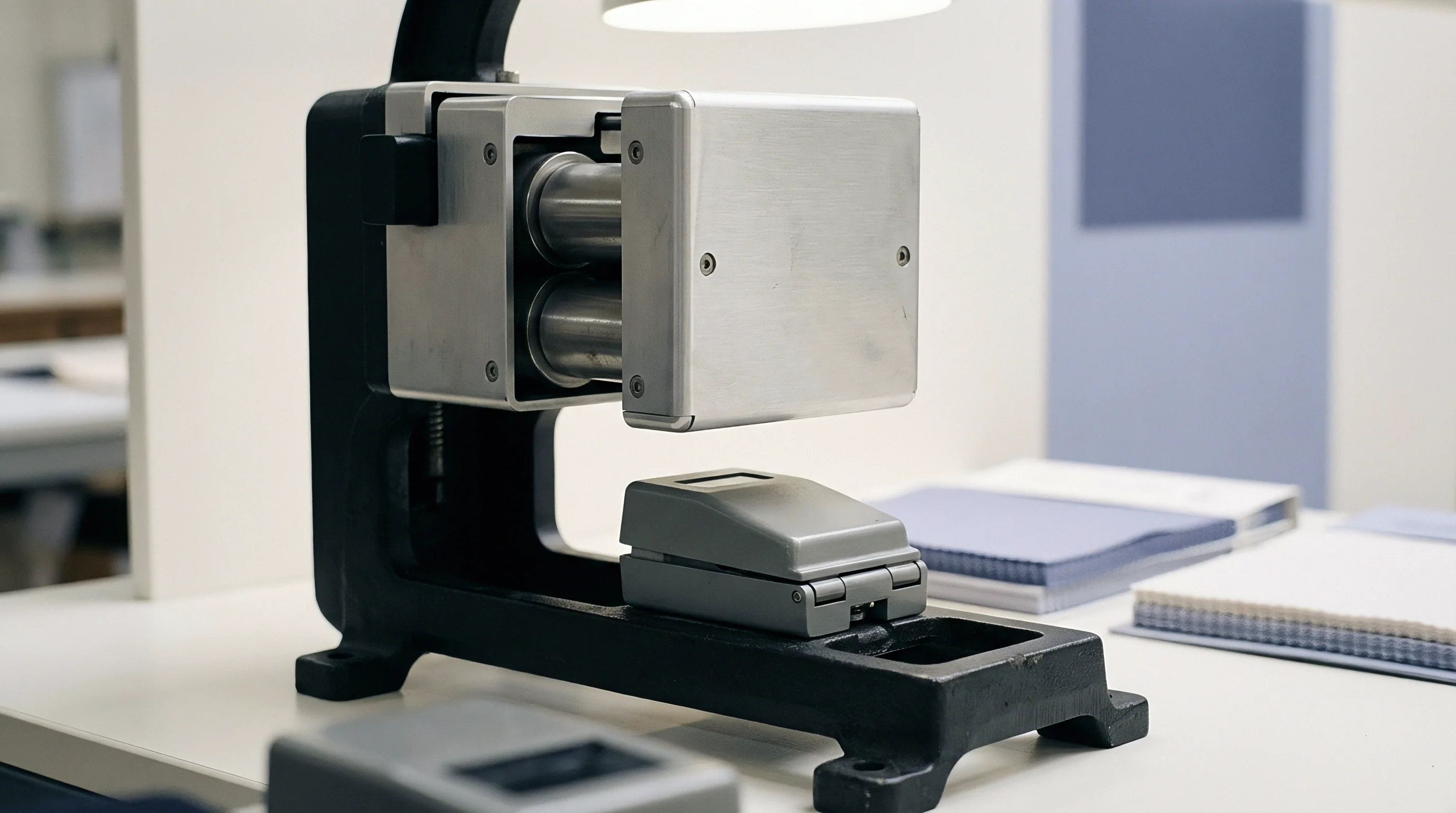
Standard bench meters measure the potential difference across a high-impedance glass circuit against an internal silver/silver chloride electrode in saturated potassium chloride, converting millivolt readings into logarithmic hydrogen ion activity using the Nernst equation.
Electrode Calibration Sequence and Asymmetry Verification
The instrument converts millivolt potentials measured across a thin hydrated silicate bulb into hydrogen ion activity. Over time, ceramic junction fouling and lithium leaching from the glass membrane create an asymmetry potential. The calibration sequence aligns the electronic slope with the theoretical Nernst value of 59.16 millivolts per pH unit at twenty-five degrees Celsius.
Commercial labs run a two-point or three-point calibration every morning using standard buffers at pH 4.01, 7.00, and either 9.21 or 10.01.
The standard operating routine for meter verification follows a rigid chronological sequence:
- Rinse the glass bulb and liquid junction thoroughly with deionized water from a wash bottle.
- Blot the outer shaft gently with lint-free laboratory paper without wiping the active glass bulb surface.
- Submerge the sensing tip into certified pH 7.00 buffer fluid and allow the thermal sensor to reach equilibrium.
- Adjust the potentiometer intercept until the electronic display matches the exact buffer temperature chart value.
- Transfer the rinsed probe into secondary pH 4.01 or pH 9.21 buffer fluid to establish the response slope.
- Verify that the calculated meter slope falls between 95.0 and 102.0 percent of theoretical Nernstian output.
Readings typically settle within two minutes. The slope tolerance of 95.0 to 102.0 percent reflects electrochemistry benchmarks across accredited calibration facilities. When cationic wetting agents or silicone softeners foul the ceramic reference junction, the measured potential per decade drops, pulling the operational slope below 92.0 percent and forcing the rejection of an unstable run.
Just as wastewater plants cycle probes through acid washes to remove calcium scale from geothermal runoff, textile labs handle surfactant contamination with weekly junction regeneration in dilute hydrochloric acid baths.
Is Potassium Chloride Extraction Defensible against Border Surprises?
Destination customs labs enforce local rules that prohibit adding salts during official batch surveillance. A shipment certified under ISO 3071 using 0.1 mol/L potassium chloride can fail import testing at ports using AATCC TM81 or pure-water GB/T 7573. Potassium chloride suppresses the diffuse double layer on the fiber surface, yielding a neutral or slightly acidic reading on cotton dyed with vinyl sulfone reactive dyes.
Tested in pure water, that same cloth reads higher and more alkaline because sodium counter-ions from the dye sulfonate groups dissociate freely into solution.
Field literature often claims that shifting the liquor ratio from 1:20 to 1:50 changes measured extract pH by exactly 0.3 units on reactive-dyed viscose. However, a fixed 0.3 unit offset does not apply across all dye classes, because residual dye sulfonate groups act as internal buffers whose capacity varies with shade depth. A pale pastel has almost no dye buffering capacity, whereas a heavy black reactive shade contains enough sulfonate chemistry to resist dilution entirely.
Contracts need to specify the exact extraction solvent and liquor ratio rather than relying on conversion factors. Probe calibration with fresh buffer solution cannot offset a cracked internal glass diaphragm.

Thresholds
Regulations and safety certifications establish tight numerical bands for chemical activity in finished textiles. A reading outside these limits points to incomplete washing, improper neutralization, or damaged fabric. Human skin maintains a slightly acidic mantle between pH 4.5 and 5.5; alkaline fabric disrupts this barrier by swelling skin keratin and stripping natural lipids, causing contact dermatitis in infants and sensitive adults.
Conversely, acidic residues below 4.0 degrade cellulosic fibers in transit, weakening cotton yarns and leading to premature tensile failure.
Mandatory Limits across International Compendiums
National statutes classify apparel based on skin contact and wearer vulnerability. China mandates compliance through GB 18401, making aqueous extract testing a requirement for customs clearance and retail sale. Imports to China fall under Category A for infant wear, Category B for direct skin contact, and Category C for non-skin contact items.
OEKO-TEX STANDARD 100 uses comparable physiological divisions across four product classes, establishing strict limits that audited plants must satisfy on every certified lot.
| Standard or Label | Product Class or Category | Allowable Extract Band | Governing Test Standard |
|---|---|---|---|
| GB 18401-2010 | Category A: Infants (under 36 months) | 4.0 to 7.5 | GB/T 7573 (Water) |
| GB 18401-2010 | Category B: Direct skin contact | 4.0 to 8.5 | GB/T 7573 (Water) |
| GB 18401-2010 | Category C: Non-skin contact | 4.0 to 9.0 | GB/T 7573 (Water) |
| OEKO-TEX STANDARD 100 | Class I: Baby articles | 4.0 to 7.5 | ISO 3071 (KCl or Water) |
| OEKO-TEX STANDARD 100 | Class II: Direct skin contact | 4.0 to 7.5 | ISO 3071 (KCl or Water) |
| OEKO-TEX STANDARD 100 | Class III: Non-skin contact | 4.0 to 9.0 | ISO 3071 (KCl or Water) |
| OEKO-TEX STANDARD 100 | Class IV: Decoration materials | 4.0 to 9.0 | ISO 3071 (KCl or Water) |
| EU Ecolabel (Textiles) | All apparel categories | 4.0 to 7.5 | ISO 3071 |
| AATCC Technical Guidelines | Industrial scouring target | 5.0 to 7.0 | AATCC TM81 |
Discrepancies between GB 18401 Category B and OEKO-TEX Class II cause frequent commercial friction. GB 18401 allows an upper limit of 8.5 for adult underwear, whereas OEKO-TEX caps certification at 7.5. A lot of polyester-cotton sheeting reading 8.1 will clear Chinese customs under Category B but fail an OEKO-TEX Class II audit.
Brands selling under both frameworks must align their finishing targets with the stricter requirement.
Under GB 18401 Category A, an extract reading of 7.6 triggers immediate border rejection of infant wear regardless of commercial origin.
Substrate Neutralisation Failures in Wet Processing
Caustic soda used in mercerization binds tightly within the crystalline structure of natural cellulose. Mills operate sodium hydroxide baths at twenty-eight to thirty degrees Baumé to swell the fiber lumen and boost luster, followed by hot counter-current rinses and acid neutralization. Dyehouses often add acetic acid to the final rinse to neutralize alkali, but because acetic acid is volatile, it evaporates during stenter drying and leaves unneutralized caustic behind inside the dried fabric.
Batch quality audits apply structured decision logic when assessing wet processing compliance:
- Non-Volatile Acid Scours verify the replacement of volatile acetic acid with citric or formic acid formulations during finishing.
- Core Fiber Sampling reveals trapped internal alkali by cross-sectional indicator staining on heavy canvas constructions.
- Blended Fiber Allowances accommodate natural protein baselines, allowing wool components to clear certification up to pH 8.0 under specific exemptions.
- Post-Stenter Re-Extraction confirms that thermal curing did not volatilize acid buffers, leaving the dry cloth in an unbalanced alkaline state.
Over-correcting for heavy mercerization introduces the opposite risk of acid tenderizing. Excess non-volatile acid remaining in the material drops the extract pH below 4.0. When stored in humid containers, acidic fabric undergoes acid hydrolysis, reducing tensile strength by up to thirty percent before arrival.
Whether international standards committees will eventually harmonize boiling extraction rules with ambient potassium chloride methods remains undecided.
Exposure
Border detentions and buyer chargebacks turn fractional pH variations into direct financial losses. Under import surveillance, an out-of-spec extract reading counts as a non-negotiable chemical defect; port authorities do not grant conditional waivers for failing apparel parameters. A container flagged for alkaline residue must be re-exported, incinerated, or reprocessed at an authorized bonded facility, and demurrage builds every day the forwarder holds the load.
Dyehouse washing ranges frequently dilute surface alkali without penetrating dense spun yarn cores.

Commercial Detention and Retest Expenditure
Customs authorities impound container loads for laboratory testing whenever surveillance sampling flags off-spec surface reactions. The cost of a border rejection quickly compounds through procedural fees, as shown in this typical commercial scenario.
Take a 20,000-metre consignment of twill finished with an average extract pH of 8.8, imported under GB 18401 Category B boundaries. The customs laboratory pulls three composite swatches and records a failing value of 8.9 due to unwashed caustic size. Assume the container sits in port detention for twenty-one days while the importer appeals and requests an official retest:
Port demurrage of 180 dollars per day adds up to 3,780 dollars in storage fees over twenty-one days. Customs retest filing and secondary lab verification cost another 1,200 dollars. Moving the container under bond to a licensed processing plant for washing and drying incurs 2,400 dollars in transport.
Re-washing and re-stentering at 0.35 dollars per linear metre across 20,000 metres adds 7,000 dollars, while secondary import certification and dossier re-filing take 1,500 dollars. The total bill reaches 15,880 dollars ~ before accounting for missed delivery windows or retail markdowns ~ and the supplier absorbs the retest expense.
Contractual Safeguards for Acidic or Caustic Bleed
Purchase orders that omit specific test standards leave buyers unprotected during supplier disputes. Mills can counter chargebacks with in-house certificates based on favorable methods: a supplier using 0.1 mol/L potassium chloride might show a compliant 7.2 reading, while the buyer’s destination lab records an 8.6 using boiling distilled water under AATCC TM81. If the purchase order lists only a target range of 4.0 to 7.5 without specifying the standard and solvent, the buyer has no contractual grounds to enforce the rejection.
Because cold wash cycles often leave caustic residues behind, sourcing contracts must bind suppliers directly to the regulatory methods of the destination market. Agreements should state that batch release requires accredited third-party lab reports using the port of entry’s official standard. Contract terms must also transfer all retest, demurrage, and reprocessing costs to the mill if customs surveillance results conflict with pre-shipment certificates.
Importing textiles without verifying extract values under target-market test procedures opens the door to unsalable inventory, financial penalties, and ongoing red flags at customs.