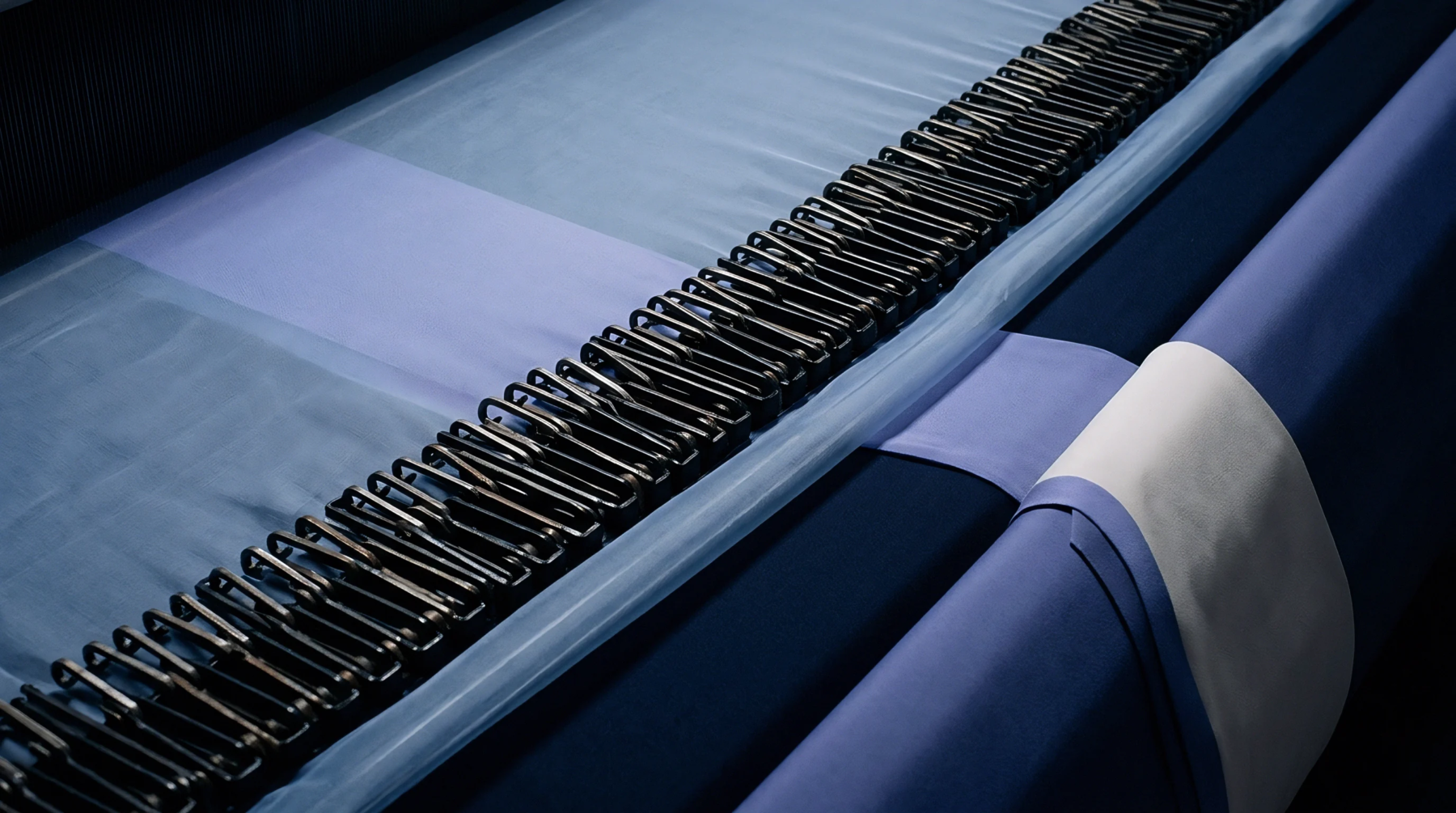
Pneumatic Sequence
High-pressure streams of gas force individual filling yarns through the shed of a loom to form a crosswise fabric construction. Air-jet shedding controls the velocity and timing of these nozzles to carry the yarn across the warp path before the reed beats it into the fell. This mechanical movement determines the speed of insertion for technical textiles and apparel fabrics alike.
The process relies upon the pressure differential generated by relay nozzles to maintain yarn tension across wide widths.
Insertion Pressure
Mill operators calibrate these air bursts to match the physical characteristics of the yarn type and linear density. Heavy yarns require increased force to overcome inertia during the initial acceleration phase. Lighter materials demand precise duration control to prevent the jet from pushing the yarn beyond the intended arrival point at the opposite side.
Such settings dictate the consistency of fabric density throughout a full production lot. Failure to align the jet timing with the main shaft rotation results in mispicks or irregular selvedge formation.
Fluid Dynamics
Turbulent air patterns inside the shed influence the stability of the yarn as it travels toward the receiving side. The air-jet shedding mechanism functions best when the laminar flow within the tunnel reduces friction against the warp ends. High air volumes increase the cooling effect on the yarn, which sometimes alters the moisture regain of natural fibers during the insertion cycle.
Engineers monitor the relationship between the nozzle diameter and the air pressure to minimize the consumption of compressed energy during continuous weaving. Optimization of these variables reduces the load on the compressors and improves the energy efficiency of the production floor.
Output Stability
Synchronized arrival of the filling yarn determines the operational limit for the total picks per minute. Any deviation in the timing of the air valves leads to a stall in production or an accumulation of loose fibers in the shed. The ability of the loom to clear the path for the next pick rests upon the strength of the final burst of air.
Reliable performance remains dependent on the maintenance of these nozzles and the prevention of air leaks in the delivery pipes. Accurate synchronization of these pneumatic forces defines the upper limit of fabric quality achievable on industrial looms.