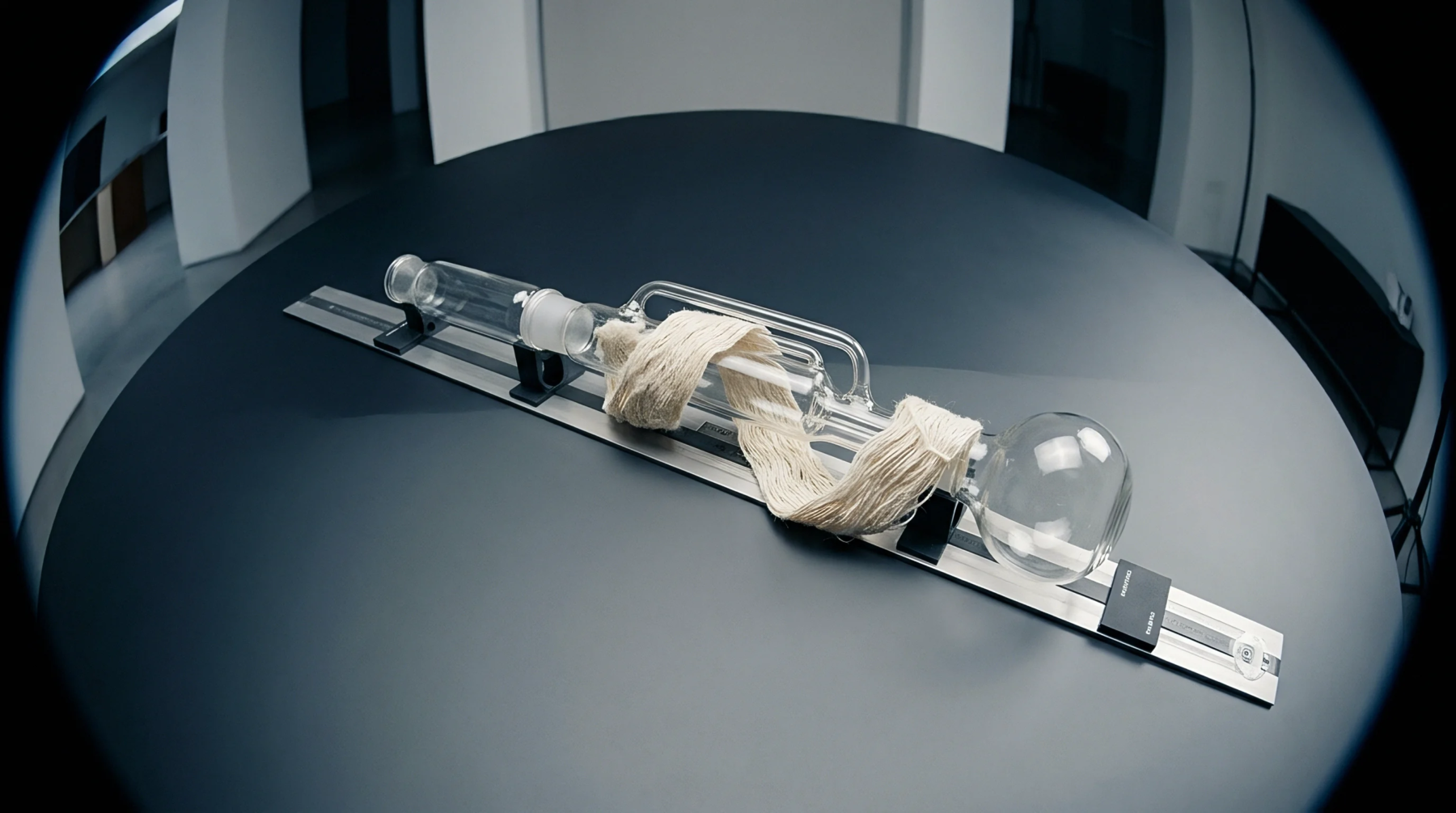
Material Separation
Analytical techniques that isolate target compounds from a solid substrate at room temperature provide a method for assessing surface-level chemical residues. Use of ambient solvent extraction allows laboratories to strip restricted substances from finished garments without inducing the thermal breakdown of the base polymer. A boundary ensures that only free or loosely bound molecules are measured.
Results from this method represent the chemicals available for skin contact during normal wear.
Operational Sequence
Mechanical agitation assists the migration of solutes into the liquid phase. Small specimens are submerged in a solvent like methanol or hexane for a specific duration, usually between thirty and sixty minutes. The volume of solvent is carefully measured to maintain a consistent ratio between the liquid and the textile mass.
After the contact time, the resulting liquid is filtered to remove physical debris before undergoing gas chromatography. Efficiency depends on the surface area of the textile and the solubility of the target residue.
Measurement Scope
Testing focuses on the quantification of finishes that are not chemically grafted to the fibre. While pressurized systems reach deeper into the molecular structure, ambient solvent extraction remains the standard for evaluating topical treatments. Softeners and water repellents often fall under this scrutiny.
Application Boundary
Laboratories select this approach when the objective is to simulate exposure rather than total content. Because the temperature remains low, the process avoids the release of monomers that might stay trapped inside a stable plastic under ambient conditions.