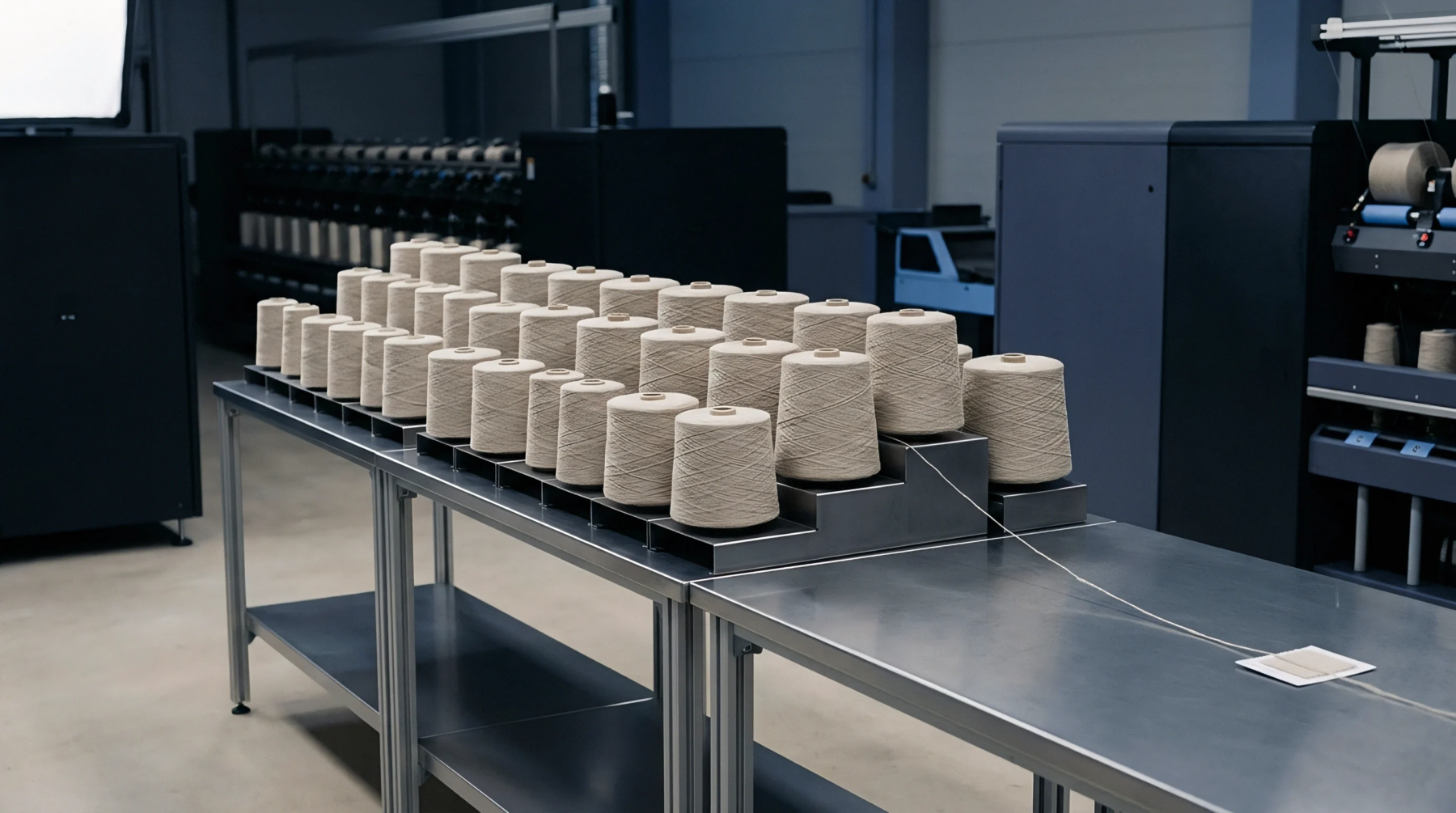
Structural Method
Plain weave density relies on a high concentration of warp yarns combined with a slightly heavier weft yarn to produce a tightly packed, crosswise rib effect. Modern broadcloth weaving employs this specific density setup to yield a uniform, crisp surface texture suitable for shirtings and fine apparel. High-capacity looms operate under precise tension control to maintain uniform spacing throughout the run.
Production Parameter
Reed width and pick insertion rates determine the final weight of the finished soft goods. During broadcloth weaving, loom settings must balance high warp density with fewer picks per inch. High warp density demands this balance to prevent yarn breakage.
Quality Inspection
Visual defects like mispicks or uneven warp tension are highlighted immediately by the dense, compact structure of the fabric surface. Standard fabric inspection tables verify that broadcloth weaving has not introduced filling bands or reed marks that would spoil the clean face of the material. Specialized light tables are used during quality audits to scan the full width for consistency.
Hand feels must remain soft.
Industrial Boundary
Heavier yarns or highly elastic synthetics prevent the formation of the characteristic fine rib structure because they disrupt the plain weave packing. Trying to apply broadcloth weaving to coarse woollen yarns fails because the fiber diameter exceeds the maximum density permitted by standard reed profiles. The technique is restricted to fine, combed cotton or comparable synthetic blends that can pack tightly without bulk.
Synthetic blends must be carefully heat-set to preserve the rib structure. If the yarn is too thick, the loom will jam or create uneven density across the width of the roll, ruining the commercial value.