Fibre Adhesion
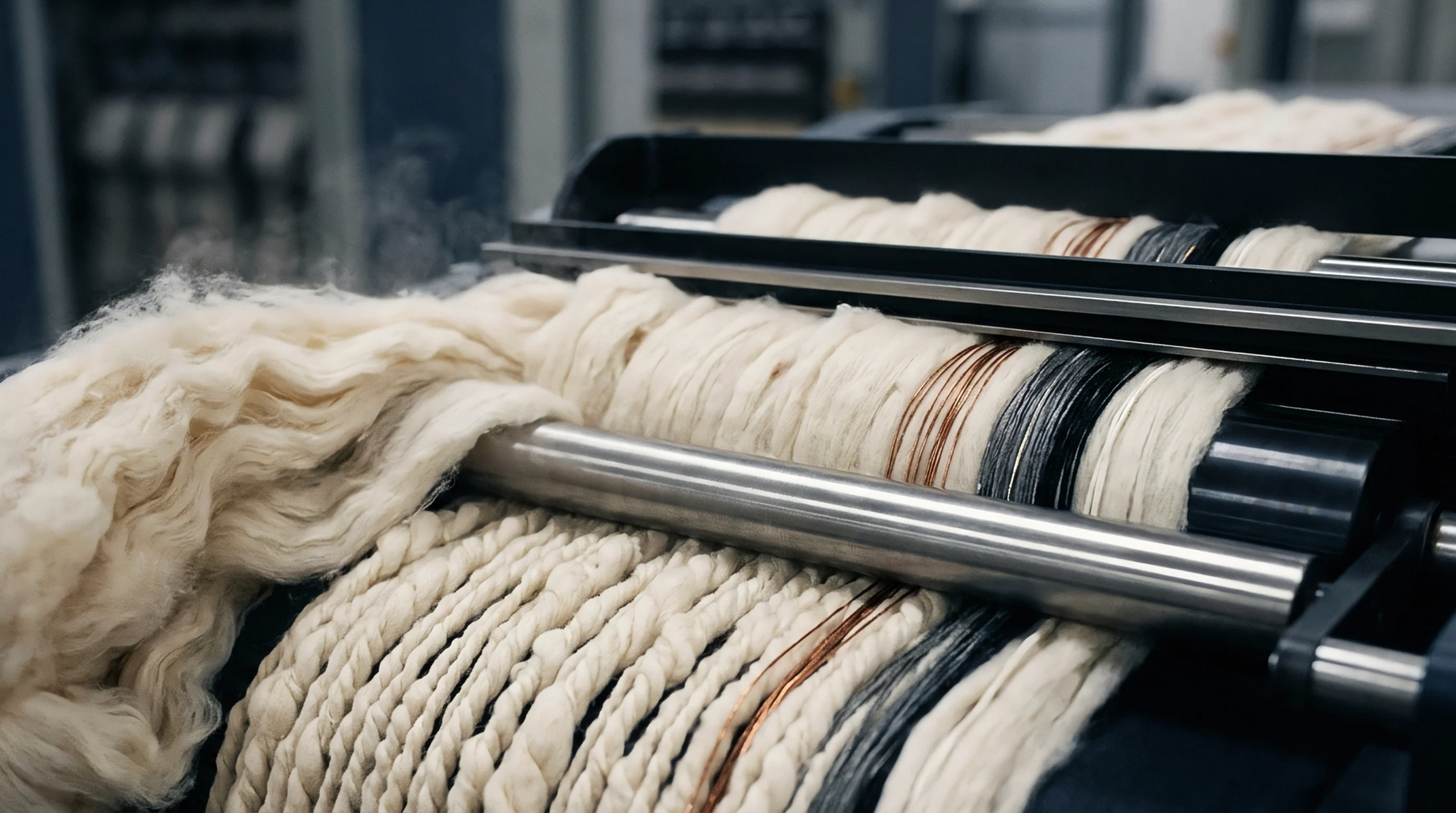
Surface contact between the sliver and the doffer cylinder occurs during the carding process when card doffer lap wrapping impedes the transfer of fibers. The phenomenon happens when the doffer wire fails to lift the web from the main cylinder, causing the mat to wind around the doffer rather than stripping cleanly into the delivery system. High humidity levels inside the carding room often promote this unwanted adherence by increasing the tackiness of processed fibers.
Control Parameters
Mechanical settings at the nip point govern how effectively the web moves from the cylinder to the doffer. Adjusting the distance between the doffer and the cylinder prevents the build-up of excess material that leads to the wrapping fault. Proper maintenance of the metallic wire clothing ensures consistent stripping performance.
Production Disruption
Accumulation of fibers on the doffer creates immediate downtime because the machine must stop for manual cleaning of the cylinder surface. Operators monitor the output web for irregularities or thin spots that signal the beginning of a wrap. Repeated incidents reduce the overall efficiency of the carding line by damaging the wire clothing through frictional heat and pressure.
Operating Environment
Synthetic fibers require specific finish applications to reduce the static charge that contributes to fiber deposition on the doffer. Lowering the processing speed provides a temporary mitigation when environmental controls cannot remove enough moisture from the stock. Consistent airflow around the doffer zone prevents the localized build-up of fly that initiates the wrapping sequence.
This defect is a function of mechanical alignment and fiber moisture content.