Shade Defect
Lateral color variation across the width of a finished fabric roll represents a common quality failure in continuous dyeing and finishing operations. This phenomenon, known as center to edge listing, presents as a gradual shift in shade or depth of color between the middle section of the fabric web and its salvage edges. Such variation makes the material unusable for multi-panel garments due to panel-to-panel mismatch.
Causal Mechanism
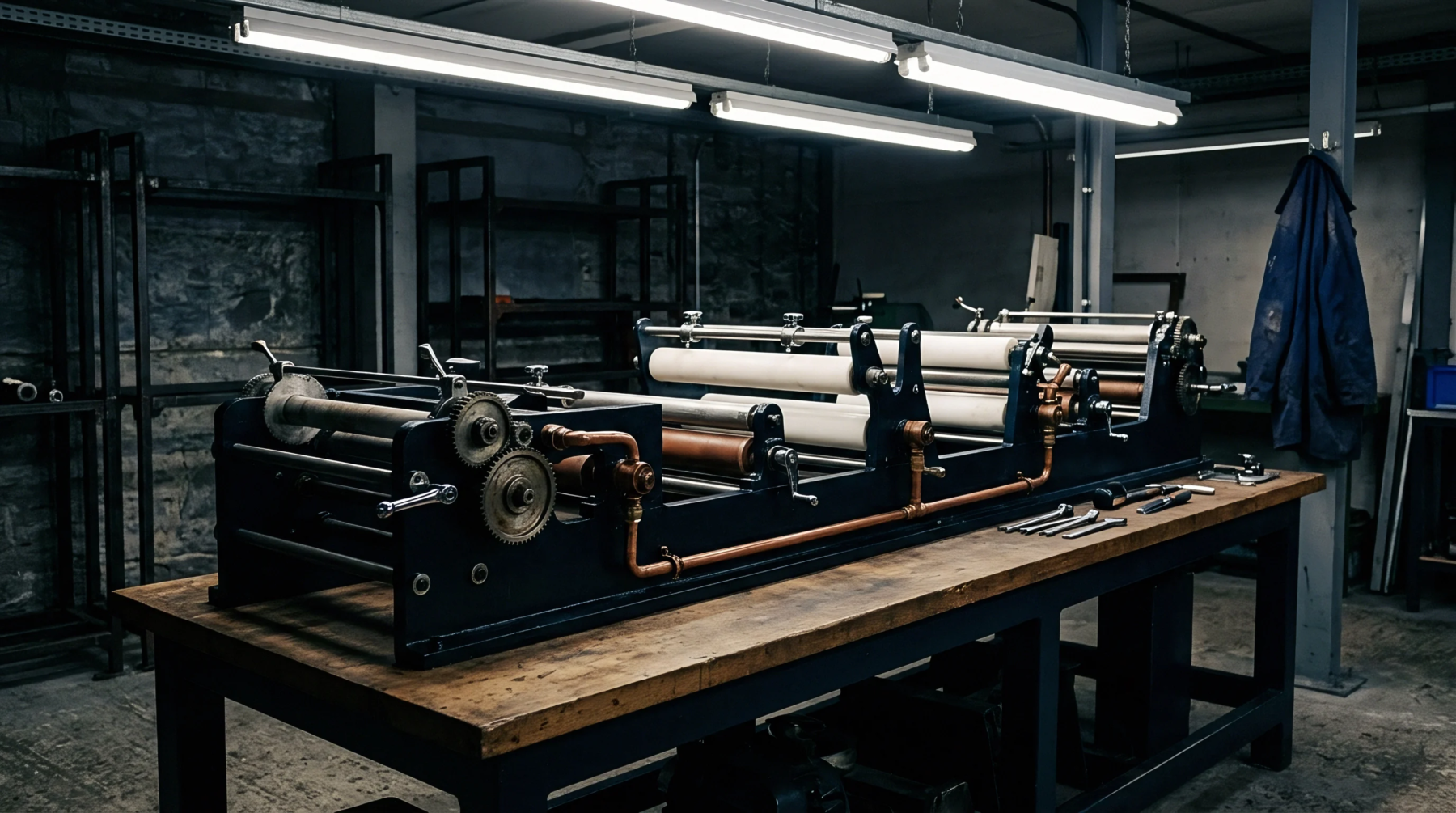
Non-uniform squeeze pressure across the pad rolls or uneven heating across the pre-dryer width often drives this defect. In pad-dyeing, if the pressure is lower in the center than at the sides, more dye liquor is left in the middle of the fabric, leading to center to edge listing after fixing. Similarly, uneven hot air circulation across the stenter frame dries the fabric at different rates, forcing migrateable dye particles to move toward the hotter regions.
This unequal migration creates a permanent shade gradient that cannot be corrected by simple washing or scouring, necessitating expensive stripping and redyeing.
Detection Practice
Quality inspectors evaluate this shade discrepancy by cutting fabric strips across the full width of the roll and comparing them under standardized cabinet lighting. Colorimeters measure the color difference (delta E) between the center and each margin to quantify the listing severity. A delta E value greater than one usually triggers a rejection for garment assembly.
Process Adjustment
Corrective actions during the production run include calibrating the crowning of the padder squeeze rolls or adjusting the airflow dampers in the dryer. Pneumatic pressure adjustments can redistribute the liquor pickup evenly across the width of the incoming fabric. Technical staff must also monitor the moisture profile of the entering web to ensure uniform pre-drying.