Tension Mechanism
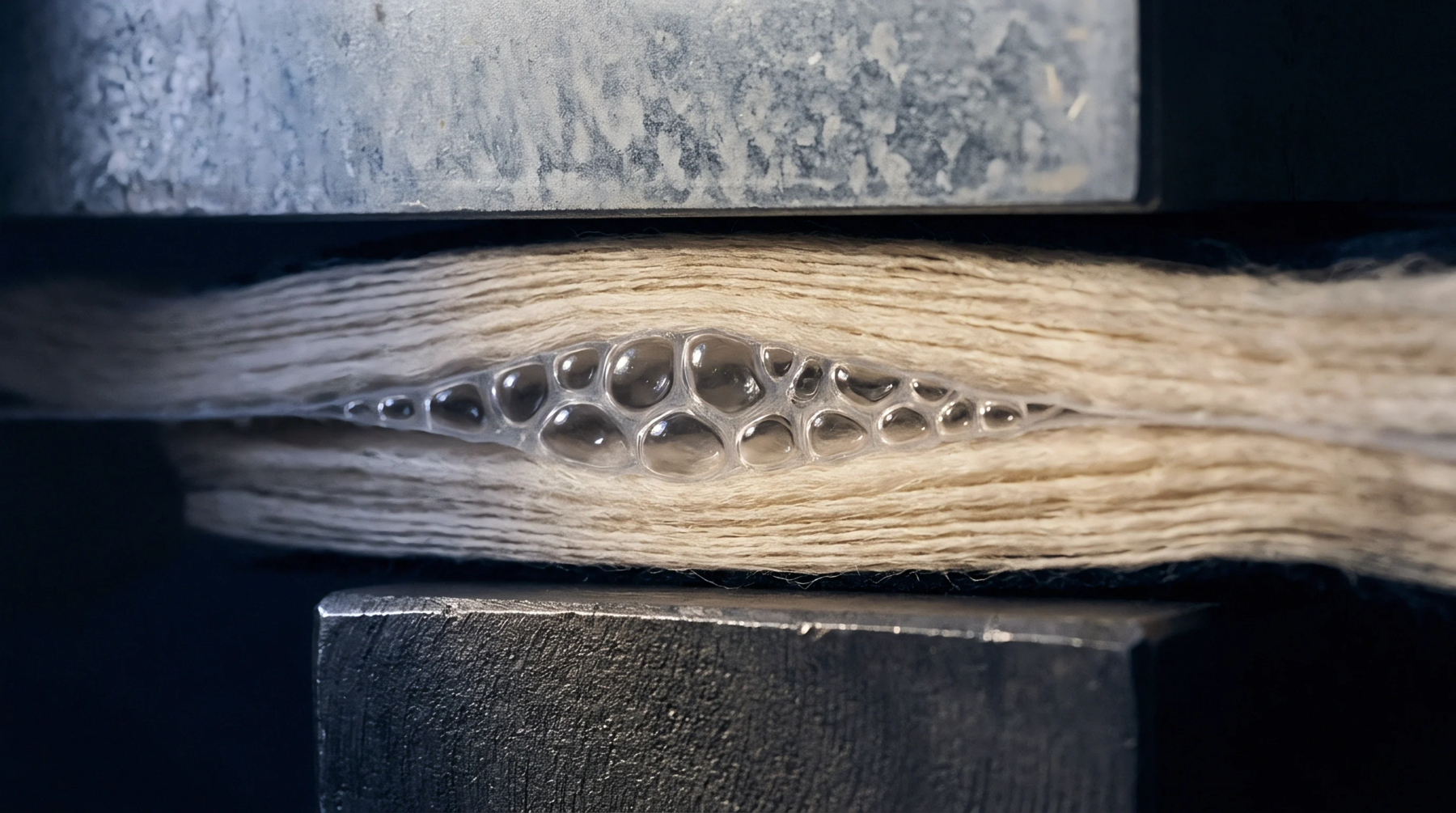
Continuous fabric transport systems using expanding grooved rollers control longitudinal and transverse tension during caustic alkali immersion of cotton fabrics. In woven textile finishing, a chainless mercerizer maintains fabric width through direct surface contact with rotating curved drums rather than mechanical pin or clip chains. Smooth surface pressure prevents selvedge distortion across delicate woven structures while guiding full-width fabric webs through concentrated sodium hydroxide baths.
Uniform roller contact minimizes width loss without subjecting fabric edges to localized pin tears.
Caustic Penetration
Concentrated sodium hydroxide solutions between twenty-eight and thirty degrees Baume induce swelling in flat cotton lumen structures. Passing fabric over tight roll stacks within a chainless mercerizer forces alkaline liquor through yarn intersections under heavy surface pressure. Penetration converts natural cellulose I crystal lattices into hydrated cellulose II structures within seconds of contact.
Dimensional Stability
Shrinkage control during caustic de-swelling relies on controlled roller speeds across consecutive washing zones. As alkali concentrations decrease during counter-current rinsing, the chainless mercerizer holds fabric dimensions through high roll contact angles. Restraining warp contraction yields consistent fabric density and improved dye affinity across the full roll width.
Smooth tension transition prevents warp bow and skew across light to medium fabric weights.
Processing Limit
Heavy fabric weights exceeding four hundred grams per square metre require clip stenter machinery for maximum width extension. Elastic recovery forces in heavy industrial fabrics overcome drum friction in a chainless mercerizer. Fabric slips across smooth drum surfaces when transverse swelling stresses exceed surface grip.