Quantifying Temperature Dependent Liquid Junction Potential Bias in Process Glass Electrodes during Caustic Scouring
Hot caustic scouring solutions induce large liquid junction potential offsets in glass electrodes, causing transmitters to underreport pH and overfeed sodium hydroxide.

Heat
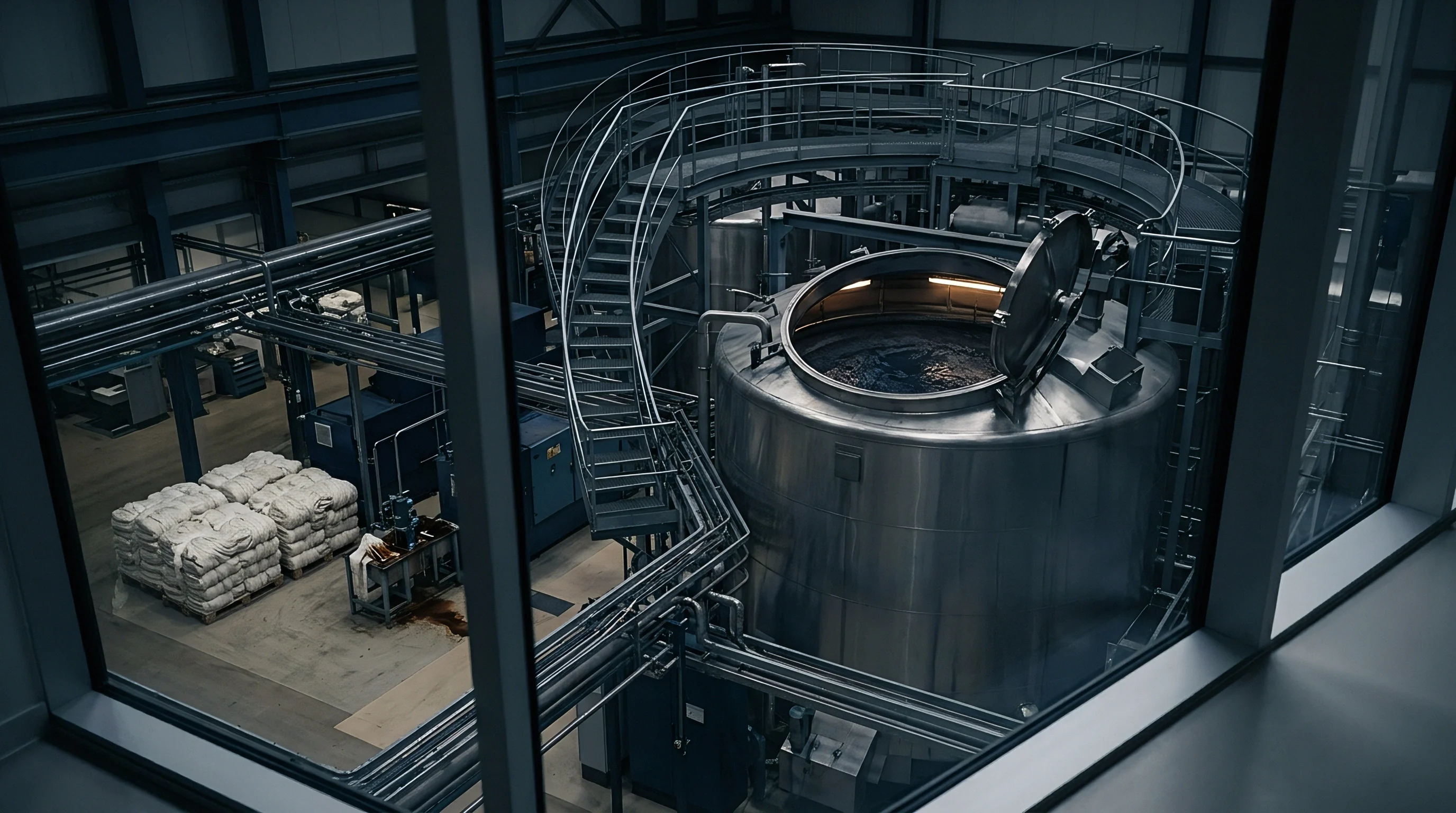
In high-alkali textile scouring ranges, process glass electrodes develop severe electrical potential offsets that automatic temperature compensation transmitters cannot eliminate. Raw cotton fabric preparation depends on sodium hydroxide baths kept at twenty to eighty grams per liter and held between seventy and ninety-five degrees Celsius. Stripping natural cotton waxes, hydrolyzing pectins, and removing motes requires this sustained high alkalinity, but under such aggressive conditions, online combination glass electrodes drift predictably.
Transmitters read the pH lower than the bath’s true active concentration, prompting automated dosing pumps to feed far too much sodium hydroxide into the range.
Waxy bath liquors readily foul ceramic diaphragms as saponified waxes raise viscosity across the membrane. Standard industrial sensors rely on a silver silver-chloride reference half-cell surrounded by a three-molar potassium chloride electrolyte, using the reference junction to maintain liquid-to-liquid contact between internal electrolyte gel or liquid and the process liquor. Once placed in a hot caustic bath, a sharp concentration gradient forms across the porous interface: potassium chloride leaks outward while sodium and hydroxide ions migrate inward, breaking down standard reference gels at elevated temperatures.
Because these ions diffuse at unequal speeds, a localized potential difference forms across the boundary ~ the liquid junction potential.
| Ionic Species | Molar Conductivity at 25°C (S cm²/mol) | Ion Mobility at 25°C (10⁻⁸ m²/V s) | Molar Conductivity at 60°C (S cm²/mol) | Ion Mobility at 60°C (10⁻⁸ m²/V s) | Molar Conductivity at 90°C (S cm²/mol) | Ion Mobility at 90°C (10⁻⁸ m²/V s) |
|---|---|---|---|---|---|---|
| Potassium (K⁺) | 73.5 | 7.62 | 131.2 | 13.60 | 191.5 | 19.85 |
| Chloride (Cl⁻) | 76.3 | 7.91 | 137.8 | 14.28 | 201.2 | 20.85 |
| Sodium (Na⁺) | 50.1 | 5.19 | 94.5 | 9.79 | 143.0 | 14.82 |
| Hydroxide (OH⁻) | 198.0 | 20.52 | 332.0 | 34.41 | 467.0 | 48.40 |
Thermodynamic Stress on Industrial Junctions
Continuous preparation lines place severe chemical and thermal stress on analytical sensors. At higher temperatures, thermal energy disrupts the hydrogen-bonded water network and accelerates ion kinetics. Hydroxide ions move charge through aqueous solutions by rapid structural proton transfer instead of simple hydrodynamic migration.
As temperature rises, this proton-hopping mechanism speeds up so sharply that hydroxide ion mobility grows more than twice as fast as potassium or chloride mobility across the span from twenty-five to ninety degrees Celsius.
Overall cell potential reflects the mobility of each participating ion. In a neutral room-temperature buffer, potassium and chloride ions cross the reference junction diaphragm at nearly the same speed, maintaining equitransferent migration that keeps liquid junction potential down around one to two millivolts. In a hot, concentrated sodium hydroxide bath, that balance disappears.
Hydroxide ions rush into the reference diaphragm much faster than potassium or sodium ions can reposition to balance charge, creating a steep electrical potential drop across the porous ceramic junction.
Hot caustic solutions accelerate hydroxide ion diffusion across ceramic junctions faster than potassium chloride reference ions can diffuse outward to maintain charge balance.

Failure Modes in Continuous Scouring Ranges
Automated alkali dosing systems suffer frequent drift, which plant operations often attribute entirely to glass membrane aging or alkaline sodium error. Glass membrane degradation is a distinct physical mechanism: exposure to hot sodium hydroxide strips the hydrated gel layer off the outer glass surface, swapping hydrogen ions for sodium ions and causing the sensor to read low above twelve pH units. Liquid junction potential bias acts at the same time, imposing an additive negative potential shift on total cell electromotive force.
Standard automatic temperature compensation algorithms recalculate Nernstian electrode slopes using RTD resistance readings, scaling the theoretical slope from 59.16 millivolts per pH unit at twenty-five degrees Celsius up to 72.05 millivolts per pH unit at ninety degrees Celsius. Transmitters use this adjusted slope to convert raw millivolts into pH values under the assumption that the isothermal intersection point remains fixed and liquid junction potential stays constant over temperature. Neither assumption holds in concentrated caustic scouring liquors.
- Thermal Junction Polarization occurs when steep thermal gradients across the sensor body generate thermoelectric potentials between internal and external reference leads.
- Diaphragm Precipitate Fouling happens as internal potassium chloride electrolyte mixes with high-concentration caustic liquor inside ceramic pores, causing localized salt crystallization.
- Hydroxide Ingress Drift develops when fast-moving hydroxide ions penetrate the internal reference compartment, altering internal chloride activity and destabilizing the silver-chloride reference potential.
- Alkaline Glass Dissolution proceeds as continuous high-temperature alkali attack dissolves the silica network of the pH-sensing glass sphere, permanently altering the electrode response time.
Standard automatic slope compensation is often treated as fully resolving temperature errors across industrial pH loops, but it fails to account for liquid junction bias in caustic conditions.

Potentiometry
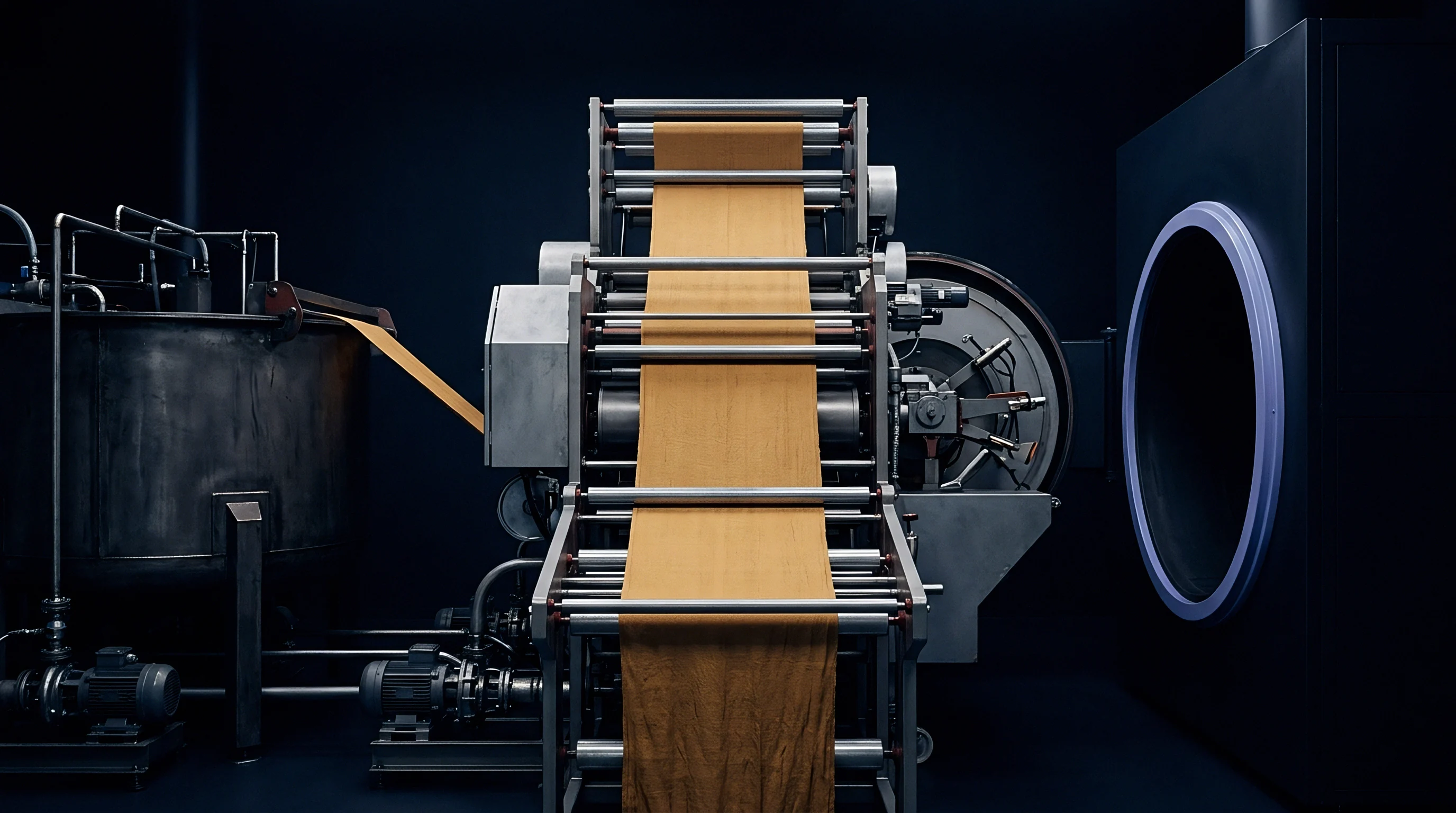
Measuring true hydrogen ion activity in concentrated sodium hydroxide depends on a multi-interface voltage circuit. The total electromotive force across a glass electrode cell is the algebraic sum of several distinct boundary potentials: internal reference potential, internal and external glass membrane surface potentials, and liquid junction potential at the reference interface. Uncorrected shifts at any single interface skew the transmitter reading.
Glass membranes develop sodium error above twelve pH, while high temperatures break down standard reference gels. Typical calibrations use low-ionic-strength dilute buffers containing potassium hydrogen phthalate, phosphate mixtures, or borate salts ~ fluids with ionic transport behavior completely unlike concentrated caustic baths. Calibrating in neutral or mild alkaline buffers sets a baseline slope, but reveals nothing about the liquid junction bias created when the sensor enters a two-molar sodium hydroxide processing liquor at eighty-five degrees Celsius.

Dissecting the Electromotive Force Chain
Transmitters measure a total voltage built from four distinct phase boundary potentials. The primary potential of analytical interest forms across the glass membrane, responding selectively to hydrogen ion activity. Provided internal electrolyte composition and temperature remain steady, the internal reference half-cell potential stays constant.
The reference liquid junction potential sits in series with the glass membrane voltage as an unwanted parasitic offset.
As hydroxide ions cross the ceramic diaphragm, any shift in liquid junction potential caused by changing bath temperature or concentration gets misinterpreted by the transmitter as a shift in hydrogen ion activity. In high-alkali scouring baths, liquid junction potential turns negative, subtracting millivolts from total cell electromotive force. Because transmitters map lower or negative millivolts to higher pH, this negative junction bias forces calculated pH downward, displaying a falsely low reading that masks the bath’s actual caustic strength.

When Does Liquid Junction Potential Exceed Target Ph Tolerance?
Analytical error expands quickly once liquor temperatures cross sixty degrees Celsius and sodium hydroxide concentrations pass twenty grams per liter. Textile scouring quality standards demand tight control of caustic levels to prevent cellulose depolymerization while fully saponifying waxes, often specifying an operational pH tolerance of plus or minus zero point two pH units. Under typical continuous scouring conditions, liquid junction potential bias alone can exceed negative zero point five pH units.
Temperature shifts the isothermal intersection point while concentration alters single-ion activity coefficients. In concentrated alkali, the relationship between hydroxide concentration and hydrogen ion activity becomes non-linear, with the mean activity coefficient of sodium hydroxide dropping significantly as molarity rises from zero point one to two molar. High ionic strength suppresses these activity coefficients.
Because standard transmitter software relies on ideal dilute solution thermodynamics rather than multi-ion activity models, combining junction bias, activity suppression, and glass error generates substantial operational errors.
- Interfacial Potential Disparity emerges from the velocity imbalance between migrating hydroxide anions entering the junction and potassium cations exiting into the process liquor.
- Non-Nernstian Temperature Response occurs when high temperature alters the glass membrane response slope away from the theoretical value calculated by transmitter algorithms.
- Activity Coefficient Depression develops because elevated ionic strength suppresses single-ion activity coefficients, uncoupling physical molar concentration from thermodynamic activity.
- Phase Contact Instability manifests as fluctuating liquid boundary positions within coarse ceramic diaphragms under varying process flow velocities.
Calibrating a glass electrode in room-temperature buffers offers no assurance of voltage accuracy once it enters a concentrated alkaline scouring bath.


Transference
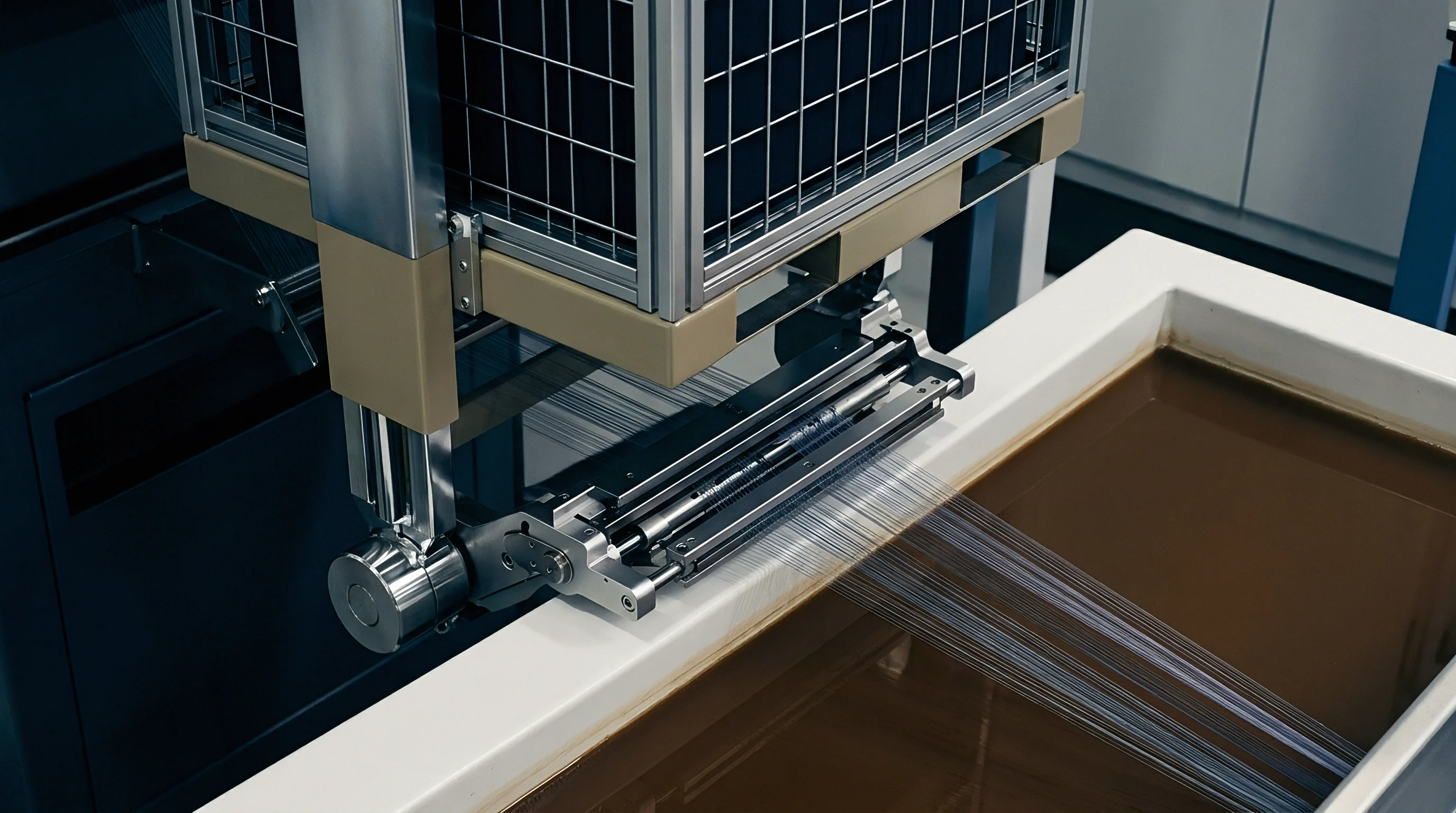
Velocity differences between migrating ions create a localized electrical dipole across porous ceramic diaphragms separating three-molar potassium chloride from sodium hydroxide liquors. Estimating liquid junction potential quantitatively relies on electro-diffusion flux models. The Nernst-Planck equation expresses total ionic flux as the joint effect of concentration gradients and electrical potential forces; integrating these flux equations across the thickness of the junction yields explicit expressions for total boundary potential.
The Henderson equation serves as the classical framework for calculating liquid junction potential across liquid-liquid boundaries. Assuming a continuous linear mixing zone between internal electrolyte and external process solution, the model calculates boundary potential from the valence, concentration, and limiting ionic molar conductivity of each ion on either side of the interface.
| NaOH Bath Molarity (g/L NaOH) | Bath Temp (°C) | Internal Electrolyte | Theoretical Nernst Slope (mV/pH) | Calculated LJP Bias (mV) | Equivalent pH Error (pH units) |
|---|---|---|---|---|---|
| 0.1 M (4.0 g/L) | 25 | 3.0 M KCl | 59.16 | -4.2 | -0.07 |
| 0.1 M (4.0 g/L) | 60 | 3.0 M KCl | 66.10 | -7.8 | -0.12 |
| 0.1 M (4.0 g/L) | 90 | 3.0 M KCl | 72.05 | -11.5 | -0.16 |
| 0.5 M (20.0 g/L) | 25 | 3.0 M KCl | 59.16 | -9.6 | -0.16 |
| 0.5 M (20.0 g/L) | 60 | 3.0 M KCl | 66.10 | -16.2 | -0.25 |
| 0.5 M (20.0 g/L) | 90 | 3.0 M KCl | 72.05 | -22.8 | -0.32 |
| 1.0 M (40.0 g/L) | 25 | 3.0 M KCl | 59.16 | -13.8 | -0.23 |
| 1.0 M (40.0 g/L) | 60 | 3.0 M KCl | 66.10 | -22.5 | -0.34 |
| 1.0 M (40.0 g/L) | 90 | 3.0 M KCl | 72.05 | -31.2 | -0.43 |
| 2.0 M (80.0 g/L) | 25 | 3.0 M KCl | 59.16 | -19.1 | -0.32 |
| 2.0 M (80.0 g/L) | 60 | 3.0 M KCl | 66.10 | -30.8 | -0.47 |
| 2.0 M (80.0 g/L) | 90 | 3.0 M KCl | 72.05 | -42.5 | -0.59 |
Henderson Equation Mechanics in High-Alkali Interfaces
Modeling boundary potentials mathematically requires integrating flux equations for every ion in the system. The structure of the Henderson equation shows clearly why caustic scouring conditions induce large potential offsets:
E_j = – (R T / F) ln
Here, R represents the universal gas constant, T is absolute temperature in Kelvin, F is Faraday’s constant, z_i is ionic valence, u_i is ionic mobility, and C_i is molar concentration. The magnitude of liquid junction potential scales directly with absolute temperature T and with mobility differences between adjacent ionic streams.
In a three-molar potassium chloride reference electrolyte, potassium and chloride dominate the internal junction boundary, while sodium and hydroxide dominate the external process side. Because potassium ions move far slower than hydroxide ~ whose limiting molar conductivity approaches five hundred S cm²/mol at ninety degrees Celsius ~ the numerator governing flux differentials becomes exceptionally large. Hydroxide ions diffuse rapidly into the ceramic matrix, creating a negative potential drop inside the reference boundary.
At ninety degrees Celsius in a one molar sodium hydroxide scouring bath, liquid junction potential introduces an uncompensated negative potential shift of twenty-four millivolts across the reference diaphragm.

Grotthuss Mobility Magnification at High Temperature
Hydroxide ions transport charge through water via rapid structural proton transfer rather than hydrodynamic sphere displacement. By accepting protons from neighboring water molecules, hydroxide ions shift the center of negative charge without physically dragging the oxygen nucleus through solvent viscous drag. This Grotthuss proton-transfer mechanism requires significantly lower activation energy than standard hydrodynamic migration.
Thermal energy accelerates hydroxide mobility exponentially. Between twenty-five and ninety degrees Celsius, potassium ion mobility increases by a factor of two point six while hydroxide mobility grows by a factor of two point four, preserving a massive absolute mobility delta. This large gap in charge transport capability between internal potassium and external hydroxide ions ensures that liquid junction potential increases steadily as process temperatures rise.
Deep scouring of dense woven fabrics requires high temperatures to accelerate wax saponification kinetics, often pushing scouring ranges up to ninety-five degrees Celsius. While process transmitters adjust temperature slopes automatically, standard automatic temperature compensation only modifies the slope multiplier applied to total electromotive force ~ it completely ignores the additive offset introduced by liquid junction potential. As a result, the measured potential reported to the control unit stays skewed by dozens of millivolts.
Bench tests continue to investigate whether modified electrolyte matrices containing equimolar lithium salts can suppress hydroxide migration without fouling the internal silver reference pin.


Quantification
Translating millivolt bias into financial liability reveals the direct cost of uncorrected sensor errors on the dyehouse floor. When liquid junction bias and alkaline glass error combine to produce a negative zero point four5 pH offset, an online transmitter reads 12.55 pH in a bath running at a true active alkalinity of 13.00 pH. Automated dosing systems set to maintain 13.00 pH respond by opening valves to feed extra concentrated sodium hydroxide.
Manual titration measures true bath alkalinity directly, but plant laboratories that depend entirely on automated pH readings often miss systematic overfeeding. Excess sodium hydroxide inflates chemical purchasing costs, drives up acid consumption in downstream neutralizing washes, and accelerates hydrolytic breakdown of cotton cellulose, causing loss of fabric strength and product rejections.
| Measurement Bias Component | Physical Mechanism | Voltage Magnitude at 85°C (mV) | Equivalent pH Shift (pH units) | Operational Effect on Automated Dosing |
|---|---|---|---|---|
| Nernstian Temperature Slope Error | Uncompensated change in RT/F electrode slope factor | +18.2 | +0.25 | Dosing system under-feeds alkali reagent |
| Liquid Junction Potential Bias | Hydroxide proton-hopping diffusion into ceramic reference pore | -28.5 | -0.40 | Dosing system over-feeds alkali reagent |
| Glass Membrane Alkaline Error | Sodium ion exchange at outer gel membrane boundary layer | -14.2 | -0.20 | Dosing system over-feeds alkali reagent |
| Activity Coefficient Suppression | High ionic strength reducing single-ion activity relative to concentration | -10.7 | -0.15 | Dosing system over-feeds alkali reagent |
| Net Accumulated System Bias | Algebraic sum of all physical potential offsets | -35.2 | -0.50 | Severe over-dosing of sodium hydroxide liquor |

Worked Offset Calculation in Continuous Scouring
Evaluating a continuous preparation line running forty grams per liter of sodium hydroxide at eighty-five degrees Celsius shows how measurement errors compound. For a nominal target of 1.0 M sodium hydroxide at eighty-five degrees Celsius, the theoretical Nernstian slope is 71.05 millivolts per pH unit. The Henderson equation calculates a liquid junction potential of negative 28.5 millivolts for 3.0 M KCl against 1.0 M NaOH at 85°C.
Alkaline glass error adds another negative 14.2 millivolts for a standard high-pH glass membrane at 1.0 M Na+ and 85°C. Combined, these errors create a net negative offset of 42.7 millivolts across the sensor cell. Dividing this voltage bias by the local Nernstian slope gives the total systematic measurement error:
Error_pH = -42.7 mV / 71.05 mV/pH = -0.601 pH units
The transmitter displays 12.39 pH instead of the true active value of 13.00 pH. To bring the display back to the 13.00 pH setpoint, the automated control loop feeds sodium hydroxide until bath concentration reaches nearly 2.2 molar (88 grams per liter). Fabric passing through this over-concentrated liquor suffers severe degree-of-polymerization loss, dropping tensile strength and tear resistance below buyer specifications.
Equipment purchase specifications mandating caustic control within zero point two pH units require online transmitters to calculate dynamic junction bias corrections.

Financial Consequence of Uncompensated Caustic Overdosing
Uncorrected sensor readings drive continuous alkali overfeeding, wasting capital while degrading fabric properties. Consider a continuous scouring line processing 5000 kilograms of woven cotton fabric per hour at an eighty percent wet pickup rate, requiring 4000 liters of scouring bath per hour. Operating at an uncompensated actual concentration of 88 grams per liter instead of the target 40 grams per liter consumes 192 kilograms of excess technical-grade sodium hydroxide every operating hour.
Downstream neutralization costs scale accordingly. Rinsing out excess alkali requires proportional increases in sulfuric or acetic acid in subsequent boxes to prevent fabric yellowing during heat setting. Caustic overdosing inflates chemical spending while driving total dissolved solids in wastewater effluent far beyond local discharge limits.
- Record uncorrected electromotive force and process liquor temperature directly at the flow cell.
- Compute theoretical Nernstian slope for observed process temperature in Kelvin.
- Calculate single-ion activity coefficient for hydroxide ions using extended Debye-Huckel equations.
- Subtract estimated liquid junction potential offset derived from Henderson equation for reference electrolyte geometry.
- Apply glass membrane sodium ion correction factor based on alkali concentration and glass formulation specifications.
Operating a caustic range under uncorrected electrode bias leads directly to fiber degradation, wasted chemical inventory, and heavy wastewater neutralization surcharges.

Mitigation
Stabilizing the liquid boundary requires specialized reference electrode geometry combined with active differential pressure control. Standard static ceramic diaphragms fail in high-temperature caustic scouring loops because tight pores restrict electrolyte outflow. As saponified fats and particulate matter clog the ceramic matrix, liquid junction potential turns erratic and highly vulnerable to line pressure fluctuations.
Installing pressurized liquid-electrolyte reference half-cells establishes flowing junctions that overcome passive diffusion bias. Maintaining internal electrolyte pressure zero point five bar above maximum line pressure forces a steady outward flux of three-molar potassium chloride through an open sleeve or ground-glass junction. This outward convective flow prevents external hydroxide ions from penetrating the reference interior, collapsing the liquid junction potential toward zero.
Reference Junction Engineering and Pressure Control
Positive differential pressure prevents caustic liquor from diffusing backward into the sensor. By maintaining outward convection, the liquid boundary line remains pinned to the outer edge of the ground-glass sleeve, isolating the internal silver silver-chloride element from caustic contamination and preserving reference stability over long production runs.
Polymer gel electrolytes are convenient and low-maintenance, but fail in hot caustic. Hot sodium hydroxide breaks down synthetic gels through polymer syneresis, forming void spaces inside the reference chamber. Solid-state conductive polymer sensors prevent gel breakdown, yet still experience interfacial potential shifts in high-hydroxide environments.
For continuous scouring ranges above seventy degrees Celsius, refillable liquid-electrolyte electrodes backed by automated overpressure reservoirs remain the most reliable physical configuration.

Compliance Verification and Dosing Control Protocols
Titration against standard acid solutions provides the primary benchmark for calibrating online transmitter offset tables. Online pH sensors should never be calibrated against standard buffer solutions alone. Effective quality control requires a two-tier verification procedure: a two-point ambient buffer calibration to verify glass membrane condition and Nernstian slope, followed by an in-situ process offset correction derived from automated volumetric acid titration of bath samples.
Modern process transmitters accept custom multi-point calibration matrices. Programming liquor concentration, temperature, and offset millivolts into transmitter memory allows the control system to compute real-time corrections for liquid junction bias and ionic activity. Combining dynamic software offset tables with pressurized flowing-junction hardware stabilizes pH control across continuous preparation ranges.
Standard glass electrodes calibrated in room temperature buffer solutions consistently underreport sodium hydroxide concentration in elevated temperature continuous processing ranges.
Master equipment purchase contracts increasingly mandate dual-point high-temperature alkali validation clauses before automated chemical feed systems receive final engineering signoff.