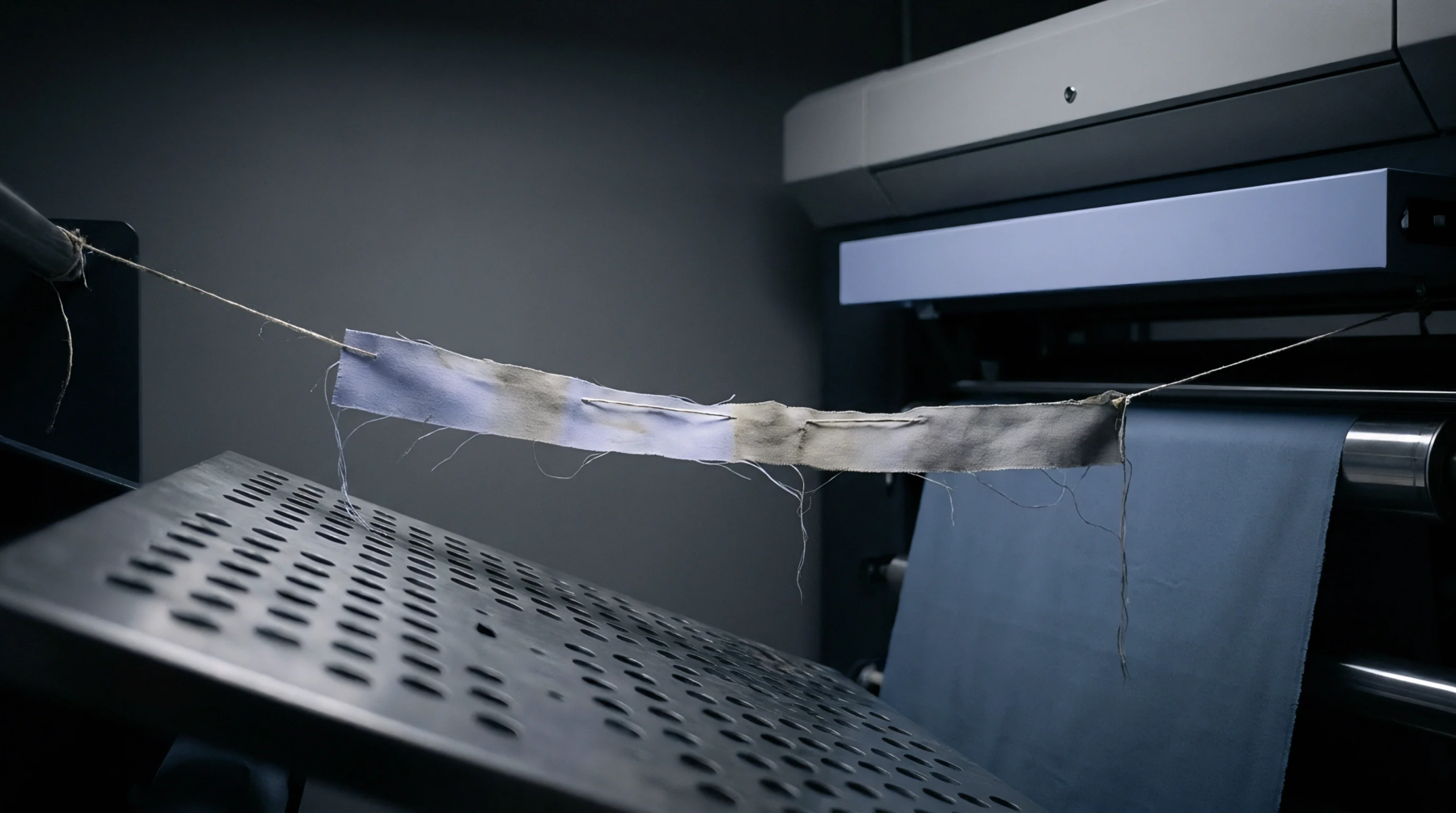
Dyeing Efficiency
Measured intensity of dye absorption on a given fabric substrate determines the depth and richness of the finished color. A higher chromatic yield indicates that a larger percentage of dye molecules successfully bonded with the yarn fibers during processing. This efficiency reduces dye consumption and lowers chemical run-off in the mill wastewater.
Fixation Process
Maximizing color uptake requires precise control over water temperature, pH levels, and salt concentration in the dyebath. Fabric preparation steps like mercerization increase the chromatic yield of cotton yarn by expanding the fiber cell walls to expose more bonding sites for the reactive dye molecules. This pre-treatment ensures that deep shades like navy or black remain stable and vibrant through multiple domestic wash cycles.
Color Measurement
Spectrophotometric analysis measures color strength to verify dye absorption levels before bulk shipment. These tests help dyehouses adjust recipe formulas for subsequent production runs.
Application Boundary
Color depth limits are reached once all available fiber bonding sites become saturated with dye molecules. Past this point, any further increase in pigment addition fails to boost the chromatic yield and merely increases the volume of loose dye that must be washed away. This saturation point dictates the chemical formula limits for each yarn type.