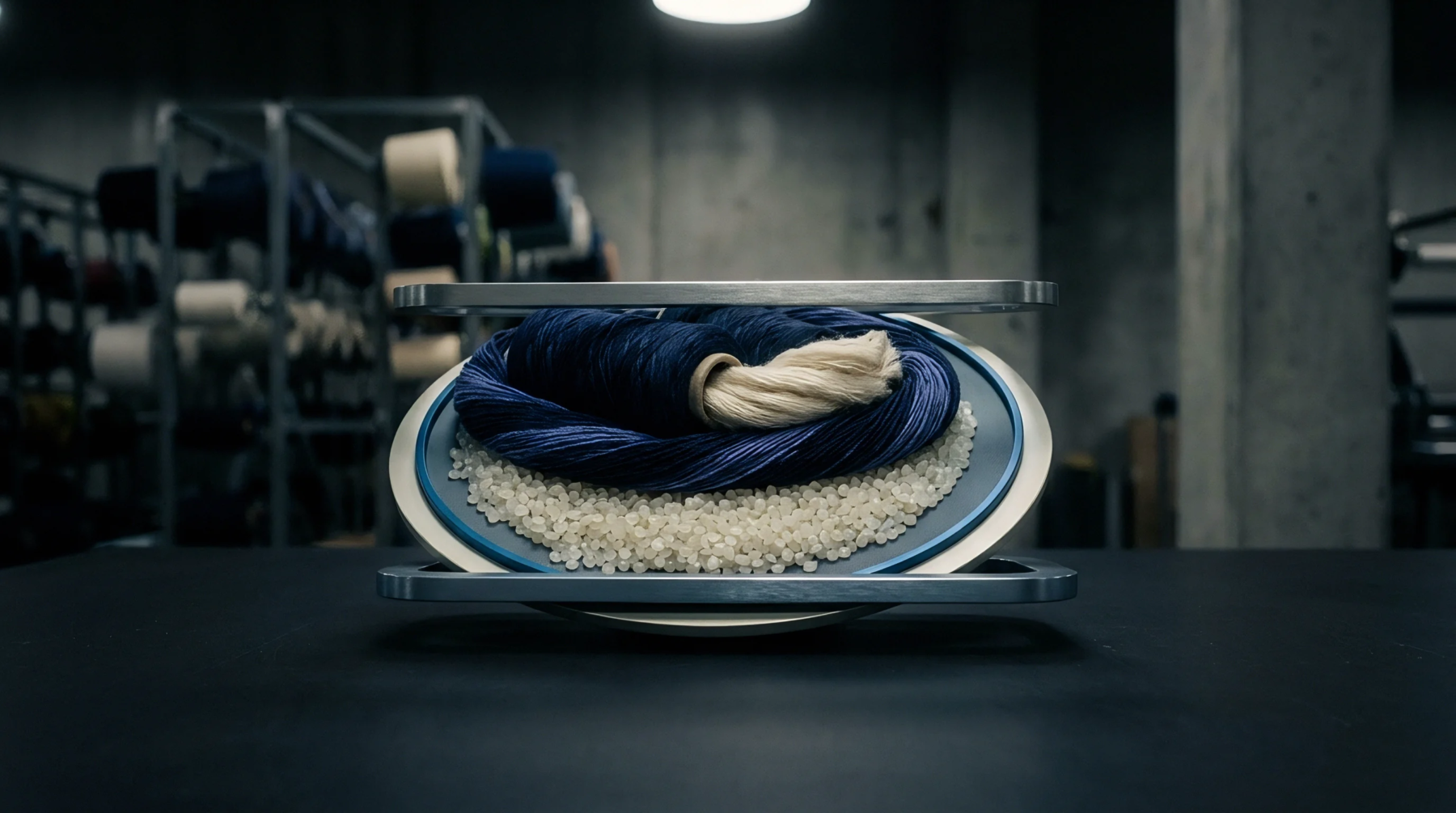
Caustic Swelling
High-concentration sodium hydroxide treatment alters cotton fibre morphology by converting cellulose I to cellulose II while inducing controlled physical shrinkage in unstretched fabric zones. Industrial processing measures continuous mercerizing contraction as the percentage reduction in fabric length or width during caustic impregnation prior to stenter pin or clip tensioning. The parameter applies to continuous planar structures and stable knitted cellulosic fabrics exposed to caustic solutions between twenty-four and twenty-eight degrees Baumé, ending where batch cold mercerization or slack swelling without physical restraint begins.
Tension Balancing
Chainless and chain-type mercerizing ranges exert mechanical force against natural transverse and longitudinal shrinkage during chemical treatment. Chain ranges utilize stenter clips to pull fabric back to targeted grey width, whereas chainless ranges rely on curved expander rollers to limit width loss. Inadequate tension control permits excessive continuous mercerizing contraction, yielding dense fabrics with reduced yield per linear meter.
Controlled tension forces the swelling cell walls inward, straightening cotton convolutions and boosting tensile strength.
Dimensional Stability
Relaxed cell structures prevent post-wash fabric distortion in finished garments.
Dyeing Receptivity
Chemical restructuring expands amorphous regions within the cotton fibre matrix, increasing hydroxyl group accessibility. Uniform swelling enhances dyestuff absorption during pad-thermofix or exhaust dyeing sequences. Inconsistent continuous mercerizing contraction across the fabric width causes shade listing, center-to-selvedge color variation and variable bar drop in subsequent garment washing processes.
Mill quality control teams inspect wet fabric width before neutralize washing to ensure consistent spatial dimensions across long production runs.