Yarn Interaction
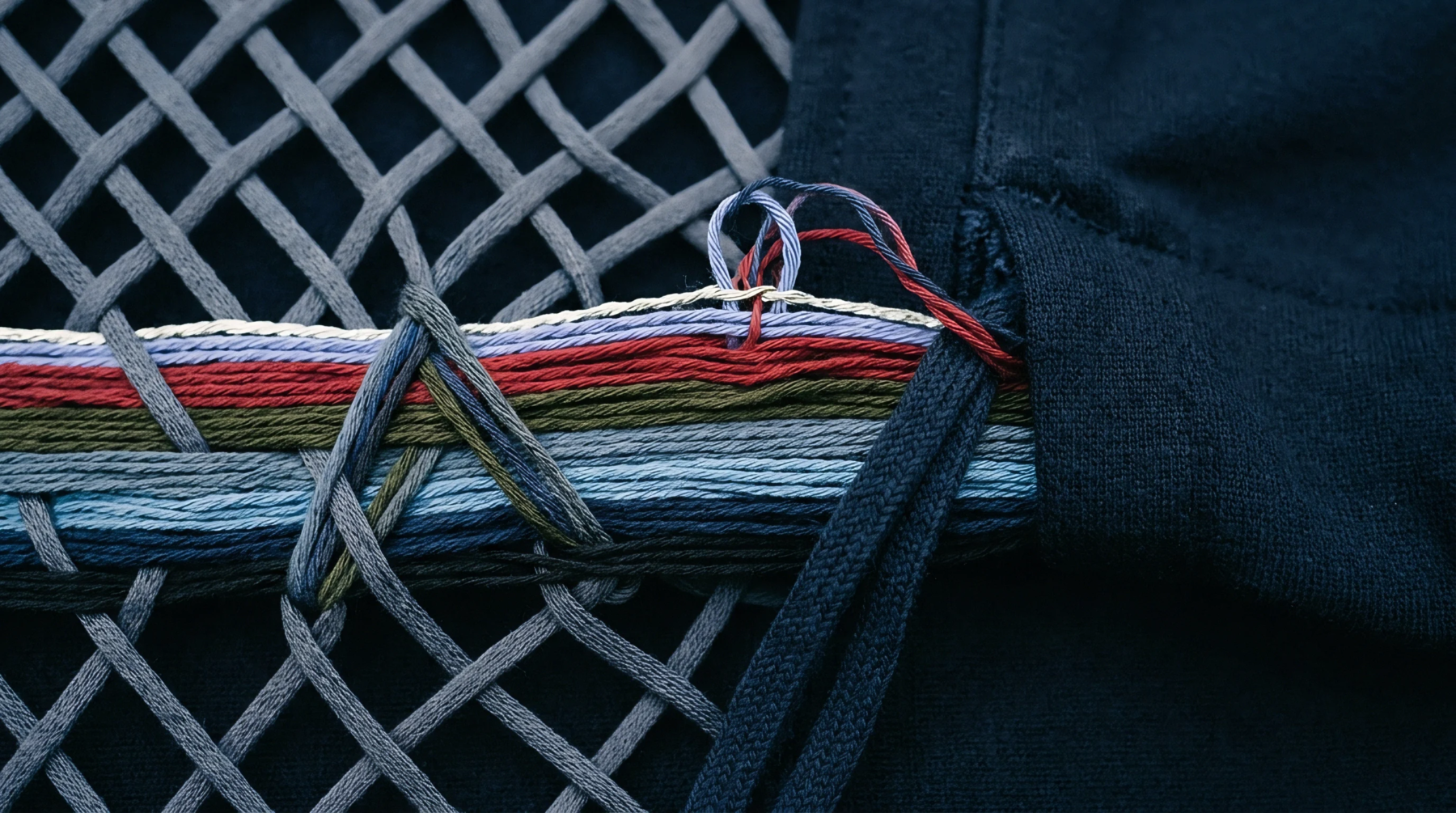
Structural reconfiguration in woven fabrics occurs when the stretching of one yarn system forces the perpendicular yarn system to bend. This phenomenon, known as crimp exchange mechanics, governs the initial low-load deformability of woven textiles. As tension increases in the warp direction, warp yarns straighten, which increases the crimp of the weft yarns.
Deformation Mechanism
Flexural rigidity and yarn geometry dictate how crimp is transferred between intersecting threads. Under crimp exchange mechanics, the total length of the fabric does not change because the deformation is geometric rather than elastic.
Fabric Behavior
Shear deformation and lateral contraction are influenced by how easily yarns can slide past one another. The principles of crimp exchange mechanics are particularly relevant in uncoated fabrics, where yarn mobility is high. Coated or laminated fabrics exhibit restricted yarn movement, which alters their deformation profile.
In rubberized fabrics, the coating fills the gaps and stops yarn movement almost completely. This constraint shifts the deformation behavior from geometric to purely elastic strain.
Tensile Response
Biaxial tension tests measure the load required to overcome yarn bending in both directions simultaneously. Understanding crimp exchange mechanics helps garment designers select fabrics with appropriate mechanical behavior. Fabrics with balanced crimp exchange provide better recovery after stretching.
This recovery helps maintain garment shape after repeated cycles of wear.