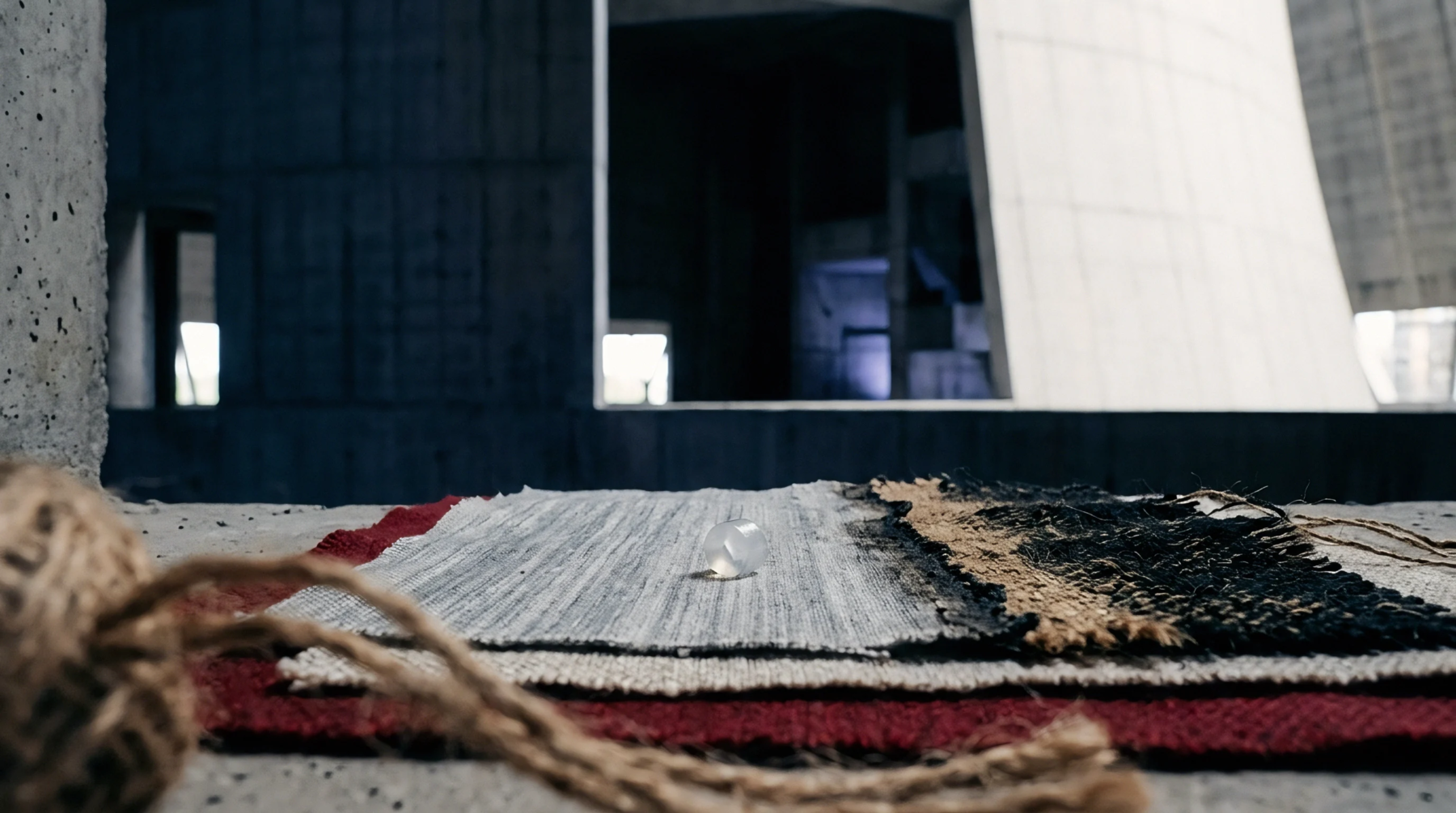
Lateral Deviation
Measurement of dimensional or physical property fluctuations across the usable width of a fabric roll. Cross-width variation occurs when parameters like weight and shade differ between the selvedges and the center. It marks the limit of uniformity in wide-format textile production.
Lateral Consistency
Uniformity across the weft direction determines the yield and cutting efficiency of a batch. If cross-width variation exceeds five percent in grams per square meter, markers must be adjusted to avoid panels of different weights in a single garment. High speed weaving or uneven tension during finishing often drives these deviations.
Consistency is required. Mills monitor the phenomenon using traversable sensors that scan the full span of the moving web.
Processing Influence
Tenter frame settings and chemical application methods directly impact the degree of variance observed. Uneven heat distribution within the drying chamber causes moisture to evaporate at different rates, leading to cross-width variation in residual shrinkage. A blocked nozzle in a spray finishing line creates streaks of uneven concentration.
Precise airflow balancing prevents these defects from reaching the finished roll.
Commercial Tolerance
Buying contracts specify the allowable range for deviations to ensure consistent product performance. When cross-width variation falls outside agreed limits, the entire lot might be downgraded or rejected by the quality control laboratory. Cross-width variation values dictate the usable width of the fabric for automated cutting systems.