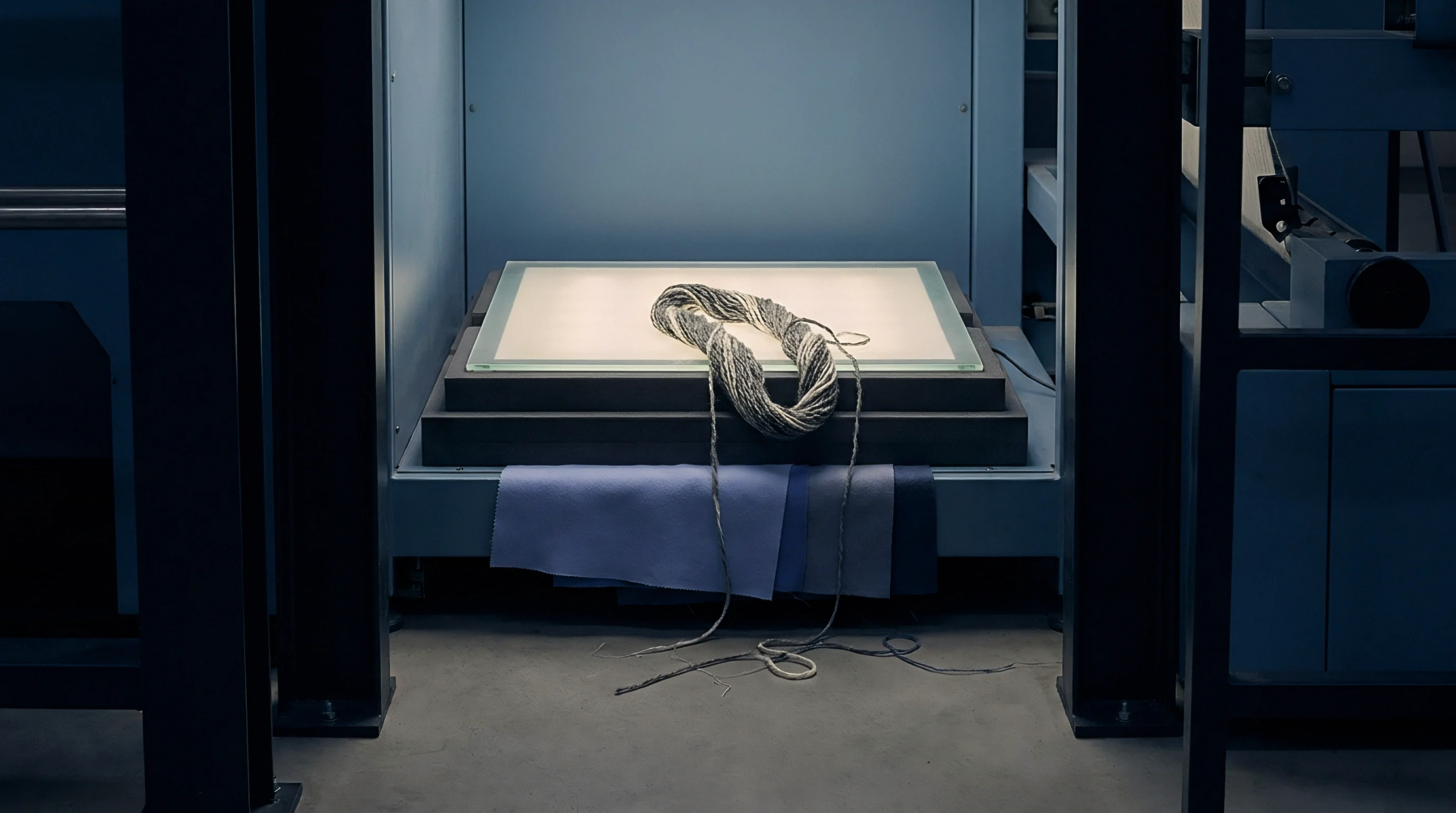
Minimum Colour Quantity Deciding a Range Plan before Design Does
Minimum colour quantities set dye vessel efficiency and enforce range plan fabric allocations long before garment sketches reach the pattern desk.
Mathematical relationship between the vertical placement of repeating design elements defines the visual rhythm of a printed or woven fabric. Specifically, the drop ratio describes the vertical distance that a pattern shifts relative to its full height when it moves across the width of the material. This value is expressed as a fraction or a percentage, such as a half drop or a quarter drop.
It determines how the individual motifs interlock with each other to avoid the appearance of unintended vertical stripes or blocks. Designers and mills use this calculation to ensure that the fabric looks continuous when sewn into large items like curtains and garments. This measurement applies to both the screen printing and digital printing stages.
Calculation of the shift involves measuring the distance from the top of one motif to the start of the next identical motif in the adjacent column. If a pattern uses a half drop ratio, the second column of designs will be lowered by exactly fifty percent of the total repeat height. This staggered arrangement creates a more organic and less mechanical appearance for the textile surface.
In complex floral or abstract prints, this technique hides the seams between the repeating units and makes the transition between panels less visible. Production teams must ensure that the printing rollers or digital files are set up correctly to maintain this alignment throughout the entire production run. Any error in the calculation will cause the patterns to mismatch when the fabric is cut and sewn.
Impact of this arrangement on the cutting room is significant because it alters the way markers are laid out. A fabric with a high drop ratio often requires more material to align the patterns at the seams of a garment. For example, matching a half drop print across the front of a shirt requires careful positioning of the pattern pieces on the fabric roll.
If the ratio is not accounted for in the initial costings, the factory may face a shortage of material during production. Planners use the repeat height and the shift value to calculate the additional wastage factor needed for the order. This ensures that the final product meets the aesthetic requirements of the brand without exceeding the budget.
Verification of the alignment happens during the first few metres of the production run at the mill. Technicians check that the drop ratio matches the approved artwork and that there is no drifting of the motifs. This is particularly important for wide width fabrics used in home textiles where the pattern must remain straight over several metres.
If the shift is inconsistent, the fabric is rejected because it cannot be used for high quality products. Digital printing systems allow for precise control of these ratios and can even adjust them for different garment sizes. The final check ensures that the pattern repeat is consistent from the beginning to the end of the roll.
Accurate alignment is the key to successful pattern matching in apparel.
Minimum colour quantities set dye vessel efficiency and enforce range plan fabric allocations long before garment sketches reach the pattern desk.
Expertise is a utility, not a secret. sentiention™ publishes its working knowledge as open reference: intelligence layer covering the materials it sources, the markets it enters, and the reference that serves both.