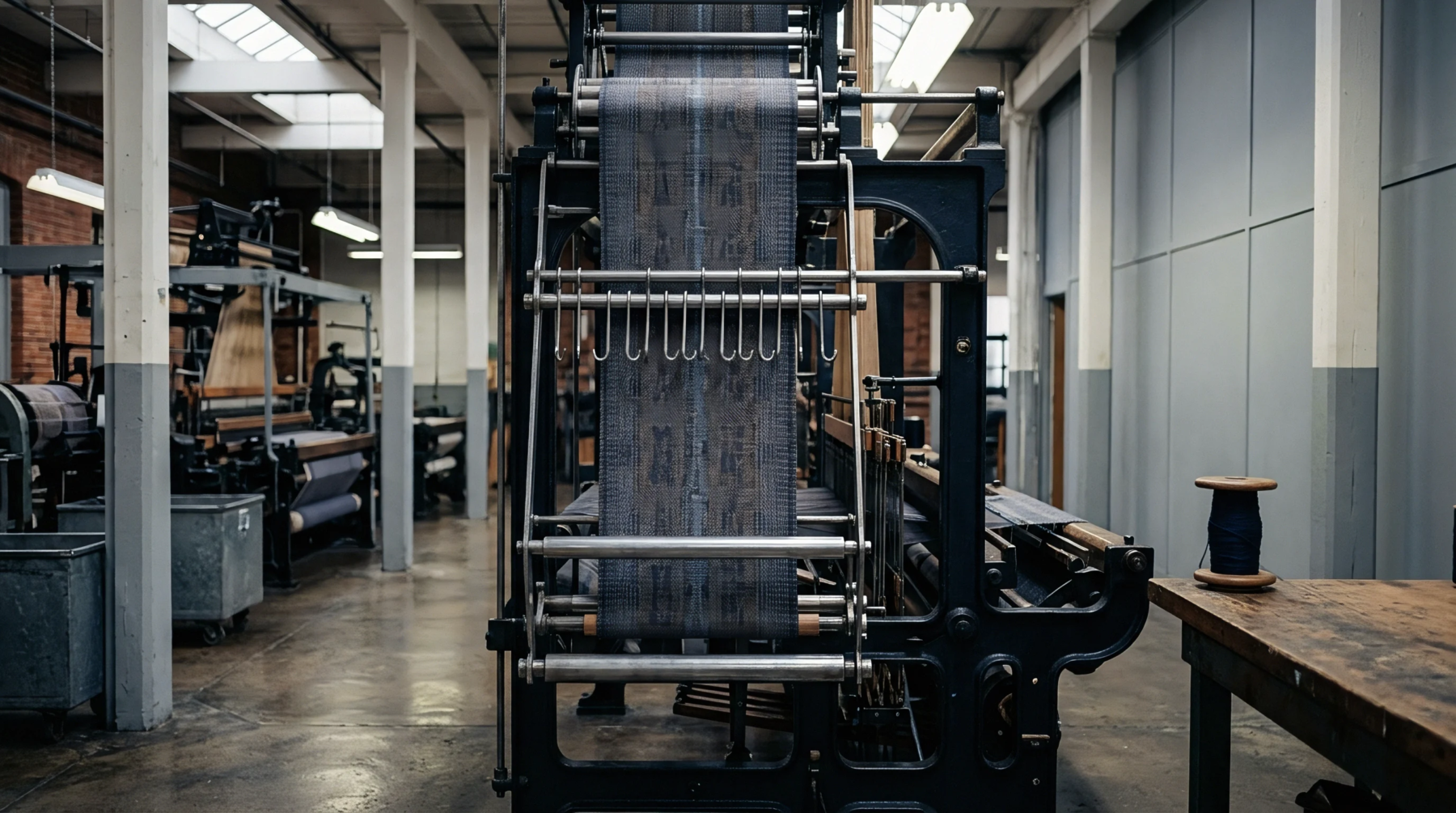
Weaving Kinematics
Coordination of the warp yarn movement as the loom creates an opening for the weft insertion occurs during high speed operation. Correct dynamic shed timing ensures that the upper and lower layers of warp threads reach their maximum separation at the exact moment the carrier enters the shed. This synchronization prevents the filling yarn from catching on the warp ends.
Mechanical Adjustment
Optimal shed openings vary based on the yarn type and the loom speed. Adjusting the dynamic shed timing involves shifting the position of the cam or the electronic program that controls the heald frame movement. Late shed formation can lead to friction between the yarn and the reed, resulting in broken ends and machine downtime.
High speed air jet looms require millisecond precision to maintain a clear path for the filling.
Yarn Stress
Rapid movement of the warp threads induces substantial peak tension during every cycle. When dynamic shed timing is aggressive, the yarns experience sharp increases in stress that can exceed their elastic limit. This mechanical load is particularly dangerous for low elongation fibres or recycled yarns with lower tensile strength.
Careful calibration reduces the frequency of warp breaks by distributing the tension more evenly over the weaving cycle.
Fabric Surface
The interaction between the shed timing and the beat-up process defines the appearance of the fabric face. Proper shed closing relative to the reed movement locks the weft yarn into place and prevents weft retraction.