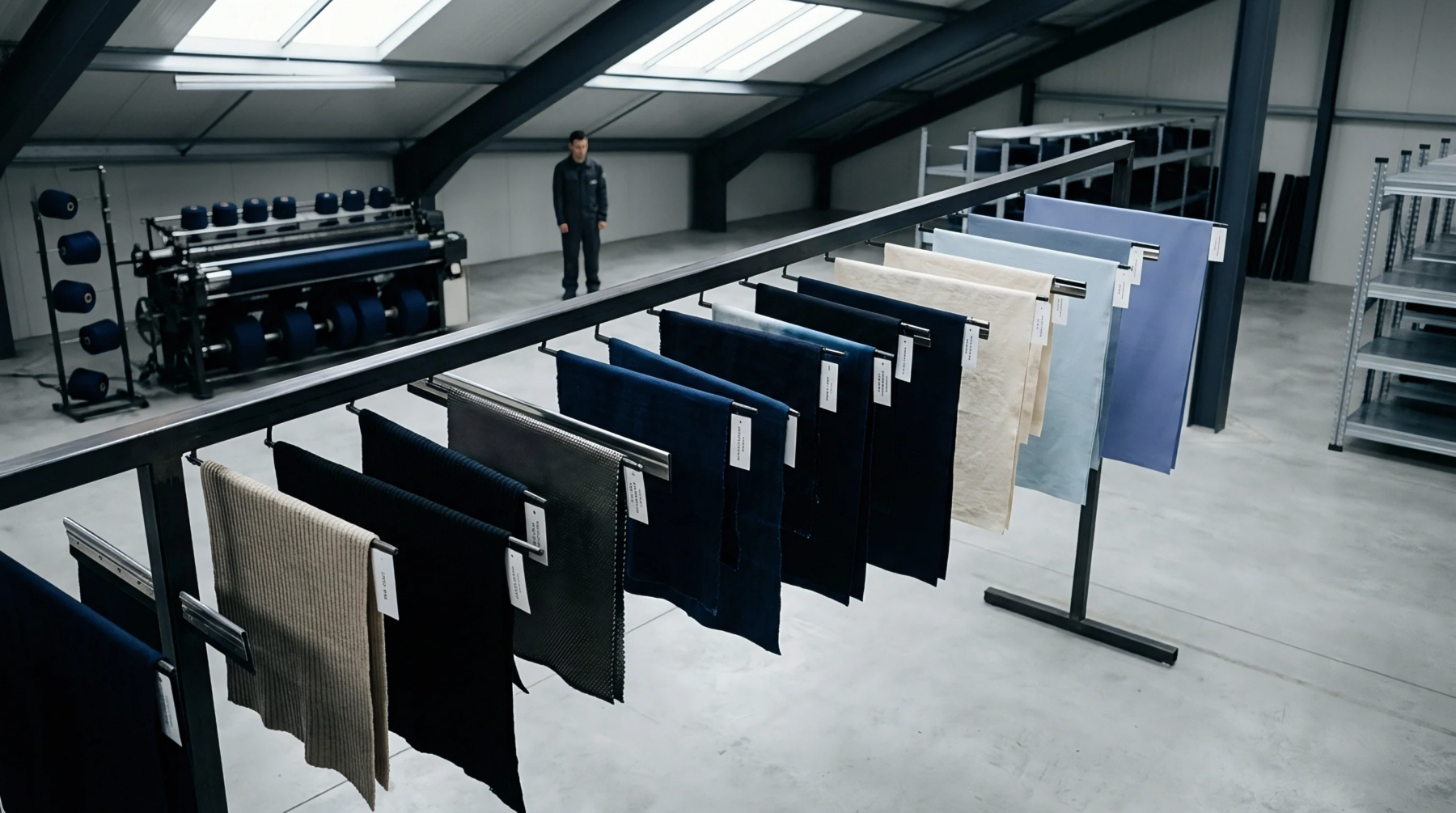
Fabric Weight Tolerance Written as a Range the Mill Holds
Fabric weight tolerance written as a mill range holds commercial validity only when tested under ISO 139 standard atmosphere using ISO 3801 methods.
Measurement of non-uniform density at the fabric edge provides a standard for identifying production quality. This edge weight bias describes the disparity in mass per unit area between the selvedge region and the body of a finished textile roll. It dictates the acceptable deviation permitted before finishing processes like heat setting or coating fail to produce consistent results.
The metric remains relevant during the final inspection phase when rolls undergo physical evaluation against predetermined mass specifications. Fabric mills apply this check to ensure that the tensioning systems used during the initial winding process prevent lateral stretching of the edges. Deviations beyond a threshold cause uneven dyeing results or structural distortion during subsequent cut and sew assembly operations.
Control of tension during the tenter frame passage dictates the outcome of the edge weight bias. Processing involves feeding the fabric through a series of rollers where pull forces act on the material. When these forces concentrate at the outer margins, the edge exhibits thinning that distorts the weight profile.
Technicians verify the mass per square meter at multiple points across the width to detect this specific deviation. Operators adjust the clip settings or the overfeed percentage to compensate for the detected variance. Excessive tension during cooling cycles results in the edge losing its original density while the center retains stability.
Accurate adjustment ensures that the finished roll provides a uniform surface for printing or garment construction. Stable edge conditions prevent the puckering that occurs when internal stresses in the material release after the cutting process begins.
Determination of limits for the edge weight bias requires comparison with the bulk average mass of the material. A tolerance window exists where small fluctuations do not impair the function of the textile. Quality control teams measure samples from the start, middle, and end of each roll to map the distribution of weight.
A variation exceeding five grams per square meter across the selvedge zone triggers a rejection of the specific section. This boundary condition protects the integrity of the fabric for high precision applications like technical laminate production. Mills document these results to maintain records for supply chain compliance.
Verification occurs using scales calibrated to a precision level compatible with the fabric GSM rating. The difference in mass between the selvedge and the interior represents a defect in structural uniformity.
Impact of the edge weight bias appears in the yield loss during final garment fabrication. When the material near the edge does not match the central density, manufacturers discard the affected segments to prevent assembly errors. High levels of this bias force the reduction of the usable width of the cloth for pattern marking.
Material waste increases as the width of the unusable edge zone expands, raising the cost of production per unit. Efficient operations monitor the weight profile to minimize the amount of fabric removed before the cutting stage. Accurate tensioning prevents the permanent deformation that necessitates the disposal of outer layers.
Proper control of weight distribution allows for a greater portion of the roll to reach the cutting table without sacrifice. The final weight profile determines the consistency of the finished product.
Fabric weight tolerance written as a mill range holds commercial validity only when tested under ISO 139 standard atmosphere using ISO 3801 methods.
Expertise is a utility, not a secret. sentiention™ publishes its working knowledge as open reference: intelligence layer covering the materials it sources, the markets it enters, and the reference that serves both.