Standard Support
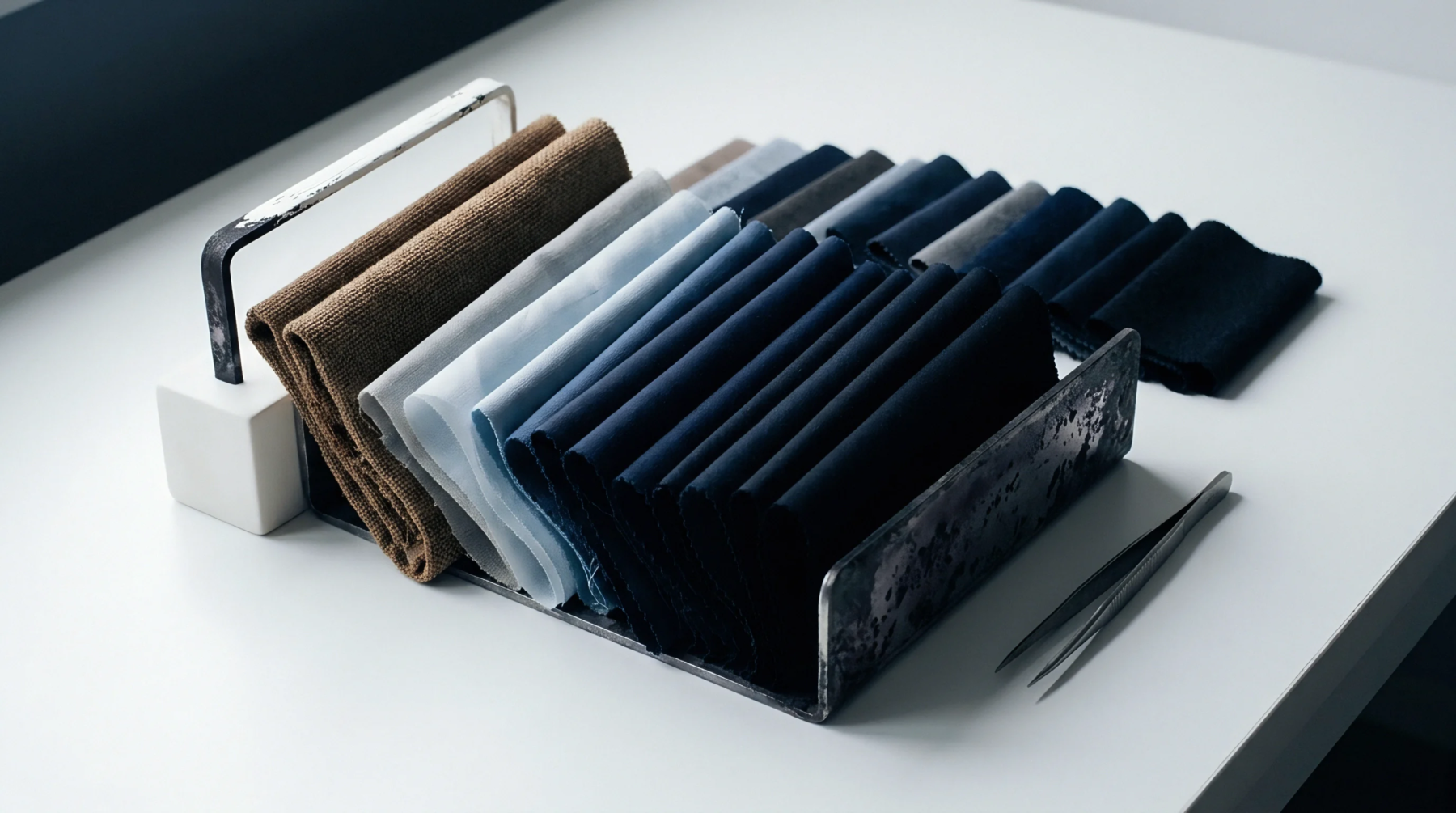
Reflectance measurements of translucent materials require a standardized backing to prevent background surfaces from distorting the color readings. The use of fabric opacity backing ensures that light passing through a sheer garment does not bounce back from the instrument holder.
Measurement Protocol
When measuring light fabrics on a spectrophotometer, some of the incident light penetrates the specimen. If the sample is placed against a variable background, the measured reflectance values will shift depending on the color of that background. Using a standardized black and white tile system or multiple layers of the same fabric as a backing resolves this issue.
This method isolates the true color profile of the textile specimen.
Material Influence
Standard backings are calibrated to specific reflectance values across the visible spectrum. A black cavity is used for absolute opacity tests, whereas a white tile with known reflectance provides the baseline for dual-thickness calculations. This difference is critical for sheer sportswear or summer dresses where garments must hide undergarments.
Testing Application
Lab technicians must choose the backing according to the test standard specified by the buyer. For knitwear, folding the fabric into multiple layers is common to achieve complete opacity. If the material is too thick to transmit any light, the influence of the backing is eliminated, and a single layer suffices.