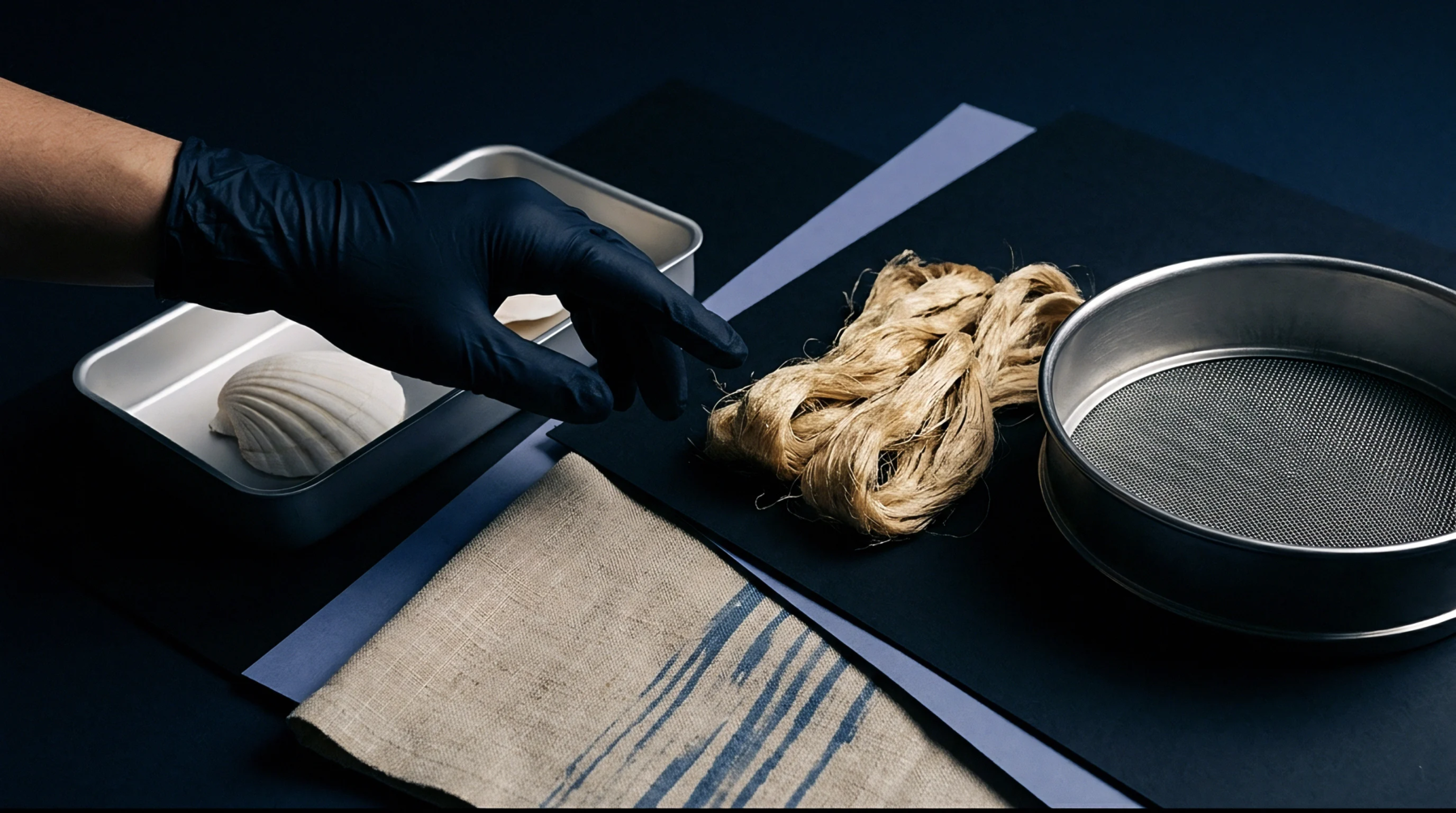
Lot Selection Method
Mathematical selection and physical extraction of representative fabric segments or entire material rolls from bulk mill shipments to assess quality parameters defines this protocol. Receiving warehouses and apparel cutting facilities execute fabric roll sampling to confirm delivered lots match physical, mechanical and aesthetic specifications prior to cutting. Sample selection follows standard inspection protocols, notably the ten percent square-root rule or ASTM D1776 conditioning frameworks.
Extracted swatches undergo evaluation for colour consistency, aerial weight, tensile strength, yarn count and residual shrinkage. The mechanism provides a statistical snapshot of shipment uniformity. It cannot eliminate the risk of isolated defects within uninspected rolls.
Sampling Mechanics
Roll selection requires balanced sampling across multiple production batches, dye lots and spinning runs. Inspectors select unopened rolls across the delivery rather than pulling solely from readily accessible outer tiers of shipping pallets. For visual inspection under the four-point or ten-point systems, standard protocol demands pulling a minimum of ten percent of the total roll count within the consignment.
For physical laboratory testing, technicians extract full-width fabric swatches measuring one running metre, cutting at least one metre away from the raw roll edge to avoid distorted yarn tensions or edge-drying variations.
Laboratory Preparation
Extracted fabric specimens undergo conditioning in standard atmospheres of twenty-one degrees Celsius plus or minus one degree, and sixty-five percent relative humidity plus or minus two percent, for a minimum of twenty-four hours. Technicians conduct physical testing on cut swatches, measuring yarn density per inch, fabric mass per square metre, tear resistance, seam slippage and dimensional stability to washing. Colour matching teams compare swatches from different rolls against the master production standard under controlled D65 light cabinets to catch roll-to-roll shading shifts.
Non-conforming rolls trigger quarantine procedures for the broader dye lot.
Statistical Scope
Sampling protocols assume homogeneous distribution of characteristics throughout individual dye lots. Flaws occurring at irregular intervals, such as intermittent loom stop marks, foreign yarn contamination or isolated slubs, may evade roll selection protocols. Testing representative swatches sacrifices the cut fabric portions, balancing analytical destruction against statistical certainty for bulk manufacturing lots.