Massive Displacement Property
A material characteristic defines the ratio of total matter to the actual physical volume occupied by a textile structure including internal air gaps. Fabric volumetric density determines how much space a solid mass occupies within a three dimensional layout, distinguishing a textile from a monolithic solid. Engineers calculate this value by dividing the mass of the specimen by the external dimensions of the unit, which accounts for both fibres and voids.
This measurement provides the basis for thermal insulation ratings and sound absorption performance during technical fabric development. Accurate assessment requires a fixed measurement of area and thickness under a specified pressure to ensure that the compression of yarns does not distort the result.
Compression Variance
Variations in structure alter the final result when external pressure forces the yarns together. Thick insulation materials exhibit lower readings because their open geometry traps more air per unit of mass. Dense weaves push the result toward the specific gravity of the base fibre since the void volume disappears under high yarn count conditions.
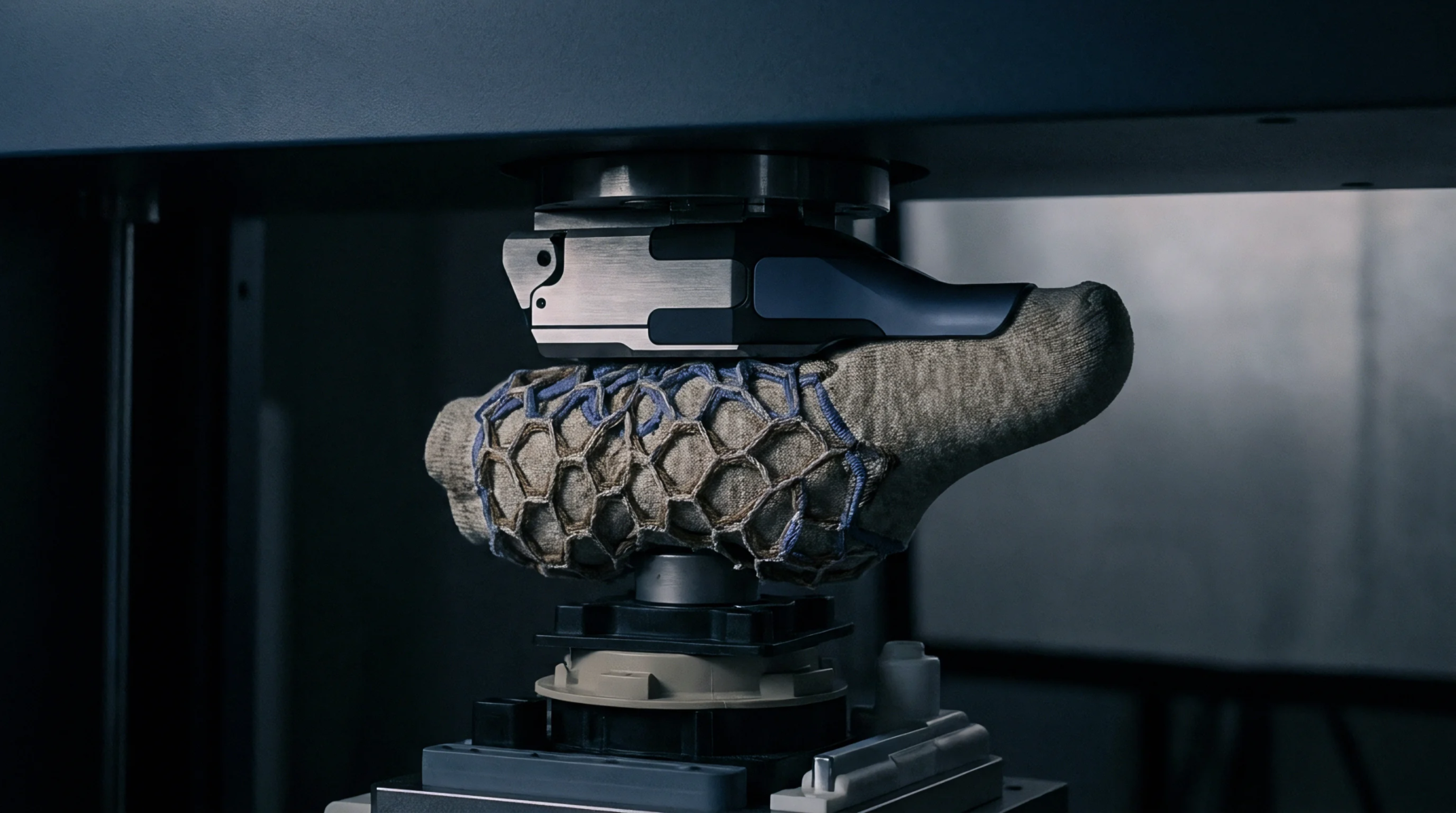
Calibrated testing rigs apply a standard weight to the surface to guarantee consistent gaps across different production batches.
Manufacturing Correlation
Production consistency relies on monitoring this metric to ensure that dyeing and finishing processes remain uniform across the entire roll. Softening agents often introduce chemical bulk that changes the internal void structure while the dry weight stays constant. Shifts in the calculated density during the finishing stage indicate that mechanical settings or chemical applications exceed the intended tolerances for the fabric.
Managers compare these results against the base greige specifications to identify machine drift before a batch leaves the site.
Standardization Metric
Regulatory bodies utilize this calculation to define the performance limits for high loft nonwovens and industrial filtration textiles. The value provides a hard limit for fire retardant penetration because the permeability of the structure changes along with the density. Lab technicians verify the result using physical measurement against established density charts for specific fibre polymers.
High performance structures require a narrow range of tolerance to maintain the functional properties expected of the finished item.