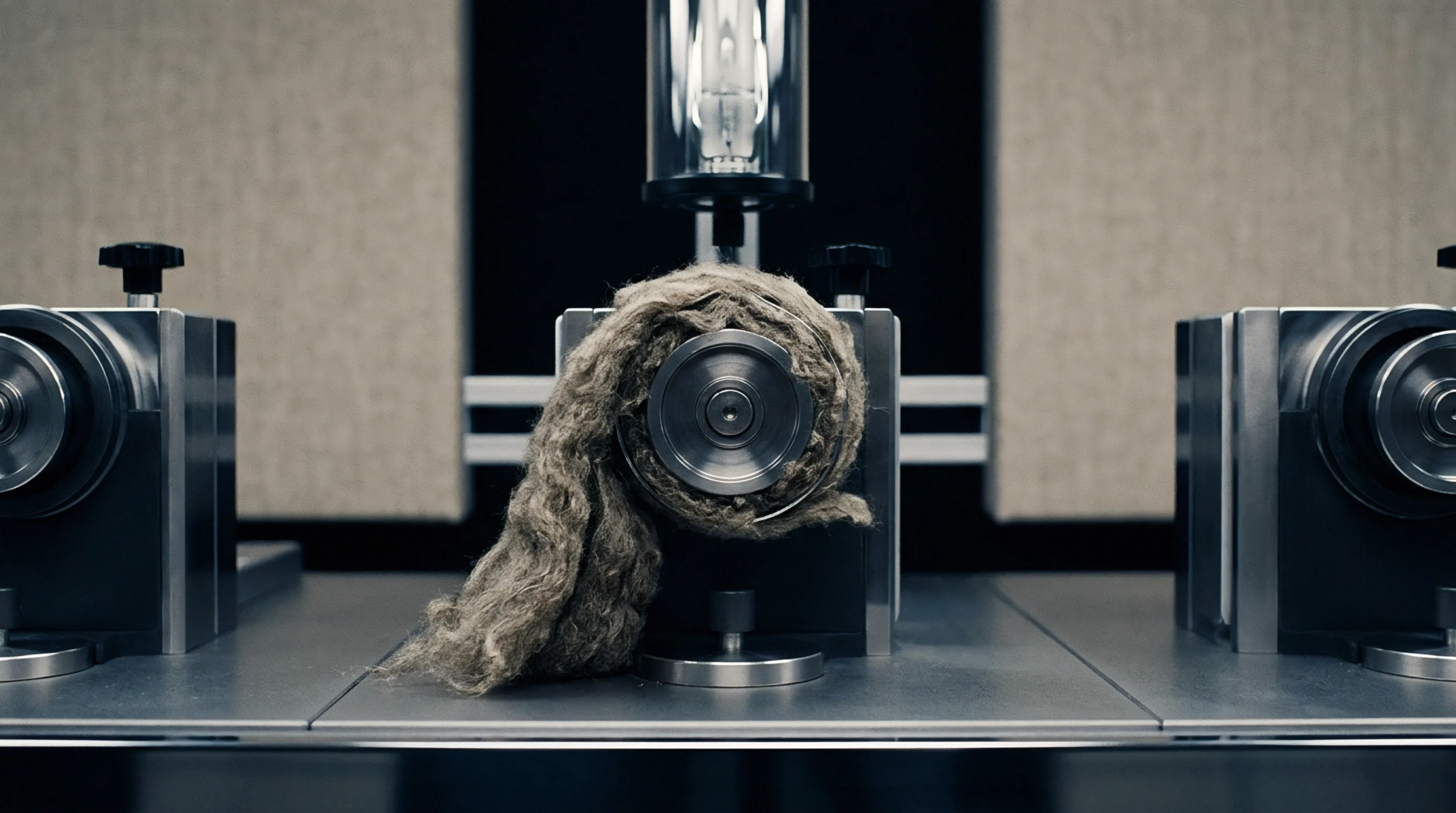
Mechanical Extraction
Carding equipment segregates individual fibres based on their physical dimensions to ensure uniformity within a sliver. Fibre length selective removal identifies and extracts short fibres below a defined threshold from the main mass of a cotton or synthetic bale sample. This separation process relies upon the differential movement of hooks and rollers to pull shorter segments away from the longer primary material.
Technical specifications demand a consistent count of the short fibre content to prevent downstream inconsistencies in yarn strength.
Cleaning Performance
Sorting efficiency determines the purity of a fibre bundle prior to spinning. Equipment configured for this separation discards the unwanted short fraction into waste collection systems while retaining the long components for further drafting. Uniformity ratios improve when the machine setting restricts the escape of mid-range fibres into the reject bin.
Accurate calibration prevents the loss of usable material while maintaining the target staple distribution.
Process Control
High tension zones on the carding cylinders apply forces that pull detached fragments away from the fibre beard. Automated sensors monitor the mass flow of both the accepted stock and the separated debris. Deviations from the baseline indicate wear in the metallic clothing or incorrect clearance between the working elements.
Adjusting these mechanical intervals restores the balance between production speed and material quality.
Quality Standard
Laboratories confirm the effectiveness of the separation by analyzing the processed sliver with high volume instrumentation. Measuring the length distribution of the final output verifies that the fiber length selective removal operation meets the required staple grade. Excess amounts of short fibres in the resulting web compromise the tensile characteristics of the yarn.
Correct operation of this mechanism establishes the physical foundation for every subsequent stage of textile manufacturing.