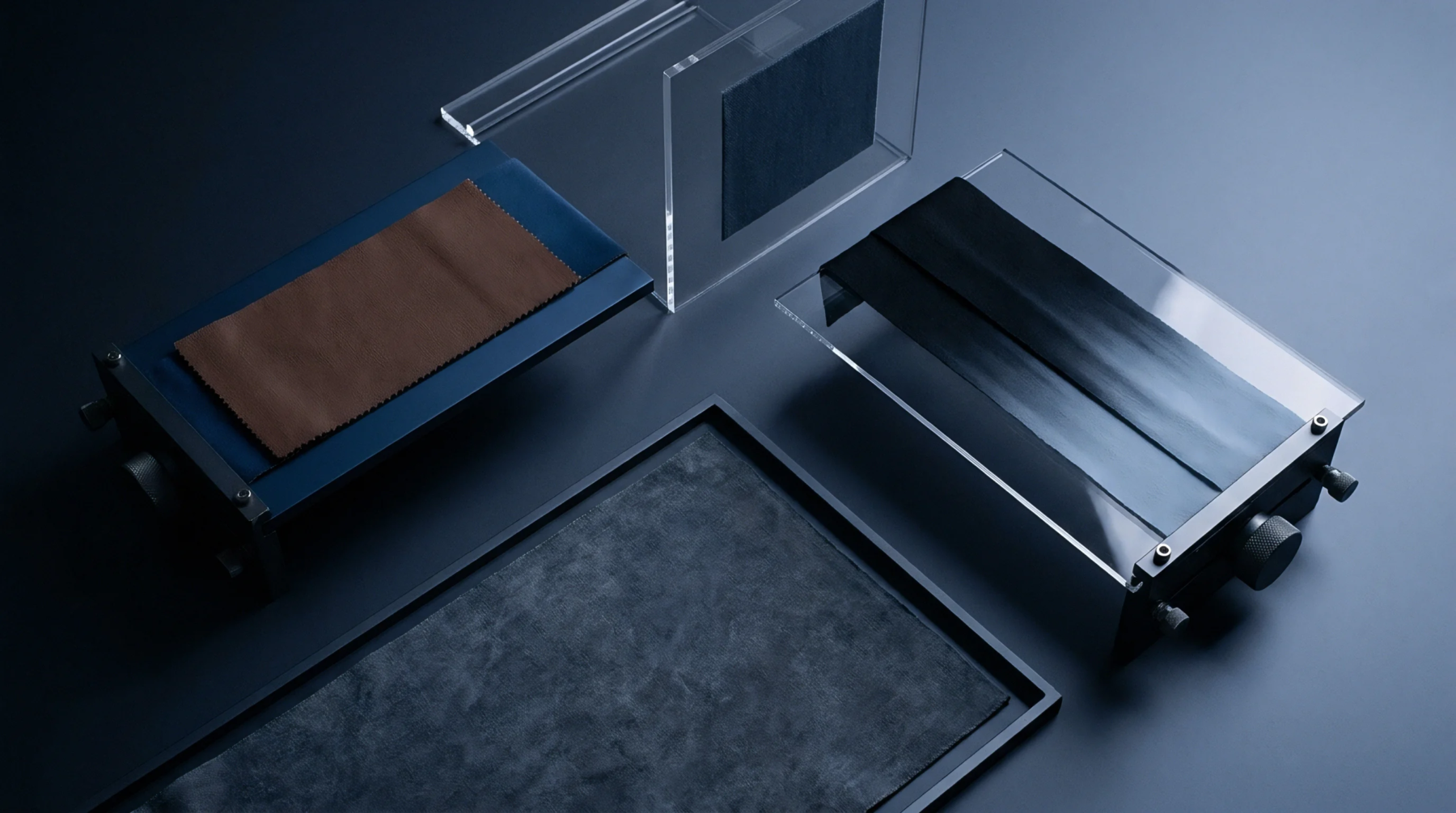
Seam Slippage
Seam slippage under constant load governs fabric durability during garment production, where GB/T 13772.1 specifies the standard test method for woven textiles. Mechanical stress pulls warp yarns over filling yarns, or filling yarns over warp yarns, until structural integrity fails along the stitched line. Laboratory technicians clamp a rectangular specimen into a constant rate of extension machine and apply a specified force perpendicular to the sewn seam.
The recorded resistance reveals whether apparel construction holds under ordinary wear or splits prematurely at stress points.
Load Resistance
Applied tension determines yarn mobility inside woven structures, and GB/T 13772.1 dictates how laboratories measure opening width against a reference baseline. Technicians record force displacement curves until the displacement reaches a fixed millimeter threshold past zero load. High density weaves restrict yarn slippage through tight geometric locking, whereas loose constructions permit displacement under minimal force.
Procurement contracts stipulate maximum allowable slippage values to prevent garment failure before retail delivery.
Creep Behavior
Constant tension over prolonged periods induces permanent deformation in woven garments, demanding rigorous verification under GB/T 13772.1 protocols. Prolonged mechanical stress forces individual filaments to migrate within the weave matrix, relaxing the initial structural resistance. Fabric weight and yarn twist density dictate how severely a material yields during sustained pulling.
Quality auditors review these displacement metrics to determine whether a fabric batch meets retail durability thresholds.
Failure Limits
Threshold values separate acceptable production lots from defective merchandise, ensuring that GB/T 13772.1 benchmarks guide mill acceptance criteria. Low resistance numbers force manufacturers to redesign stitch density, increase seam allowances, or select alternative thread counts. Buyers reject shipments failing the millimeter displacement limit during pre-shipment laboratory inspections.
Exact mechanical compliance protects brand reputation by eliminating premature garment destruction at retail stores.