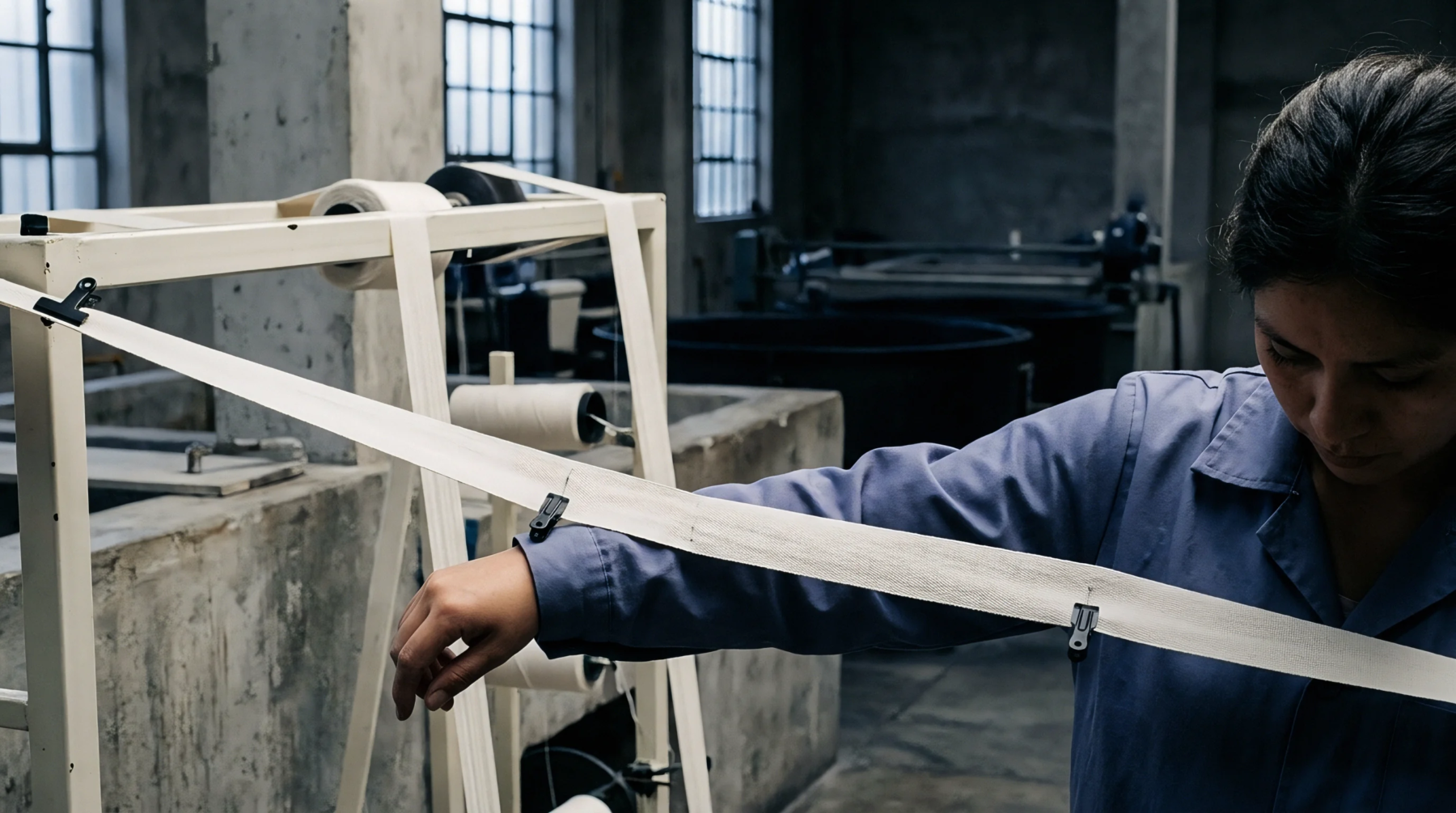
Fibre Specification
Egyptian extra long staple cotton combined with domestic upland varieties forms a giza cotton blend to lower spinning costs while preserving hand feel. Mill buyers inspect raw bales for micronaire and uniformity index before issuing processing instructions to the carding floor. Extraneous vegetable matter and short fibres leave the stock during combing, which removes material below specific length thresholds.
Spinners adjust drafting rollers on ring frames to handle the increased variability introduced by mixing different staple distributions.
Spinning Tolerance
Processing parameters on high speed spinning frames require strict humidity control to prevent yarn breakage during twist insertion. Technicians monitor breaking tenacity and elongation at break on single strand testers to verify that the yarn meets buyer specifications. Twist multipliers change depending on whether the resultant yarn goes into warp or filling directions on the weaving loom.
Uneven tension across the creel causes periodic faults in the final yarn package, requiring optical clearers to splice out defects before winding.
Fabric Construction
Weaving mills set warp density and pick counts to achieve desired GSM targets in finished woven piece goods. Sizing agents applied to warp yarns protect them from abrasion against metallic heddles and reeds during shedding operations. Fabric width on the loom dictates subsequent processing allowances for shrinkage during scouring and mercerization.
Mercerizing baths under tension swell the cellulose structure, improving dye uptake and imparting a permanent luster to the woven cloth.
Finishing Parameter
Final shade matching under standard daylight cabinets ensures commercial acceptance by apparel brands before bulk shipment approval. Stenter frames apply heat setting and width control to stabilize dimensional properties against washing and steam pressing. Laboratory testing verifies color fastness to laundering and rubbing through standardized grey scale comparisons.
Tensile strength retention after resin treatments remains a primary quality gate for finished garments entering retail channels.