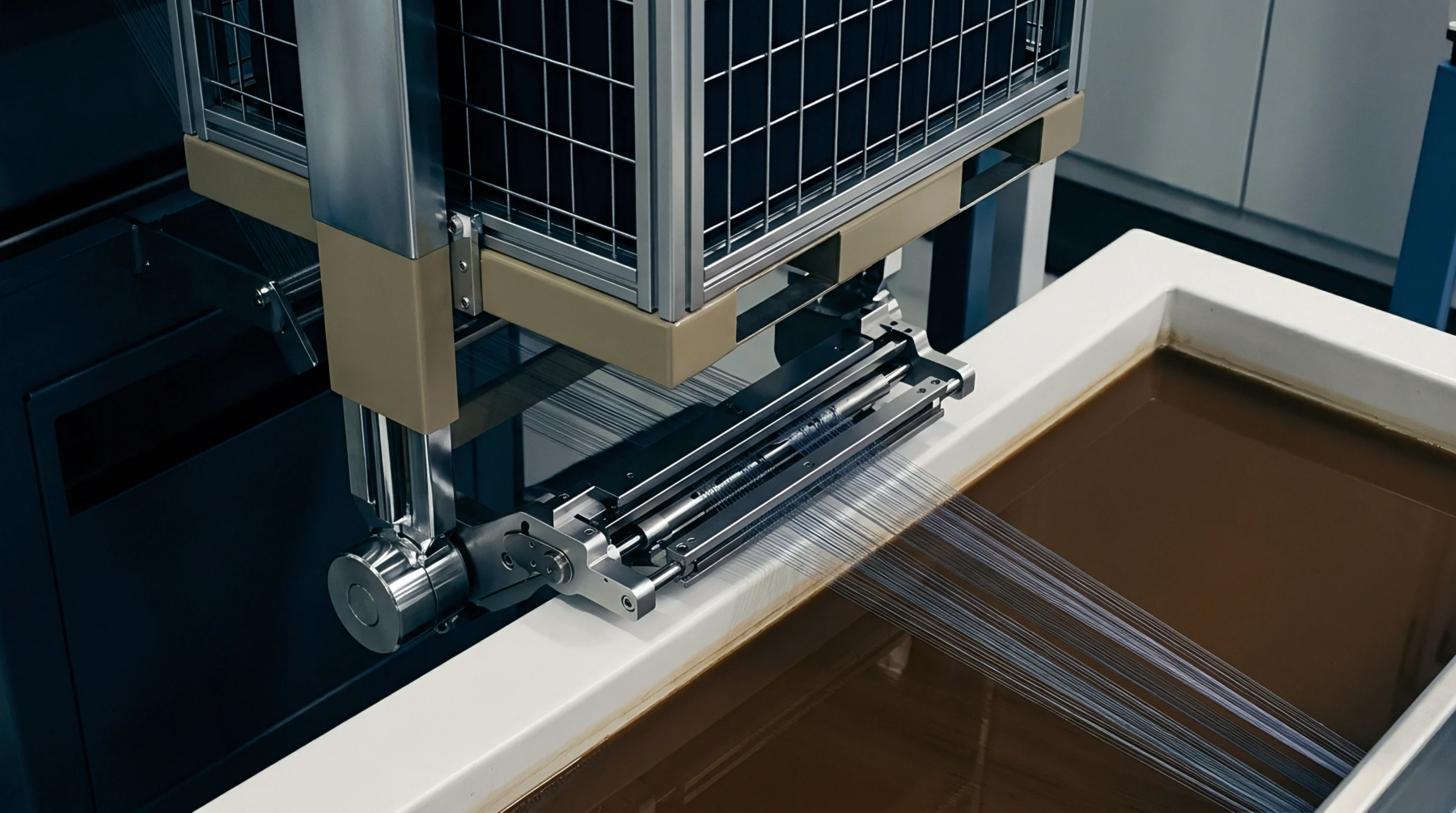
Cleaning Protocols
Fabric processing begins with the removal of sizing agents, oils, and waxes applied during the spinning and weaving stages. Grey goods preparation constitutes the essential chemical and thermal treatment required to render raw textile surfaces absorbent for subsequent dyeing or printing. Natural fibres contain impurities that interfere with chemical affinity, while synthetic materials often retain processing lubricants from the loom.
Removing these substances produces a uniform substrate capable of consistent colour intake.
Chemical Parameters
Alkalinity levels determine the efficiency of scouring during this conversion phase. High concentrations of caustic soda facilitate the saponification of natural fats, converting insoluble oils into water-soluble soaps. Excessively high temperatures during this step risk damage to sensitive protein fibres such as wool or silk.
Operators monitor the pH balance of the wash liquor to ensure the chemical reaction remains stable across the entire lot.
Moisture Management
Uniform drying follows the wet processing stage to stabilize the fabric dimensions. Excessive residual moisture causes uneven dye strike, which results in visible colour variation across the roll. Removing water through industrial rollers or stenter frames sets the fabric width and ensures flatness.
Precise control of the evaporation rate protects the fibre structure from thermal shock while maintaining the desired weight per square metre.
Quality Verification
Absorbency testing serves as the final validation that the substrate meets production requirements. Technicians measure the time required for a water droplet to penetrate the surface of the fabric. Rapid absorption indicates the successful extraction of all hydrophobic contaminants.
Fabrics failing this specific benchmark remain unsuitable for high-quality finishing applications.