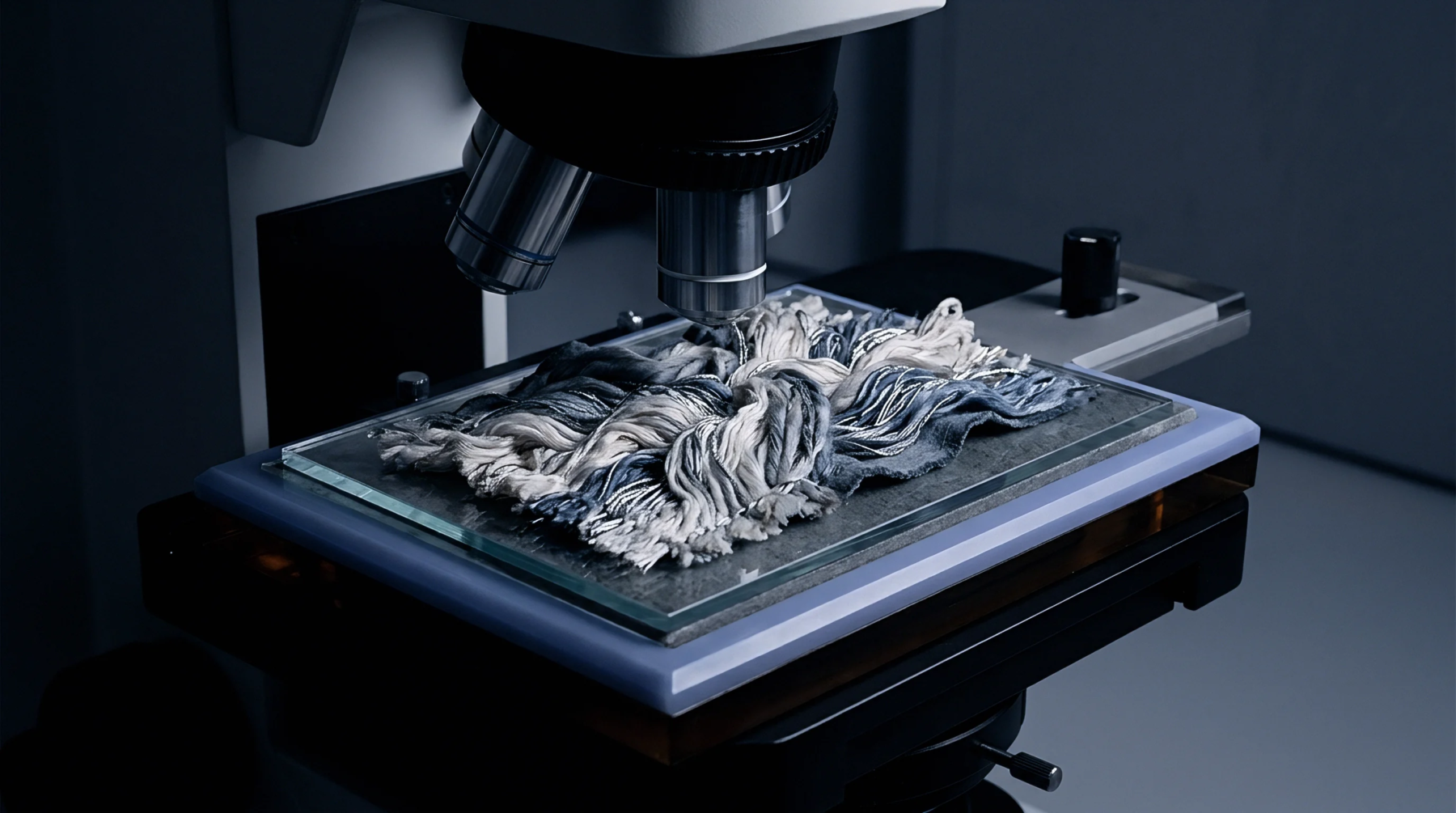
Quantitative Observation
Digital vision systems convert pixel brightness data into measurable geometry for surface inspection. Through image analysis, hardware platforms digitize optical input from fabric swatches or moving textile webs to detect structural irregularities. Software algorithms identify contrast boundaries or color variations that deviate from specified tolerances.
The method produces objective output that replaces human visual estimation during fabric grading.
Geometric Calibration
Spatial data acquisition requires consistent lighting angles to eliminate shadows that simulate non-existent defects. Operators define a pixel-to-millimeter ratio using a reference target of known dimensions. This scale factor allows the system to calculate the absolute size of snags, knots or oil stains on the textile surface.
Software filters ignore noise from normal yarn texture while highlighting anomalies that exceed a programmed threshold. The mathematical output correlates pixel clusters to specific industry standard grades for final inventory disposition.
Computational Reliability
Consistent detection across large production volumes provides a data stream for quality auditing. Systems maintain stable performance without the fatigue that degrades manual inspection accuracy over time. Variance in the results arises when machine settings fluctuate or sensor hardware collects dust.
Proper maintenance cycles for optical components ensure the measurement remains within the bounds of precision defined by laboratory control methods.
Detection Limitation
Optical capture lacks the capacity to verify tensile strength or chemical finishing properties. These properties require mechanical loading or molecular testing to determine fitness for consumer use. The method informs the operator about surface uniformity rather than the internal physical integrity of the fiber construction.
High-speed cameras provide rapid binary sorting for fabric rolls but cannot diagnose the root cause of the imperfection. Final accuracy depends on the calibration of light intensity relative to the specific weave pattern under observation.