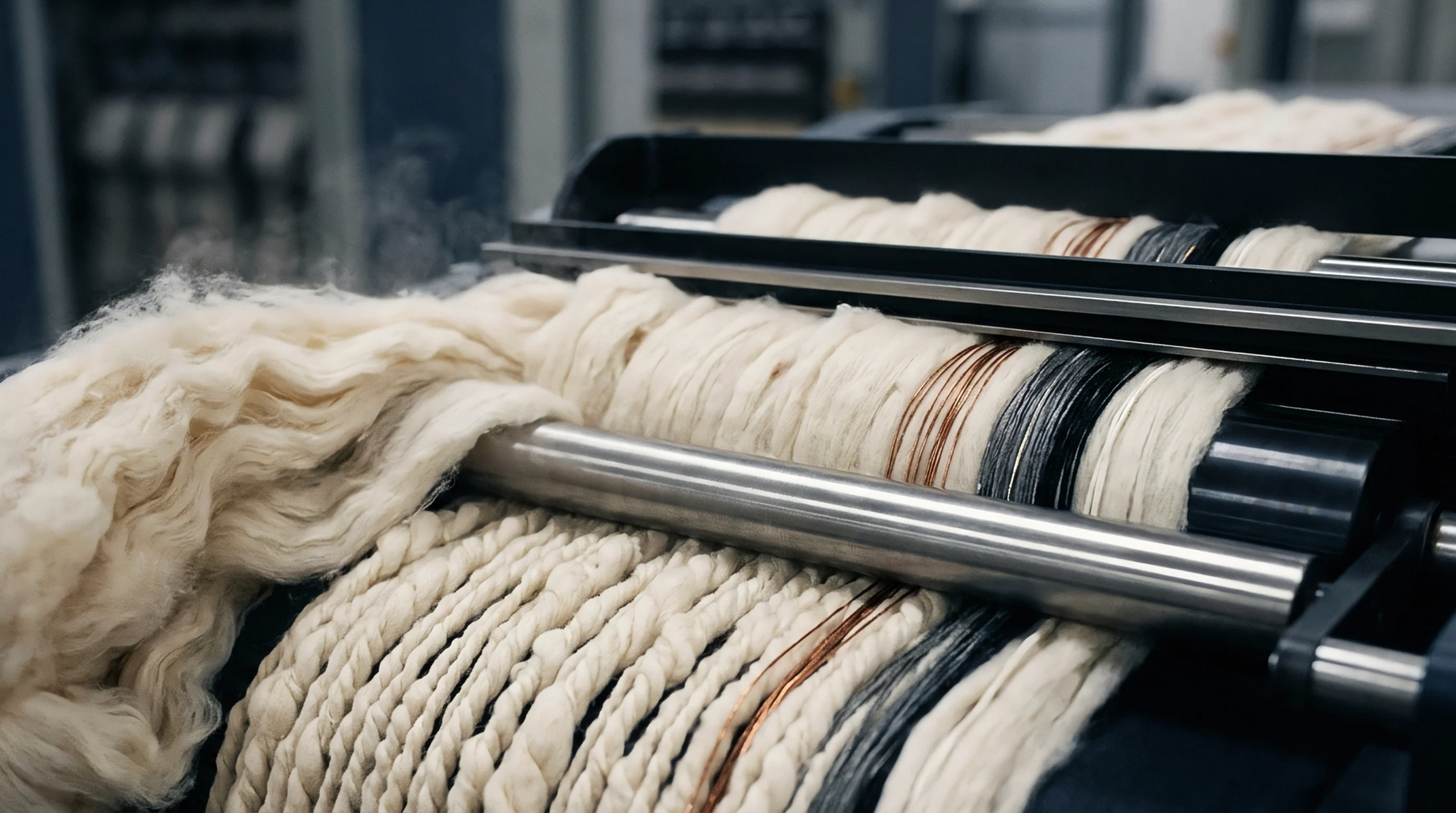
Blend Ratio Drift across a Season from One Blending Room
Blend ratio drift stems from uncompensated raw bale moisture changes and pneumatic sorting; control requires ISO 1833 dry-mass specs and real-time weigh-hopper NIR updates.
Analytical moisture correction provides the quantitative foundation for verifying commercial fibre mass across international trade contracts by removing non-fibre mass variables from raw shipment weights. This dry mass calculation procedure normalizes the measured weight of natural fibres to a specific laboratory state defined by a percentage of regain, thereby ensuring that buyers pay only for the fibre content rather than adsorbed water. The method dictates the precise drying oven parameters required to expel moisture until the sample reaches a constant weight.
Equilibrium remains the target state throughout the conditioning cycle. Laboratories verify the oven dry weight against the net mass recorded at the point of origin or delivery. Accuracy depends on the total removal of atmospheric water without triggering thermal degradation of the chemical structure of the fibre.
If the heat setting exceeds recommended limits for synthetic blends or protein fibres, the sample loses structural mass beyond the intended water loss. Technicians confirm the validity of this measurement by comparing the initial gross weight with the calculated dry mass after applying the regulated moisture regain factor.
Moisture content variability creates financial risk for mills when purchasing raw wool, cotton or bast fibres because water weight fluctuates based on storage humidity and ambient shipping conditions. Procurement teams avoid overpayment through the application of iso 6741 dry mass calculation to adjust invoice totals based on the moisture free baseline. An auditor inspects the testing logs to determine if the sample size sufficiently represents the entire lot density.
Discrepancies between the calculated value and the bulk manifest trigger a retest of the shipment. Factory controllers rely on the consistency of this calculation to maintain accurate inventory records and production costing. Price adjustments move in proportion to the difference between the actual moisture level and the commercial moisture regain allowance assigned to each fibre category.
Drying stages proceed in a forced air oven calibrated to maintain a stable temperature range for a minimum duration. Technicians weigh the specimen immediately upon removal from the heat source to prevent ambient reabsorption of moisture. Small variances in the cooling environment change the recorded result.
A desiccant chamber houses the sample while the weight stabilizes before final registration. The weighing process repeats until two consecutive measurements show no change exceeding a predefined tolerance. Digital scales linked to the oven unit capture the weight loss data directly.
This automated recording minimizes manual errors during the heavy volume periods typical of large textile consignments.
Consistency across global supply chains rests on the adherence to these specific gravimetric standards by third party testing houses. Producers submit certificate copies to finance departments to finalize payment for delivered goods. An independent verification of the calculation results provides the final proof of contract compliance before the fibre enters the carding process.
Any deviation from the established testing parameters renders the dry mass calculation invalid for commercial settlement. Proper calibration of the laboratory equipment forms the absolute constraint on the precision of the trade transaction.
Blend ratio drift stems from uncompensated raw bale moisture changes and pneumatic sorting; control requires ISO 1833 dry-mass specs and real-time weigh-hopper NIR updates.
Expertise is a utility, not a secret. sentiention™ publishes its working knowledge as open reference: intelligence layer covering the materials it sources, the markets it enters, and the reference that serves both.