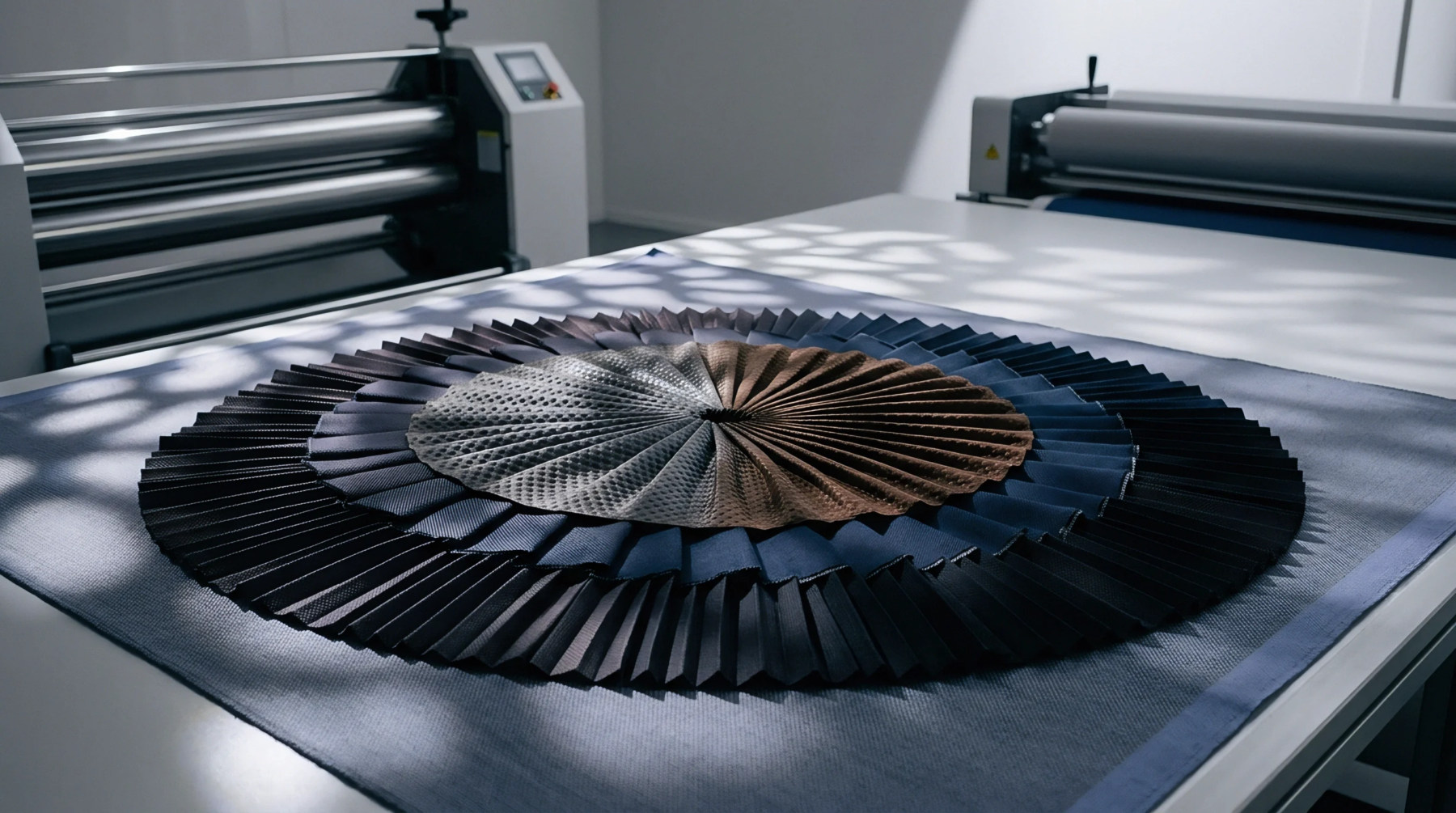
Crystalline Growth
Increase in the thickness of the folded-chain crystal regions within a polymer occurs when the material is held at temperatures between the glass transition and the melting point. This process of lamellar thickening leads to a more stable crystalline structure and often results in a higher melting temperature for the finished fibre. It involves the rearrangement of polymer chains as they pull from the amorphous regions into the crystal lattice.
Thermal Mechanism
Heat setting in a stenter frame provides the energy needed for these crystals to grow. Long exposure times or higher temperatures promote thicker lamellae.
Fibre Property
Tensile strength and modulus change as the internal geometry of the fibre shifts during annealing. Larger crystals generally increase the stiffness of the yarn but may reduce the dye uptake by shrinking the available amorphous space.
Production Control
Dimensional stability improves because the thickened crystals act as more stable physical cross-links that resist further shrinkage. Monitoring this change helps mill operators predict how a fabric will behave during subsequent high-temperature finishing steps. If the initial heat setting is insufficient, the crystals remain thin and susceptible to further growth, which results in unwanted fabric shrinkage in the final garment.