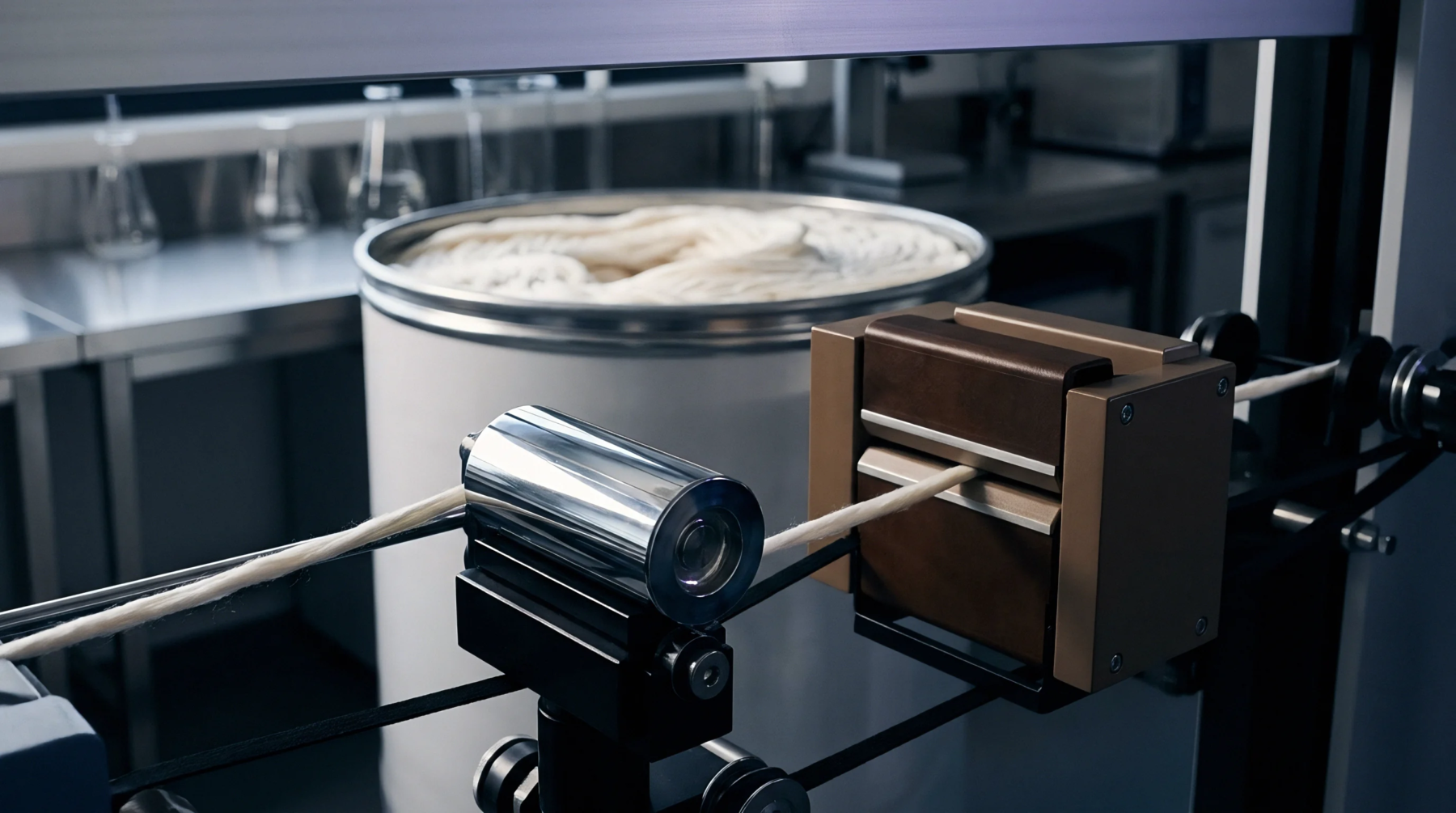
Speed Coordination
A mechanical alignment coordinates the rotation of the internal winch with the velocity of the liquid jet in a wet-processing vessel. Proper lifter reel synchronization prevents tension imbalances that can stretch or damage knitted fabrics during processing. It maintains a constant ratio between the linear speed of the fabric rope and the peripheral speed of the reel.
This balance avoids slip and friction, protecting the face of the fabric from mechanical bruising, which is especially important for elastomeric blends that are highly susceptible to permanent deformation when hot.
Control System
Microprocessors monitor the motor speeds of both the drive reel and the circulation pump to adjust the drive frequency in real time. Through lifter reel synchronization, the system prevents the fabric rope from piling up in the nozzle or stretching under excessive tension. If the reel runs faster than the liquid flow, the fabric undergoes friction that creates surface hairiness.
Automated feedback loops adjust the drive to keep these speeds aligned.
Fabric Protection
Sensitive synthetic knits are easily deformed if subjected to uneven forces at high process temperatures. Achieving lifter reel synchronization ensures that the fabric travels smoothly through the machine without being subjected to snatching or pulling forces. This minimizes crease marks and surface defects that would lower the grade of the finished batch.
High yields depend on this steady movement.
Operating Limit
Vessel loading limits must be respected to prevent the fabric weight from overcoming the motor torque of the drive system. If the load is too high, lifter reel synchronization cannot be maintained because the fabric slips on the reel surface. This loss of coordination leads immediately to process interruptions and potential damage to the batch.