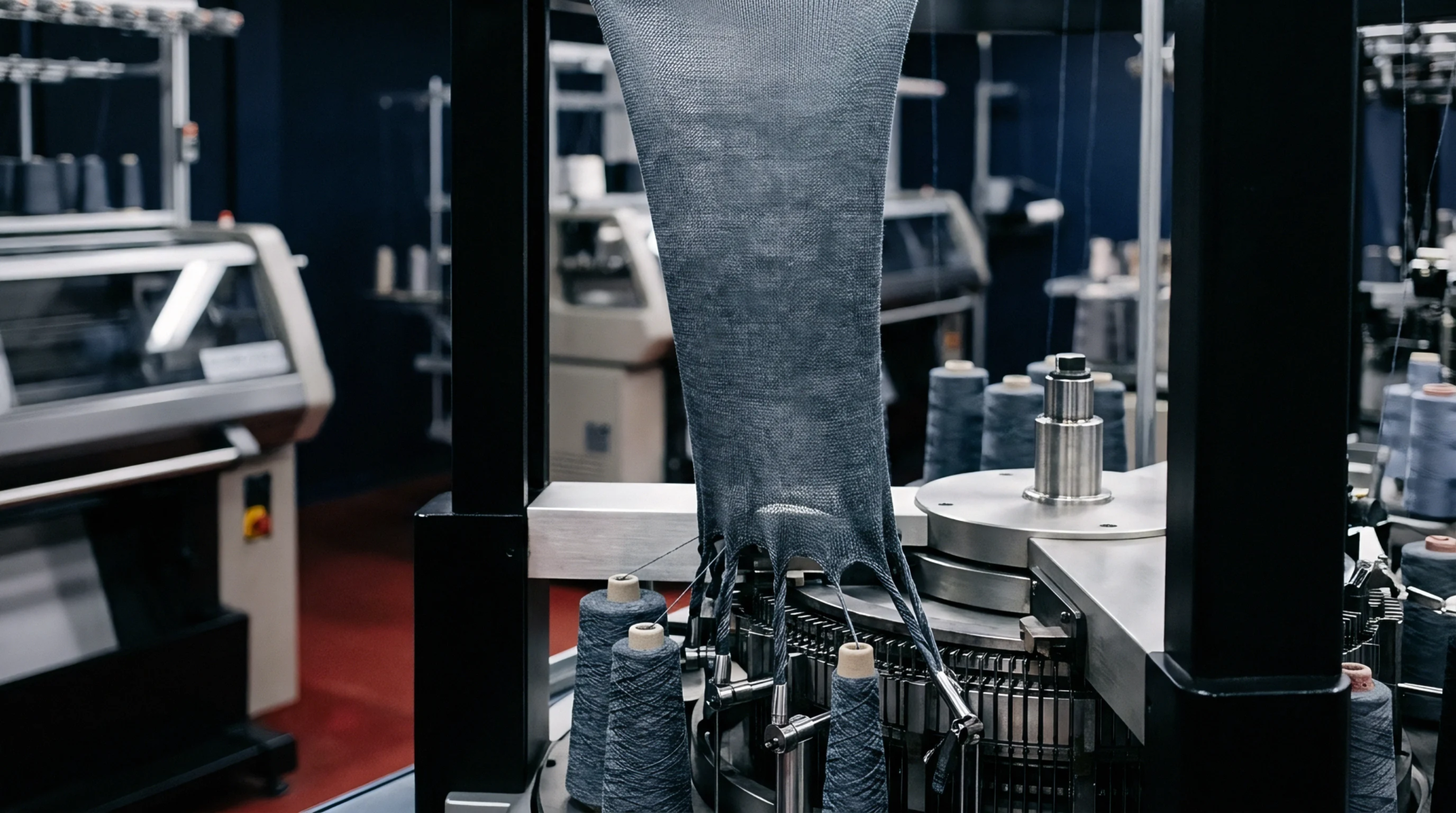
Stitch Creation
Interaction between the yarn and the needle as it rises, captures the thread, and pulls it through a previous stitch defines the structural basis of knitted fabric. These loop formation mechanics involve the synchronized movement of needles, sinkers, feeders and yarn guides. The process transforms a linear strand of yarn into a two-dimensional interlocking mesh.
Tension Influence
Magnitude of the force applied to the yarn as it enters the needle zone dictates the size and uniformity of the resulting loop. If the loop formation mechanics are disrupted by uneven tension, the fabric will exhibit barre or holes. High-speed cameras are often used in labs to observe these movements and identify the source of mechanical faults.
Needle Path
Geometry of the cam track guides the needle through its vertical cycle of clearing, feeding, landing and knocking over. Precise timing within these loop formation mechanics ensures that the old loop is cast off only after the new yarn is securely held. Different cam profiles can be installed to change how the needle interacts with the yarn, allowing for tuck or miss stitches.
This mechanical flexibility is what enables the creation of patterns and textures in the final garment. Any deviation in this path leads to dropped stitches or yarn shearing.
Fabric Characteristic
Final elasticity and recovery of the material depend on the shape of the interlocked loops. Because loop formation mechanics determine the amount of yarn used in each stitch, they influence the weight and thickness of the finished textile. Controlling these variables allows for the production of fabrics with specific stretch characteristics.