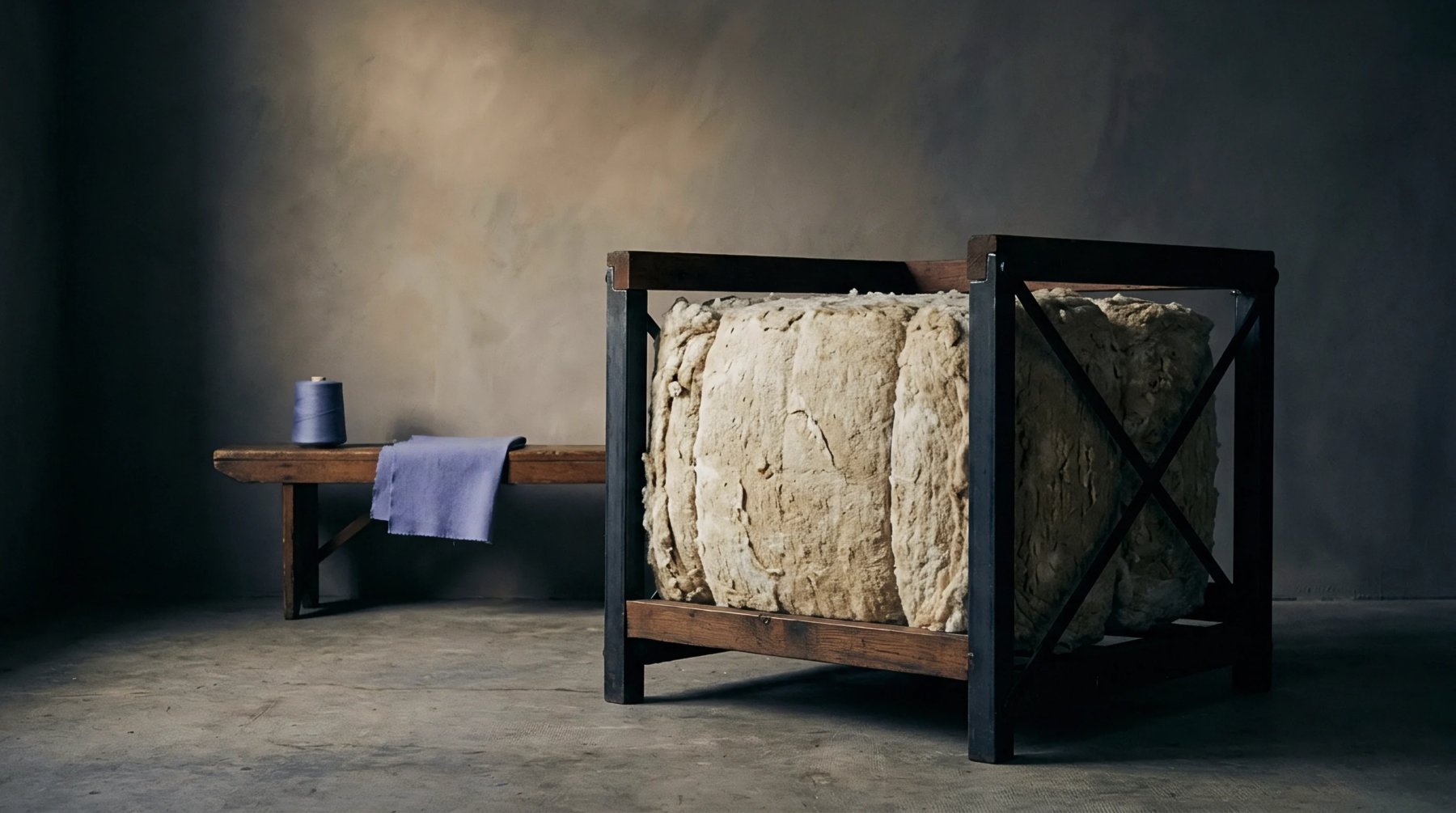
Standard Allowance
Standardized commercial mass calculations determine the official billable weight of fiber or yarn lots by adding agreed moisture percentages to oven-dry mass. Commercial transactions use moisture regain basis to eliminate weight fluctuations caused by ambient relative humidity changes during storage or transit. The calculation applies to commercial invoicing weight, stopping short of measuring free surface water or liquid processing additives.
Mass Adjustment
Laboratory drying ovens heat sample fibers to constant dry mass at one hundred five degrees Celsius to strip all absorbed water. Under moisture regain basis, standard percentage allowances designated for each fiber type are added to the dry mass figure. Cotton receives an allowance of eight point five percent, while wool achieves up to eighteen point two five percent depending on processing stage.
Precision balances record dry weight immediately after cooling in sealed desiccators to prevent atmospheric re-absorption. Standardized formulas compute final commercial weight for financial settlement.
Commercial Weight
Inconsistent moisture calculations lead to financial disputes in fiber trading. Variations in ambient humidity alter actual roll weight without changing dry fiber mass.
Contract Valuation
Trade contracts mandate standard regain allowances to standardize valuation across global supply chains. Commercial invoices calculated using moisture regain basis ensure fair pricing between yarn spinners and fabric weaving mills.