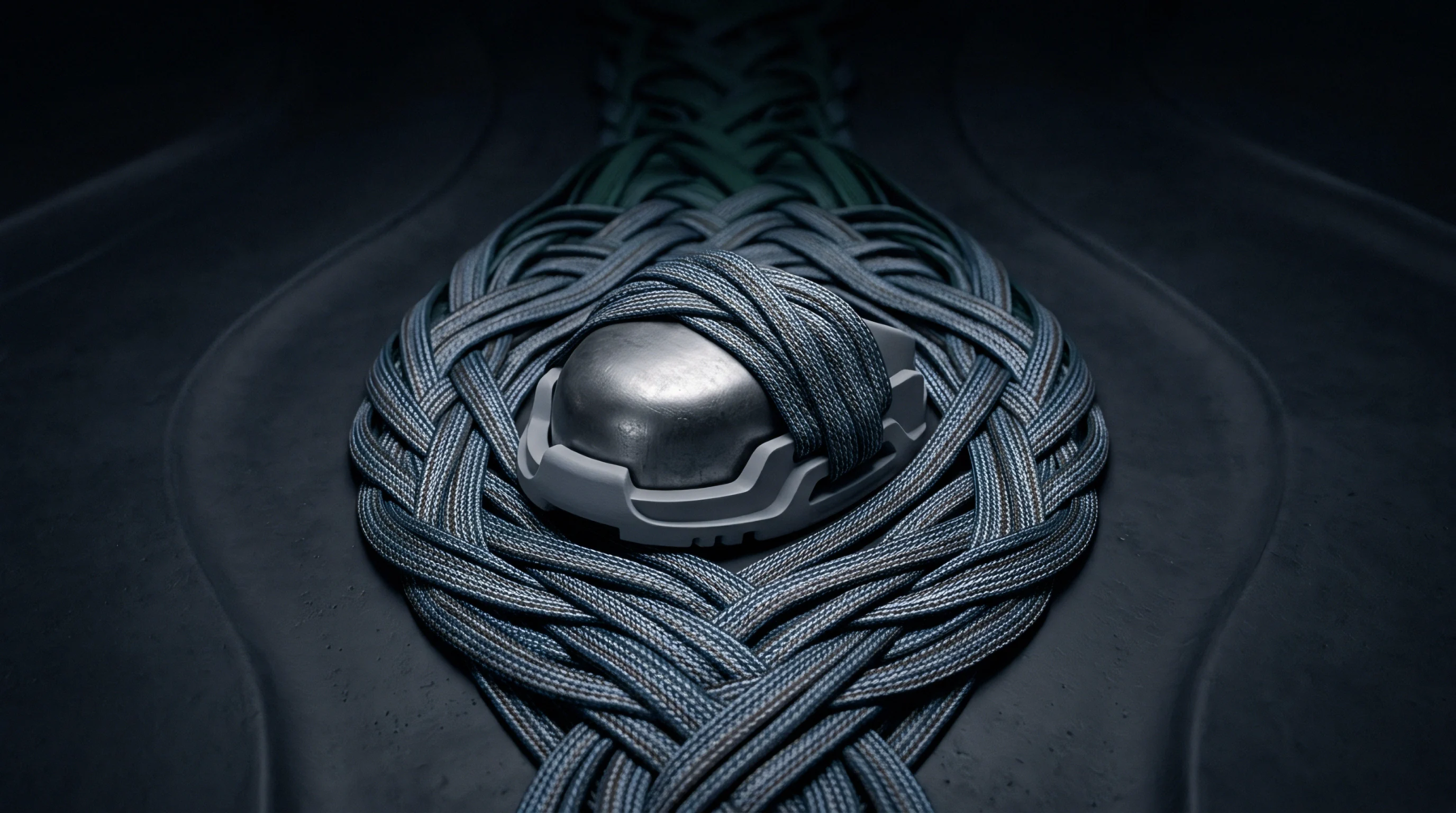
Internal Component
Pressurized housing within an air-jet spinning or texturing machine directs the flow of compressed air around a moving yarn. This nozzle chamber creates the aerodynamic conditions necessary to twist or entangle the fibres. Precision engineering of the internal geometry ensures that the air velocity remains constant.
Aerodynamic Function
High-velocity air enters the cavity through small orifices, generating a powerful vortex that wraps loose fibre ends around the yarn core. This action defines the structural integrity and surface appearance of air-jet yarns. Adjusting the air pressure within the chamber allows the operator to control the degree of entanglement and the resulting yarn strength.
Minimal turbulence outside the primary vortex is required to maintain a stable spinning process. The shape of the chamber determines the frequency of the air pulses and the final texture of the product.
Maintenance Priority
Contamination from finish residues or dust disrupts the airflow pattern, leading to yarn irregularities. Regular cleaning of the nozzle chamber prevents the buildup of deposits that could cause a drop in production quality or increased yarn breakage. Technicians use ultrasonic baths or specialized brushes to remove stubborn debris without scratching the polished internal surfaces.
Performance Influence
Uniformity between different chambers on a long machine frame is necessary for producing consistent fabric. A damaged or worn nozzle produces yarn with different characteristics, which may show up as defects in the final textile. Inspection of the nozzle tips and internal bores ensures that the manufacturing tolerances remain within the specified limits for high-speed operation.
The stability of the air vortex directly correlates with the efficiency of the textile mill.