Mechanical Binding
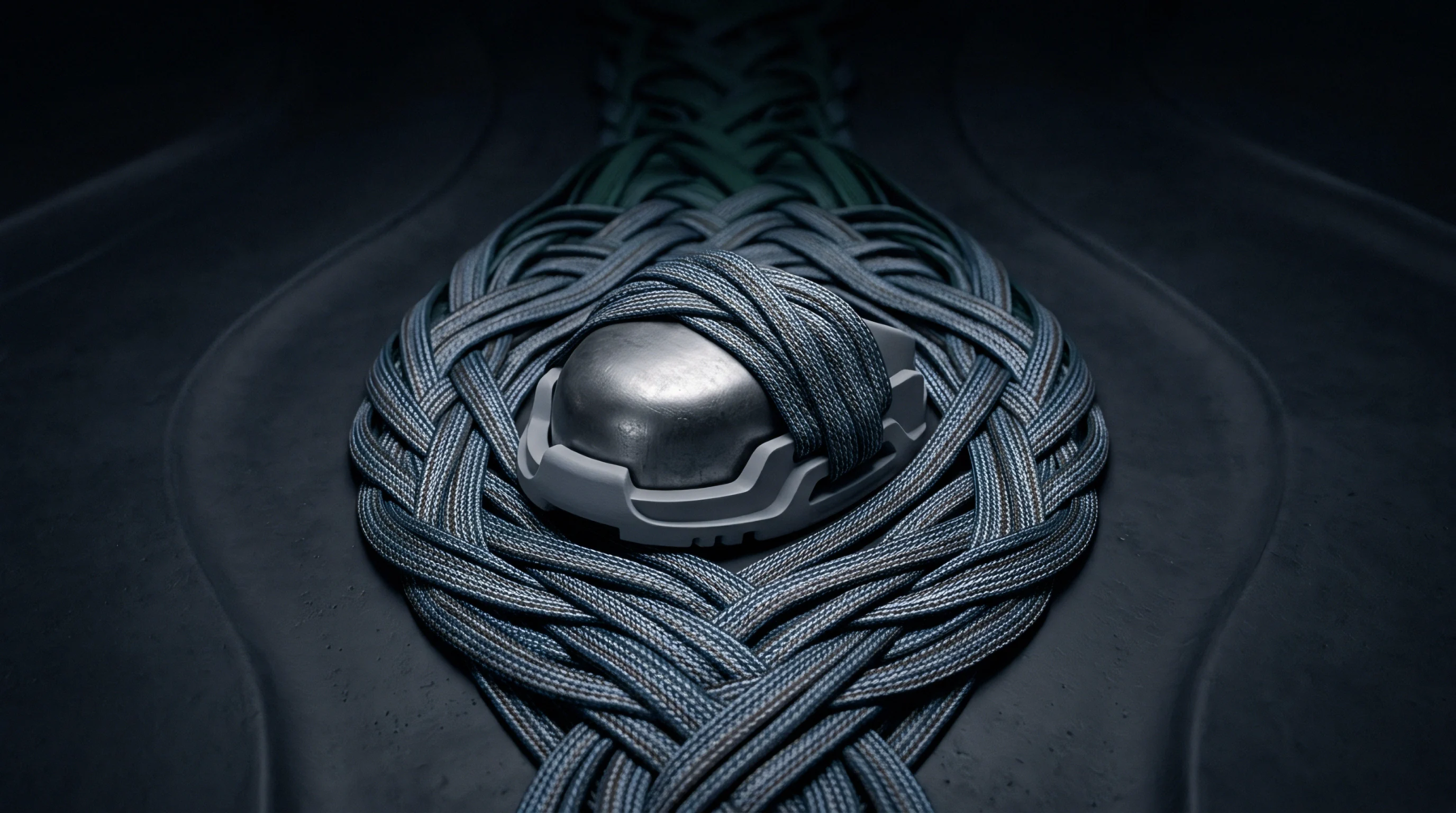
Pneumatic nozzle air pressures hold parallel continuous filaments together through the generation of surface wrapping fibers. A fasciated yarn structure relies upon these few external fibers to maintain core coherence instead of relying on traditional twist mechanics. The absence of traditional twist minimizes the production of hairiness during the subsequent conversion processes.
This arrangement increases moisture absorption rates compared to ring spun alternatives because the internal core remains relatively open. High speeds characterize the manufacturing process, resulting in a distinct aesthetic that minimizes pilling in finished garments.
Fiber Distribution
Parallel core filaments occupy the center while peripheral fibers loop around the exterior to secure the arrangement. These wrapper fibers originate from the same supply material but lose their connection to the main drafting stream before the pneumatic nozzle acts upon them. Uniformity in the mass per unit length of the yarn depends entirely on the accuracy of the drafting system and the consistency of the air velocity.
Defects emerge when the ratio of wrapping fibers to core fibers falls below the threshold required to resist tension during weaving or knitting.
Processing Impact
Manufacturers observe lower torque in fabrics produced with this construction because the internal filaments lack the helical path of twisted yarns. This geometry reduces the tendency for garments to skew after laundering cycles. Softness levels exceed those found in conventional yarns due to the lower lateral pressure exerted on the fibers during the spinning process.
Surface smoothness contributes to clear patterns in dyed cloth because light reflects off the flattened profile of the yarn.
Verification Protocol
Tension tests identify the performance limit of the binding mechanism under mechanical stress. Auditors inspect the surface for periodic variations in wrapping density that indicate irregular pneumatic control in the spinning frame. Stronger coherence results in better performance during high speed loom insertion.
Excessive tension during post spinning operations pulls the wrapper fibers away from the core and compromises the structural integrity of the final fabric.