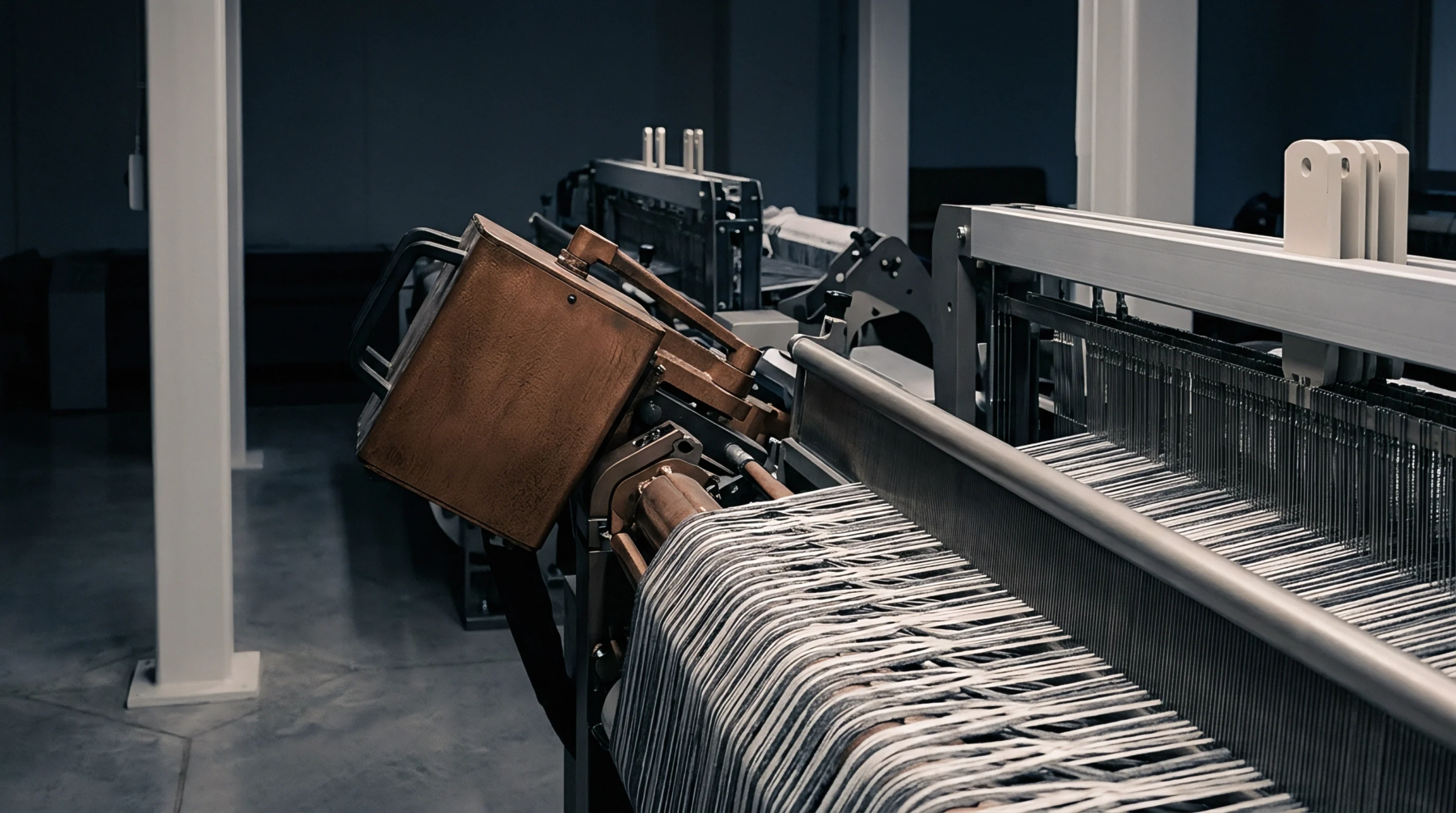
Lateral Contraction
Dimensional changes occurring immediately after a fabric is released from the weaving machine result from the relaxation of internal stresses. The off loom width loss is the difference between the width of the yarn in the reed and the width of the greige cloth on the roll. This reduction happens because the weft yarns contract as the lateral tension from the temples is removed.
Elastic Recovery
Yarn type and weave structure determine the magnitude of this effect. A high degree of off loom width loss is typical for fabrics with high weft crimp or those made from highly elastic yarns. Plain weaves often show more contraction than twills or satins because the higher number of intersections forces the yarns into more frequent bends.
Production Estimation
Weaving mills calculate the required reed width by adding the expected off loom width loss to the target greige width. If this calculation is inaccurate, the resulting fabric may be too narrow for the finishing range or the cutting table. This measurement is the first checkpoint in verifying that the loom is set correctly for the order.
Quality Control
Precise tracking of these values across different batches ensures that the finished width of the fabric remains consistent. The off loom width loss is a primary indicator of structural stability in raw textiles.