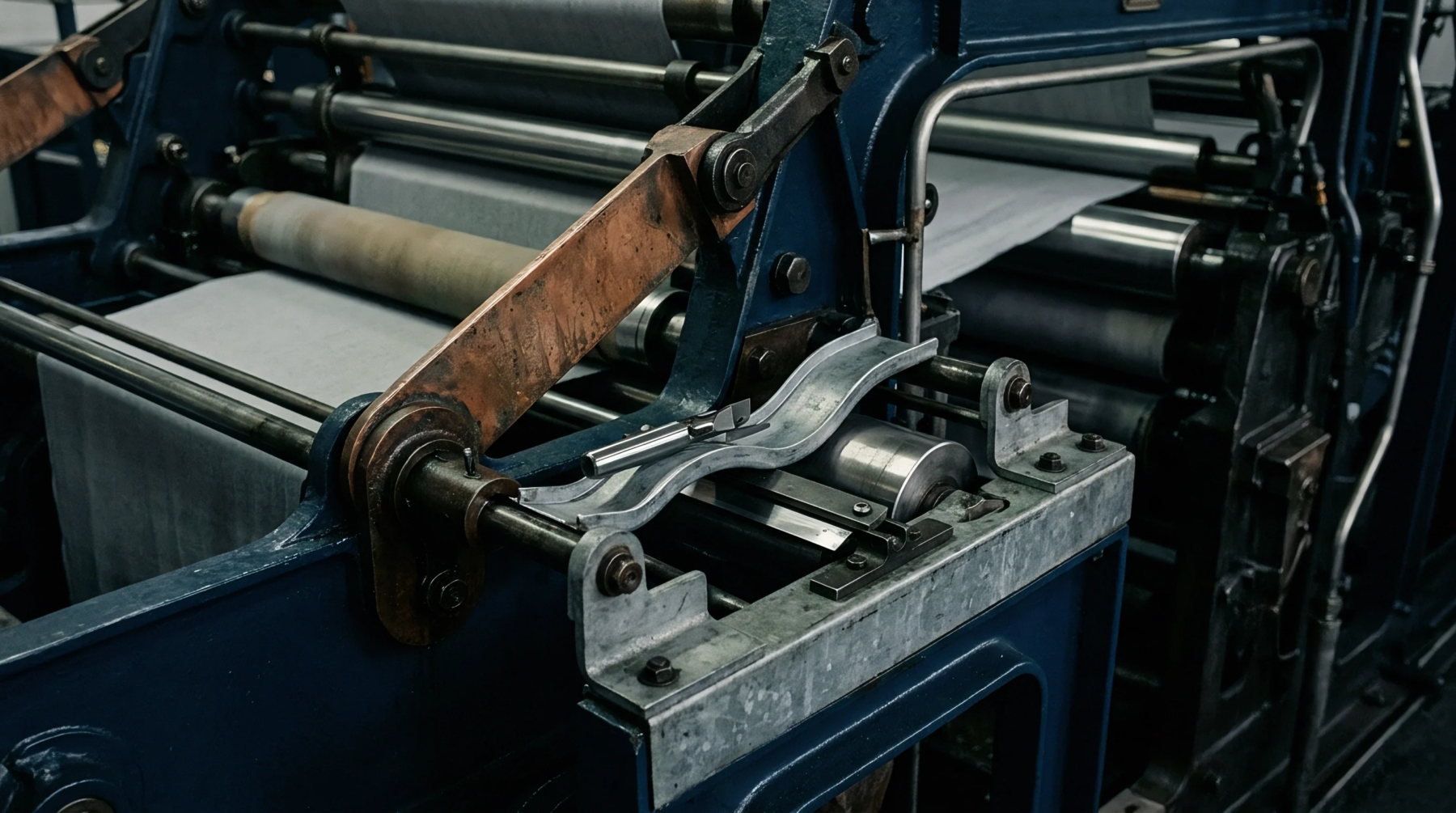
Pinning Mechanism
Mechanical holding devices secure continuous fabric webs across pin chain assemblies during high temperature stentering operations. Horizontal stabilization depends on steel pins projecting upward at fixed intervals to pierce selvedges without tearing warp threads. Industrial finishing plants mount these systems along both edges of thermal chambers to maintain constant width tolerances under longitudinal tension.
Heat setting machines rely on precise rail divergence to impart dimensional memory to synthetic blends before final winding.
Rail Synchronization
Drive motors maintain exact velocity matching between left and right side chains to prevent skewing defects in woven polyester goods. Mechanical torque distribution prevents pin breakage when heavy canvas or technical textiles enter high speed entry zones. Servo driven sprockets adjust track width continuously according to computerized recipe parameters stored for specific fabric grammages.
Thermal expansion during drying phases requires automatic track compensation so that pin spacing remains uniform across the entire dwell time.
Tension Gradient
Longitudinal pulling forces act against lateral holding friction to stretch material uniformly across designated thermal processing zones. Excessive overfeeding causes fabric bowing while insufficient tension generates creasing along treated selvedges. Operators monitor load cells positioned near delivery nip rolls to verify that mechanical stress stays below distortion limits for delicate elastane mixtures.
Roller torque adjustments compensate for shrinkage rates measured continuously by optical sensors located at the chamber exit.
Thermal Tolerance
Operating temperatures inside industrial curing ovens demand hardened steel alloys to prevent pin deformation under continuous heat exposure. Metallurgy selection dictates how long components endure thermal fatigue before microcracking alters pin alignment accuracy. Lubrication schedules utilize high temperature synthetic oils that withstand prolonged cycling without carbonizing onto sensitive fabric surfaces.
Component longevity drops sharply when exhaust systems fail to evacuate finishing chemical residues adequately from the internal housing channels.