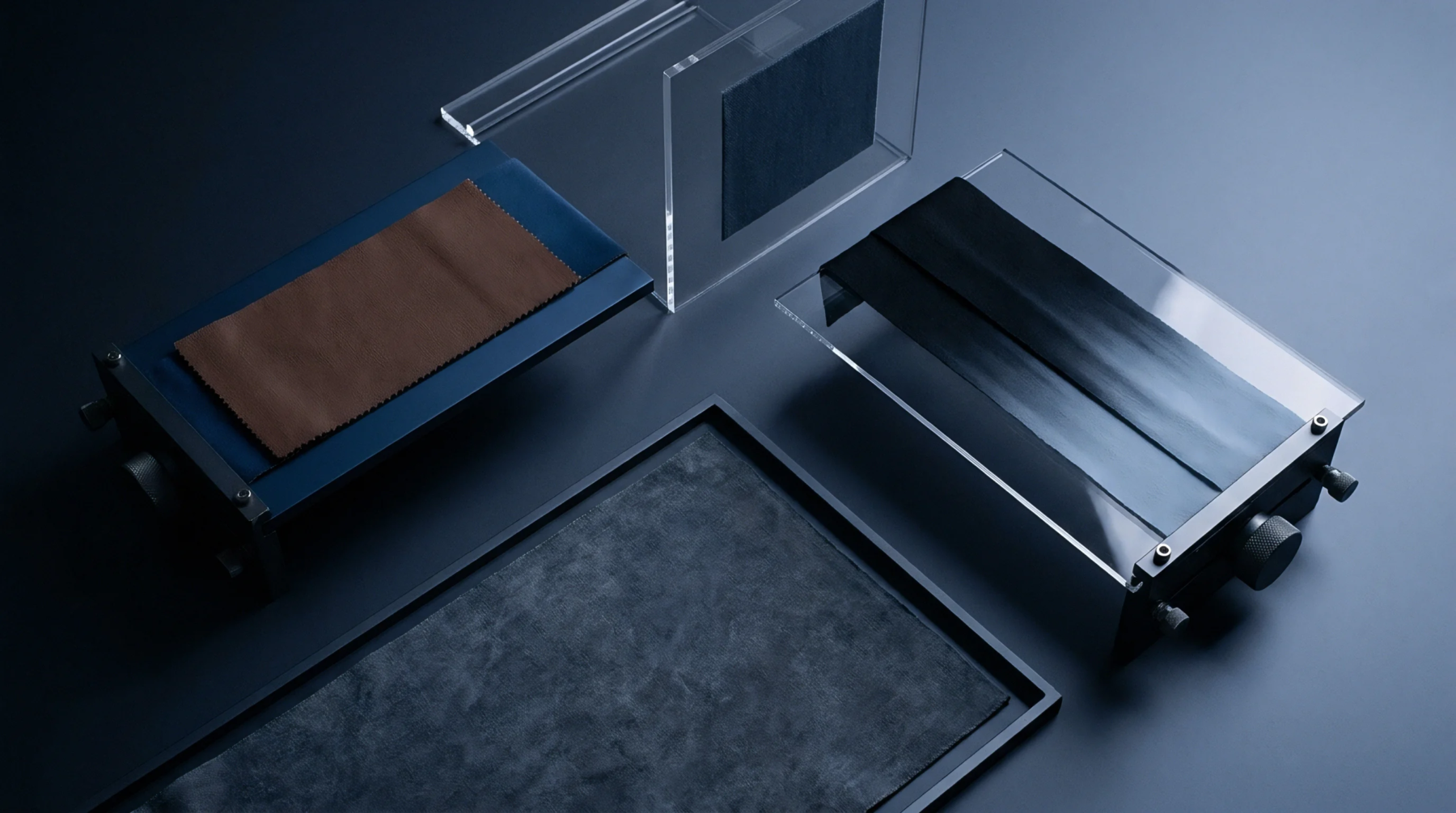
Clamping Force
Regulated compressed air systems apply mechanical holding force through actuated grip faces to secure tensile test specimens in universal material testing frames. Pneumatic jaw pressure establishes the exact clamping force exerted on textile fabric strips, yarns and garment seams to prevent physical slippage without inducing mechanical jaw breaks. The operating envelope of this parameter governs sample gripping mechanisms during mechanical tensile, tear, bursting and seam slippage evaluations, ending where internal material tensile failure occurs between the test gauge marks.
Tensile Grip
Specimen clamping represents a primary source of measurement variance in textile tensile testing. Inadequate grip force permits fabric specimens to slip out of the clamps during load application, generating false high-elongation readings and inaccurate modulus calculations. Excessive pneumatic jaw pressure crushes individual filaments at the clamp edge, causing premature specimen failure directly along the grip line.
Calibrated air regulators supply consistent pneumatic pressure to double-acting cylinders across repeated testing cycles. This mechanical consistency eliminates operator-to-operator gripping discrepancies associated with manual screw-action clamps. Selecting appropriate jaw face textures such as smooth steel, wave-profile serrations or vulcanized rubber pads matches the clamping force to specific fabric weights.
Testing Calibration
Standard testing procedures require daily verification of pneumatic supply lines and grip pressure gauges prior to mechanical testing. Technicians adjust pneumatic jaw pressure according to standardized laboratory protocols and fabric substrate thicknesses. Heavyweight industrial webbings demand high pneumatic pressures paired with serrated jaw faces, while lightweight filament silks require reduced air pressures over smooth rubber contact surfaces.
Slippage Boundary
Tensile testing results are considered invalid when specimen rupture occurs directly at the clamp face or when fabric slips through the grips by more than calibrated tolerances. Maintaining calibrated pneumatic jaw pressure ensures valid tensile, tear and seam strength certifications across commercial quality assurance programs. Valid test records provide legal confirmation of fabric strength compliance.