Material Structure
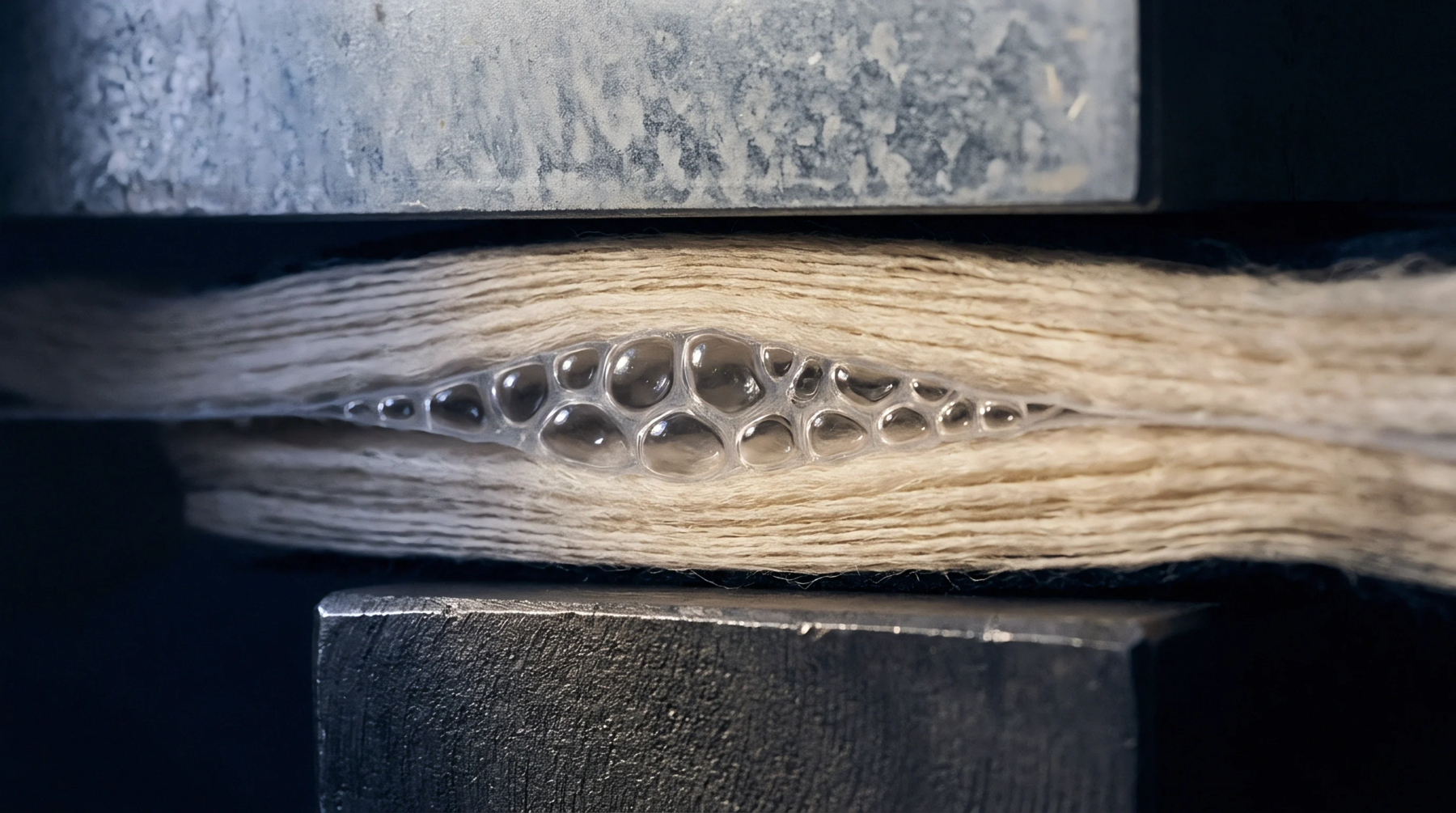
Central elastomeric filament that provides high stretch and recovery properties forms the basis of core-spun yarns. This element, known as a polyurethane core, is continuously fed under tension while stapled fibers are wrapped around it during the ring spinning process. It gives the yarn its characteristic elasticity and resilience.
Manufacturing Integration
Varying the draft ratio of the elastomeric filament determines the stretch capacity of the resulting yarn. During spinning, the polyurethane core is drawn to several times its original length before the cotton or wool sheath is consolidated around it. This drafting ensures that when the yarn is released, the core contracts and pulls the sheath fibers closer together, which creates a highly stretchable yarn.
If the draft ratio is set too high, the elastomeric core can snap during spinning and disrupt the operation.
Elastomeric Performance
Durability of the yarn depends on the protective sheath remaining intact during fabric finishing. If the core is exposed, it can degrade quickly when subjected to heat, chlorine, or ultraviolet radiation. This degradation results in a loss of elasticity, which causes the fabric to sag and lose its shape over time.
Application Boundary
Spinning mills use specialized feeding attachments to ensure that the filament remains perfectly centered. Incorrect alignment can lead to the polyurethane core slipping out of the sheath, which creates unsightly surface defects in the woven or knitted fabric. Consistent core tension is necessary to maintain uniform stretch across the entire production lot.