Dynamic Fluid Shear Threshold Modeling for Polyurethane Core Degradation across High Pressure Venturi Geometries
Polyurethane core degradation in high-pressure venturis is driven by hydrodynamic wall shear stress exceeding elastomeric scission thresholds during high-temperature jet cycles.

Throat
Hydrodynamic Acceleration and Boundary Layer Friction
Inside jet dyeing equipment, processing liquor accelerates rapidly as it reaches narrow constrictions. Moving from the main transport pipe into the converging cone of a venturi system, liquor velocity rises in direct proportion to the drop in cross-sectional area. This narrowing creates steep velocity gradients between the center of the fluid stream and the static pipe wall, concentrating fluid shear stress within the throat and transferring high kinetic energy to the moving yarn.
Fabrics made with elastomeric core yarns experience strong differential forces inside the nozzle. The outer sheath absorbs the initial hydrodynamic drag, transferring stress inward to the polyurethane core through friction between the staple fibers. At high liquid velocities, boundary layer shear peels away these outer fibers, exposing the synthetic core to direct fluid forces and destabilizing yarn geometry before the bath reaches thermal equilibrium.
| Throat Diameter (mm) | Liquor Flow Rate (L/min) | Mean Velocity (m/s) | Reynolds Number | Wall Shear Stress (Pa) |
|---|---|---|---|---|
| 10.0 | 180.0 | 38.2 | 412,000 | 1,840 |
| 12.0 | 180.0 | 26.5 | 343,000 | 980 |
| 14.0 | 180.0 | 19.5 | 294,000 | 580 |
| 16.0 | 180.0 | 14.9 | 257,000 | 370 |
| 18.0 | 180.0 | 11.8 | 228,000 | 250 |
Reducing nozzle inner diameter from 16 mm to 10 mm quadruples the shear stress applied to the fabric rope. Under continuous operating pressure, this added hydraulic friction disrupts the alignment of elastomeric polymer chains.
Velocity Gradients and Mechanical Drag Forces
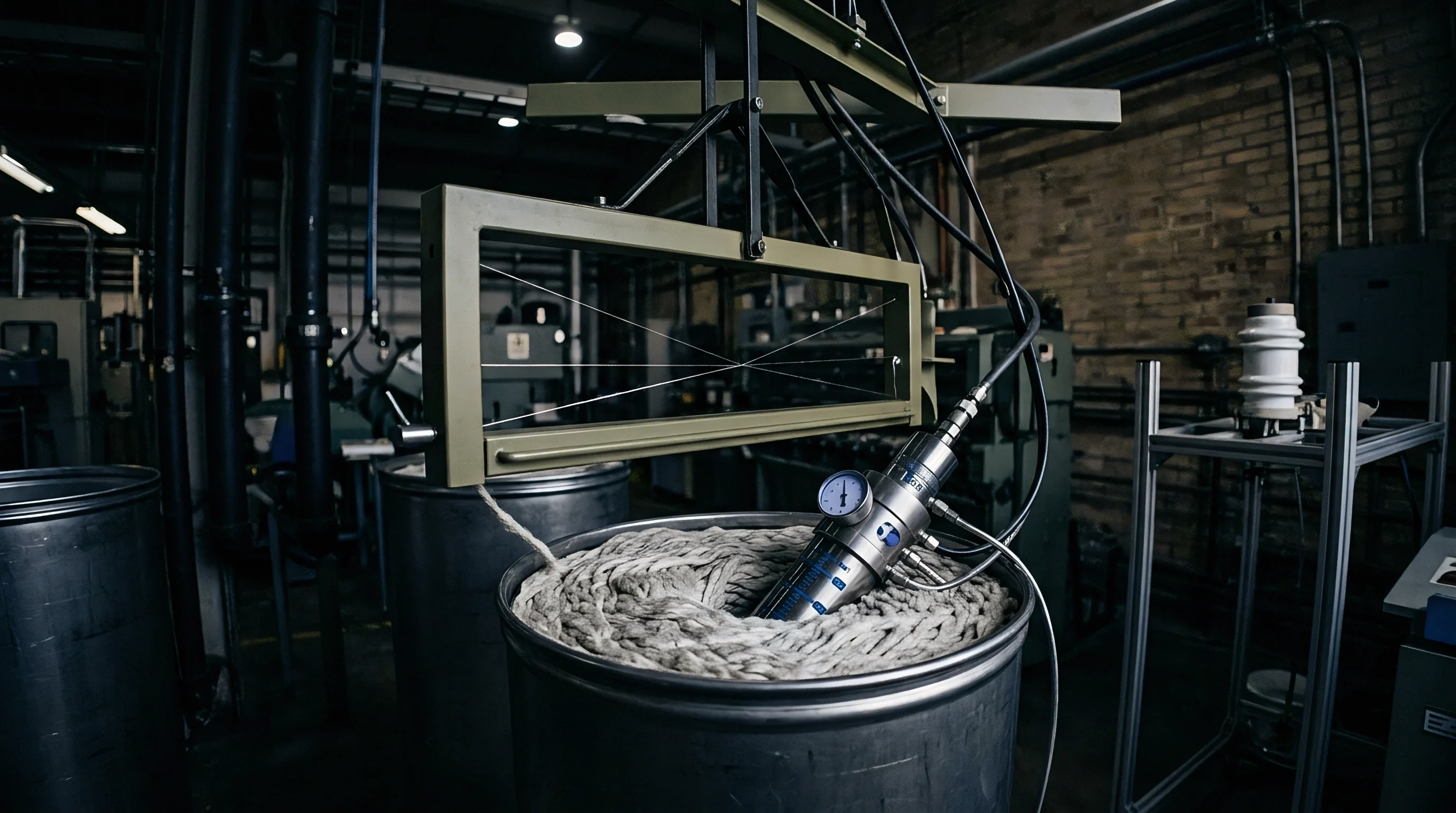
Energy transfers from liquid jets to suspended fabric ropes through momentum exchange in the fluid boundary layer. A large velocity differential generates longitudinal drag that stretches elastic core filaments beyond their mechanical yield limits. Once fluid velocity exceeds linear fabric speed by more than thirty percent, drag forces create sharp tension spikes inside the nozzle zone.
At wall shear rates exceeding 85,000 inverse seconds inside a 10 mm constriction, elastomeric monofilaments suffer structural fibrillation within twelve mechanical circulations.
High-speed liquid motion creates turbulent zones that vibrate the moving fabric web. Subjected to continuous hydrodynamic agitation, submerged polyurethane cores undergo cyclical mechanical fatigue at elevated temperatures. Impulse forces produce dynamic tension spikes four to six times higher than static winding tension, causing localized structural damage.
It remains unclear whether non-linear turbulence damping near the nozzle outlet can suppress core filament slippage during rapid cooling cycles.
Fracture
Microstructural Scission under Hydrodynamic Stress
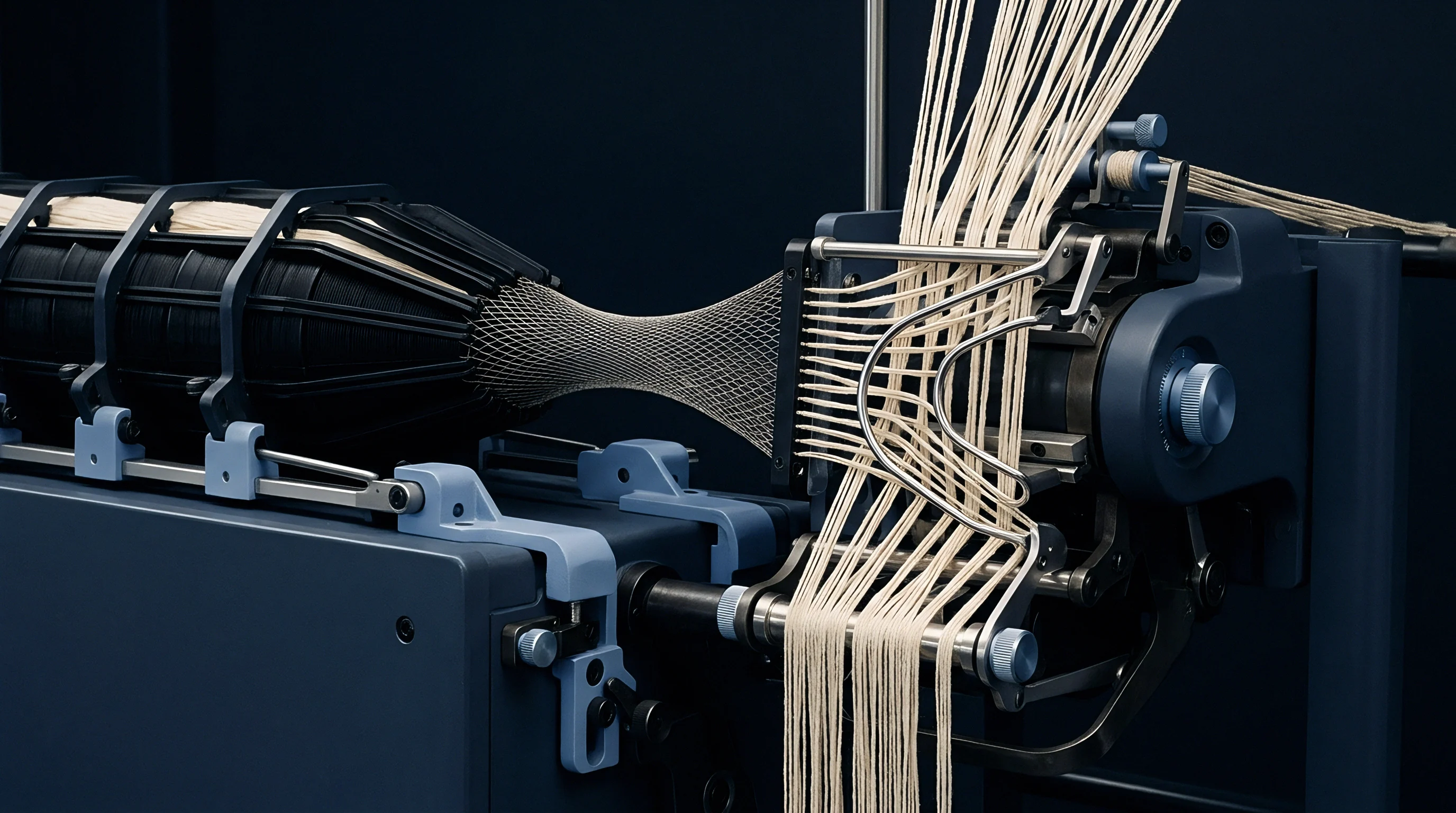
Polyurethane elastomers owe their elasticity to an alternating block copolymer structure made of rigid aromatic segments and flexible polyether or polyester soft domains. High fluid shear pulls these chains past their normal orientation during thermal expansion, while mechanical energy from turbulent flow breaks the weak hydrogen bonds in the hard domains, leading to permanent slipping.
High temperatures combined with severe shear cause macromolecular scission along soft polyether chains. As continuous hydraulic impact strips away the protective outer cotton or synthetic fibers, the exposed polyurethane core undergoes localized plastic deformation from fluid drag.
Yarn Sheath Disruption and Core Exposure Sequence
Damage to core-spun yarns follows a predictable sequence as the fabric passes through high-pressure jets, progressing through four distinct physical stages:
- Outer Sheath Fiber Displacement occurs when tangential drag overcomes friction between staple fibers, leaving bare core patches along the yarn.
- Elastomeric Core Strand Elongation happens under dynamic fluid drag, pulling the inner polyurethane filament past its linear elastic range.
- Micro-Fibrillation and Hard Block Disruption begin in the polymer matrix, forming longitudinal micro-voids visible under cross-sectional microscopy.
- Transverse Filament Scission finishes core degradation, causing total loss of elasticity and visible core snap-back in the fabric web.
In a typical case using 40 dtex polyurethane core wrapped in 30/1 combed cotton yarn running at 400 meters per minute through a venturi nozzle, the bath operates at 130 degrees Celsius with a viscosity of 0.70 millipascal-seconds. Once dynamic shear stress exceeds 620 Pascals, it overcomes the cohesive friction of the staple sheath. The exposed core then stretches past two hundred percent strain, crossing the critical fracture threshold after eight passes.
Shear Threshold Modeling Equations and Boundary Limits
Determining the dynamic shear threshold requires modeling fluid drag against the yield strength of the core. Strain rate scales directly with liquid kinetic energy, bath viscosity, and nozzle contraction, with polymer chains failing whenever total mechanical energy input exceeds internal hydrogen bonding density per unit length.
| Elastomer Base Polymer | Linear Density (dtex) | Critical Shear Stress (Pa) | Break Elongation Loss (%) | Micro-Void Density (per mm²) |
|---|---|---|---|---|
| Polyether Polyurethane | 22 | 480 | 34.2 | 1,420 |
| Polyether Polyurethane | 40 | 590 | 28.5 | 1,150 |
| Polyether Polyurethane | 70 | 740 | 21.0 | 830 |
| Polyester Polyurethane | 40 | 680 | 18.4 | 640 |
| Polyester Polyurethane | 70 | 850 | 14.1 | 490 |
Polyester-based polyurethane cores resist shear better than polyether-based versions under identical fluid loads. While polyether chains provide flexibility, they yield at lower stress thresholds when bath temperatures exceed 120 degrees Celsius.
Elastic core degradation stems from pre-existing spinning tension irregularities or high-pressure dye jet hydraulic forces.
Bore
Geometry Configurations and Fluid Velocity Profiles
Internal geometry determines pressure variations within high-pressure nozzles. Cone angles between fifteen and twenty-two degrees accelerate liquor smoothly into the throat, whereas sharp transition angles trigger localized flow separation, creating vortex rings that multiply fluid shear stress.
Drag forces depend heavily on surface finish and expansion geometry. Gradual diverging cones allow liquor to decelerate under control, recovering static pressure without generating back-flow turbulence, whereas steep expansion angles create low-pressure pockets that promote micro-cavitation.
Cavitation Dynamics and Shockwave Impact
When local pressure drops below vapor pressure, micro-cavitation bubbles form inside narrow passages. These cavities collapse violently as they enter higher-pressure zones in the diverging cone, generating micro-jets that strike the fabric with impact pressures exceeding 1.2 Gigapascals.
Failure to specify maximum nozzle differential pressure in jet processing contracts waives buyer compensation rights when core breakage exceeds three percent.
Micro-jets from collapsing bubbles pierce protective yarn sheaths and tear synthetic core filaments. Pitting and surface erosion accelerate mechanical fatigue, leading to tensile failure during subsequent tensioning steps.
Poor nozzle geometry exposes elastomeric cores to several distinct failure modes during wet processing:
- Vortex Ring Shear Amplification, which concentrates drag forces onto specific points of the fabric rope.
- Boundary Layer Flow Separation, which creates asymmetric pulling forces that strip away wrapping yarns.
- Cavitation Implosion Pitting, which blasts micro-cavities into the polyurethane filament.
- Pressure Shock Fluctuation, which induces high-frequency tension spikes that snap stretched elastomeric strands.
Running venturi nozzles at high differential pressures without adequate back-pressure destroys core elasticity over long production runs.
Assay
Tensile Testing and Elastic Recovery Analysis
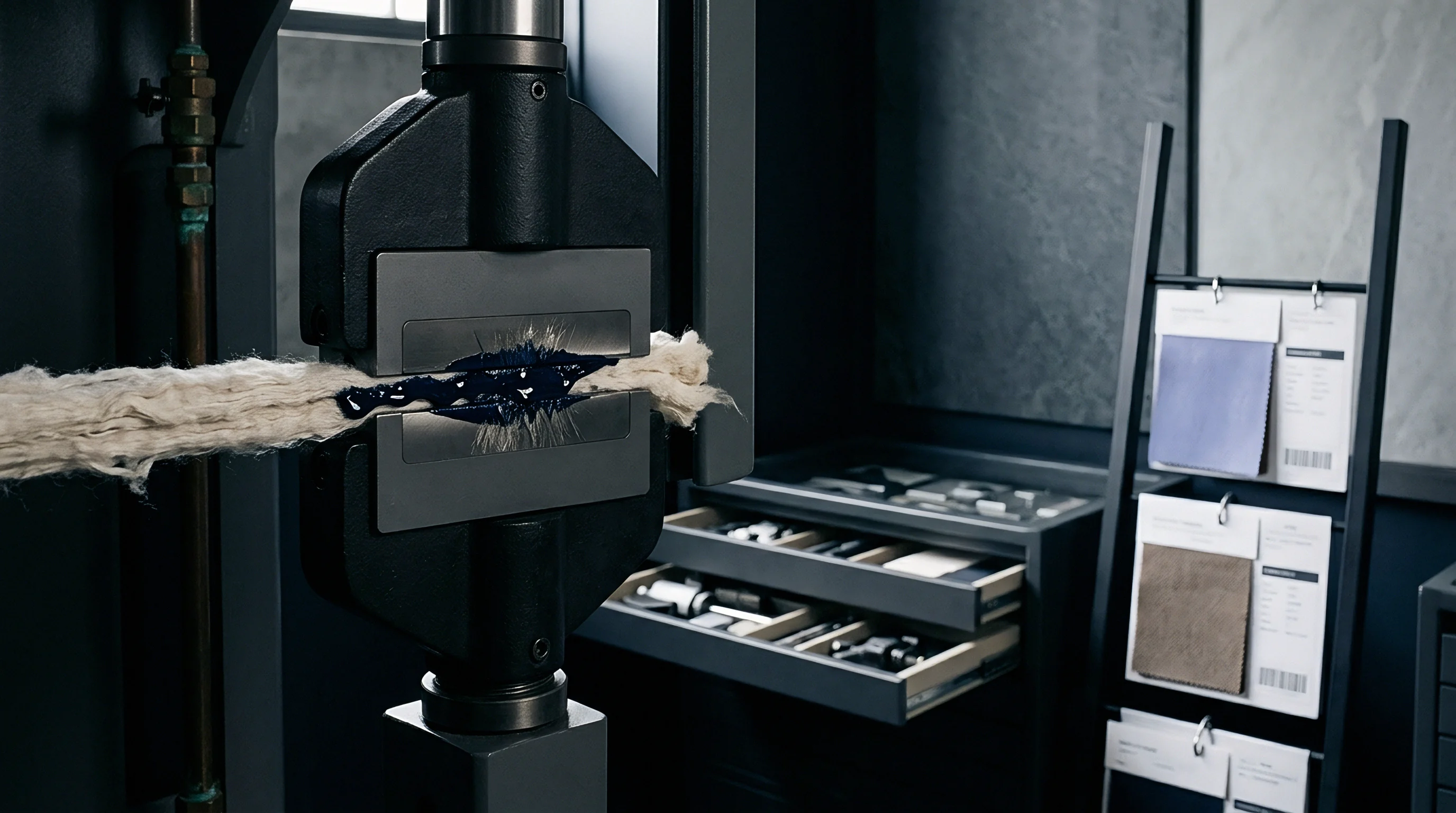
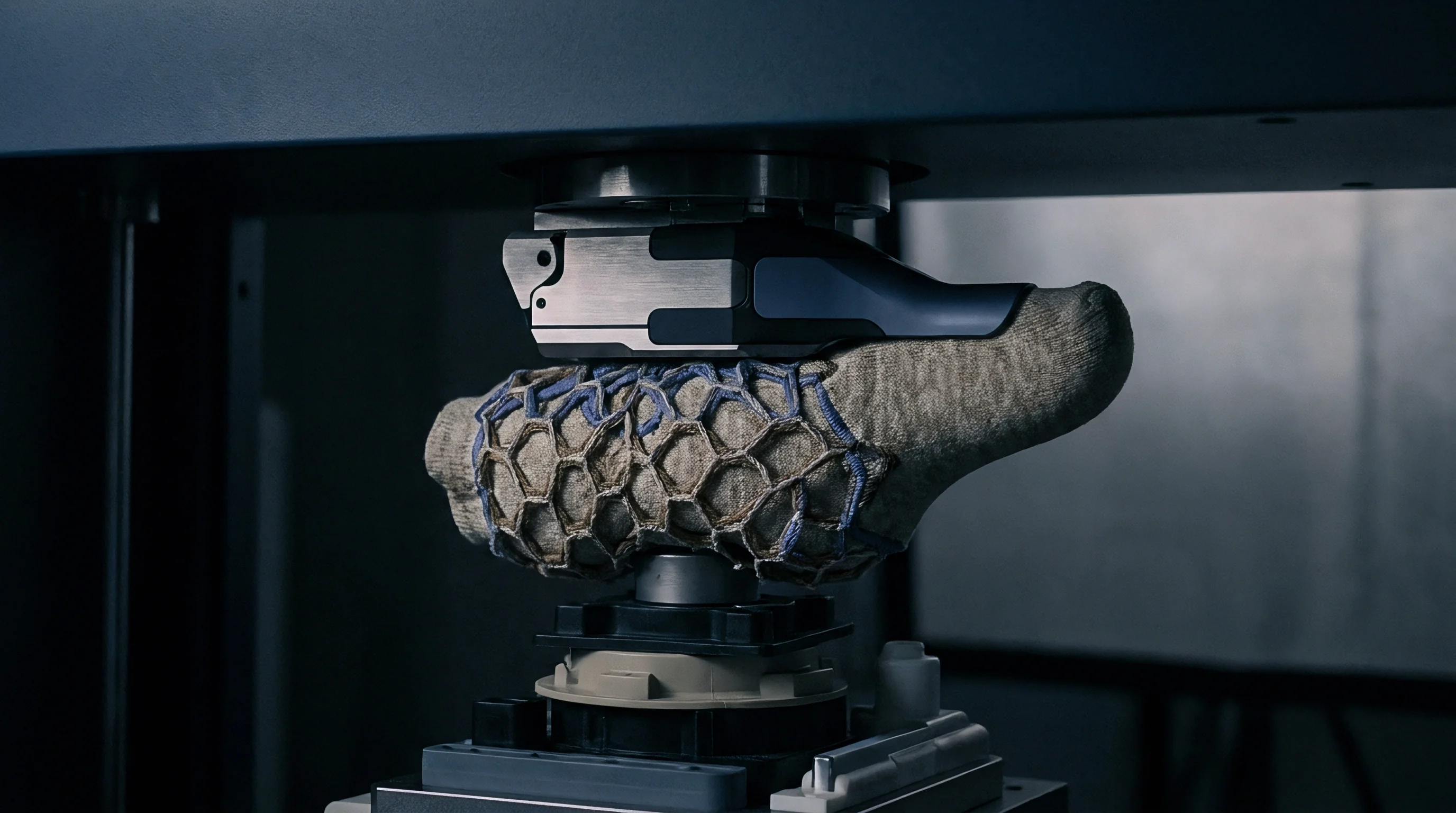
Evaluating core breakdown requires destructive mechanical testing after processing. Standard ISO 2062 procedures measure tenacity changes, while DIN 53835 cyclic tests evaluate loss of elastic recovery. Samples taken from high-stress processed fabrics show clear drops in residual elastic force compared to untreated greige control samples.
Microscopic inspection reveals longitudinal voids along damaged polyurethane cores. Tensile tests performed after fifty percent cyclic extension show permanent set growth, pointing to severe soft-block slippage in the polymer structure.
Higher bath liquor ratios cushion mechanical impact inside geometric constrictions while reducing localized fluid tension across core filaments.
| Exposure Temperature (°C) | Nozzle Shear Stress (Pa) | Retained Tenacity (%) | Unrecovered Stretch (%) | Core Break Frequency (/100m) |
|---|---|---|---|---|
| 98 | 450 | 94.5 | 3.2 | 0.1 |
| 110 | 580 | 88.1 | 5.8 | 0.4 |
| 120 | 720 | 79.4 | 9.6 | 1.8 |
| 130 | 880 | 68.2 | 15.4 | 5.2 |
| 135 | 1,050 | 51.0 | 24.8 | 12.6 |
High temperatures combined with elevated fluid shear accelerate mechanical breakdown, leading to frequent core breaks. Above 120 degrees Celsius, retained tenacity drops sharply as thermal softening and hydraulic shearing act together.
Verification Protocols and Analytical Standards
Standard protocols evaluate physical damage through detailed analytical routines. Cross-sectional micro-tomography pinpoints internal core breaks inside complex knits without unraveling the sample, while chemical solvent extraction strips outer fibers to isolate core length per square meter for mass-balance verification.
Under contract clause DIN 53835-3, recovery limits are mandatory: fabrics exhibiting more than twelve percent unrecovered stretch after three passes automatically fail qualification standards.
Pass
Machine Calibration and Kinetic Control
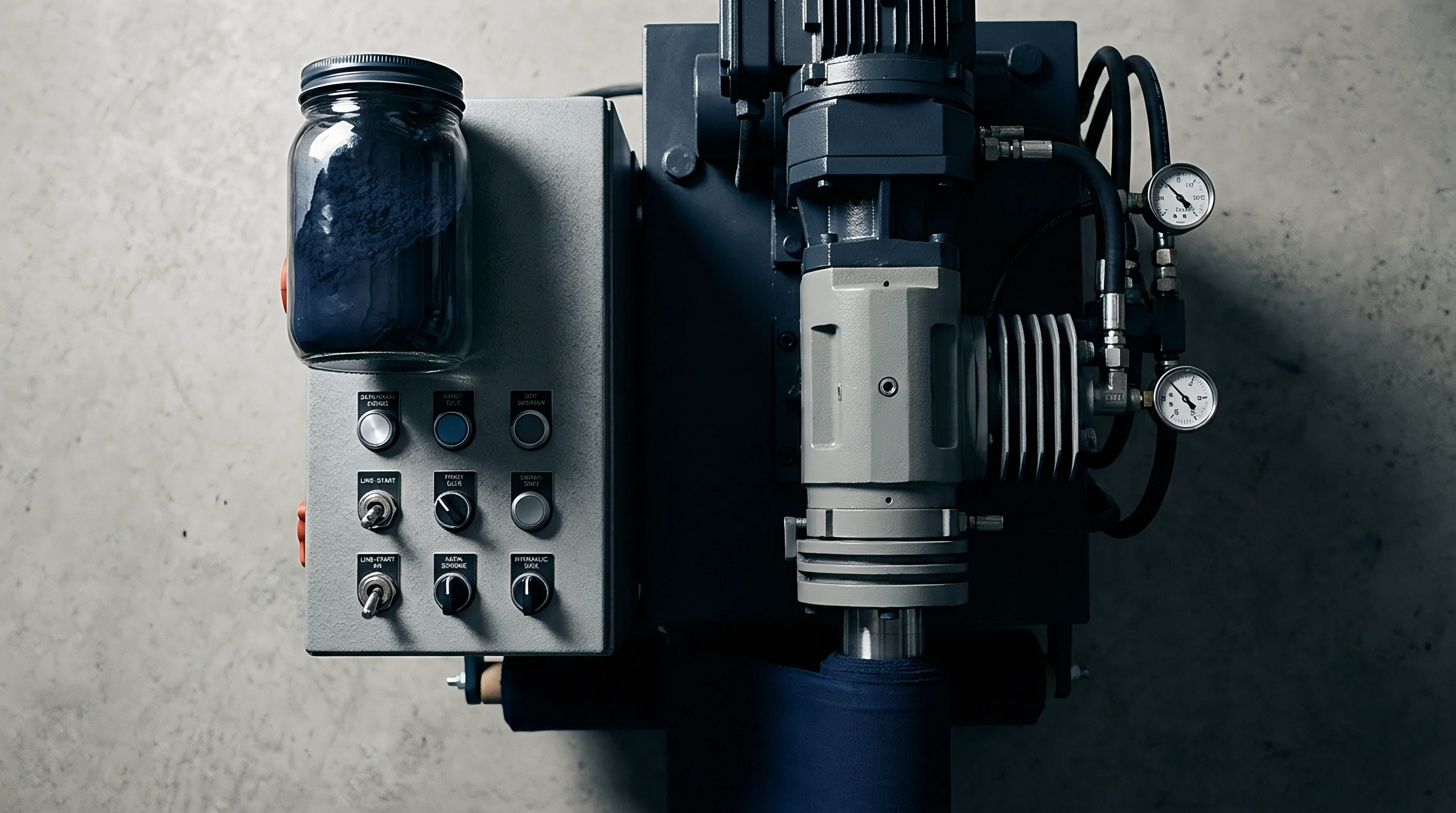
Dyehouses control fluid shear by synchronizing pump frequency with fabric reel speed. Matching transport speed to liquid velocity minimizes mechanical drag inside the nozzle. When liquid and fabric move at the same speed, relative shear stress drops to baseline levels.
Lowering main pump frequency reduces system static head pressure, dampening velocity spikes in converging flow channels. Equipment must be calibrated systematically to protect sensitive core yarns during production runs.
- Verify raw fabric core properties against manufacturer baseline specifications.
- Select venturi nozzle orifice diameters that yield fluid velocities matching target fabric speeds.
- Adjust pump inverter frequencies to keep static differential pressure under 0.8 bar.
- Set bath temperature ramp rates below 1.5 degrees Celsius per minute to prevent thermal shock during high-shear phases.
- Measure residual core elasticity from end-of-run swatches before unloading fabric lots.
Thermal softening during high pressure scouring amplifies elastomeric core susceptibility to fluid dynamic shear.
Matching nozzle fluid velocity to fabric speed preserves core integrity across operating temperatures.
Recourse
Commercial Allocation of Core Damage Liabilities
Elastomeric core failures lead to costly fabric rejections across textile supply chains. Determining whether damage stems from spinning defects, heat-setting issues, or excessive hydraulic shear requires solid audit documentation. Clear purchase agreements specify fluid shear limits directly inside processing contracts.
When finished goods fail elastic recovery benchmarks, buyers inspect nozzle logs and pump differential records. Any gap between approved processing parameters and actual batch charts assigns financial liability to the dyehouse.
| Failure Severity Level | Elastic Recovery Deficit (%) | Rerouting or Scrap Outcome | Direct Financial Claim (% Goods Value) | Lead Time Delay Impact (Weeks) |
|---|---|---|---|---|
| Minor | 3.0 to 5.0 | Sub-standard Sales Downgrade | 15 | 1 |
| Moderate | 5.1 to 10.0 | Stripping and Stenter Refinishing | 35 | 3 |
| Severe | 10.1 to 18.0 | Garment Mill Rejection / Scrap | 85 | 6 |
| Critical | > 18.0 | Total Lot Scrap plus Remaking | 100 | 8 |
Financial recovery depends on documented proof of nozzle operational overshoot. Sourcing agencies protect margins by enforcing processing limits before approving bulk production runs.
Specific contract terms protect buyers against uncompensated failures. Purchase orders should include these core preservation criteria:
- Maximum Permissible Nozzle Velocity restricted to fifteen meters per second during high-temperature dye cycles.
- Differential Pressure Ceiling capped at 0.7 bar across all venturi assemblies.
- Mandatory Nozzle Sizing Specifications matching tube diameter to fabric weight per linear meter.
- Elastic Recovery Tolerance Limits governed by ISO 2062 post-processing verification test standards.
Clear fabric specifications prevent costly legal disputes between converters and brands. Setting firm fluid shear thresholds places responsibility on processing mills, helping maintain consistent elastomeric performance in bulk production.