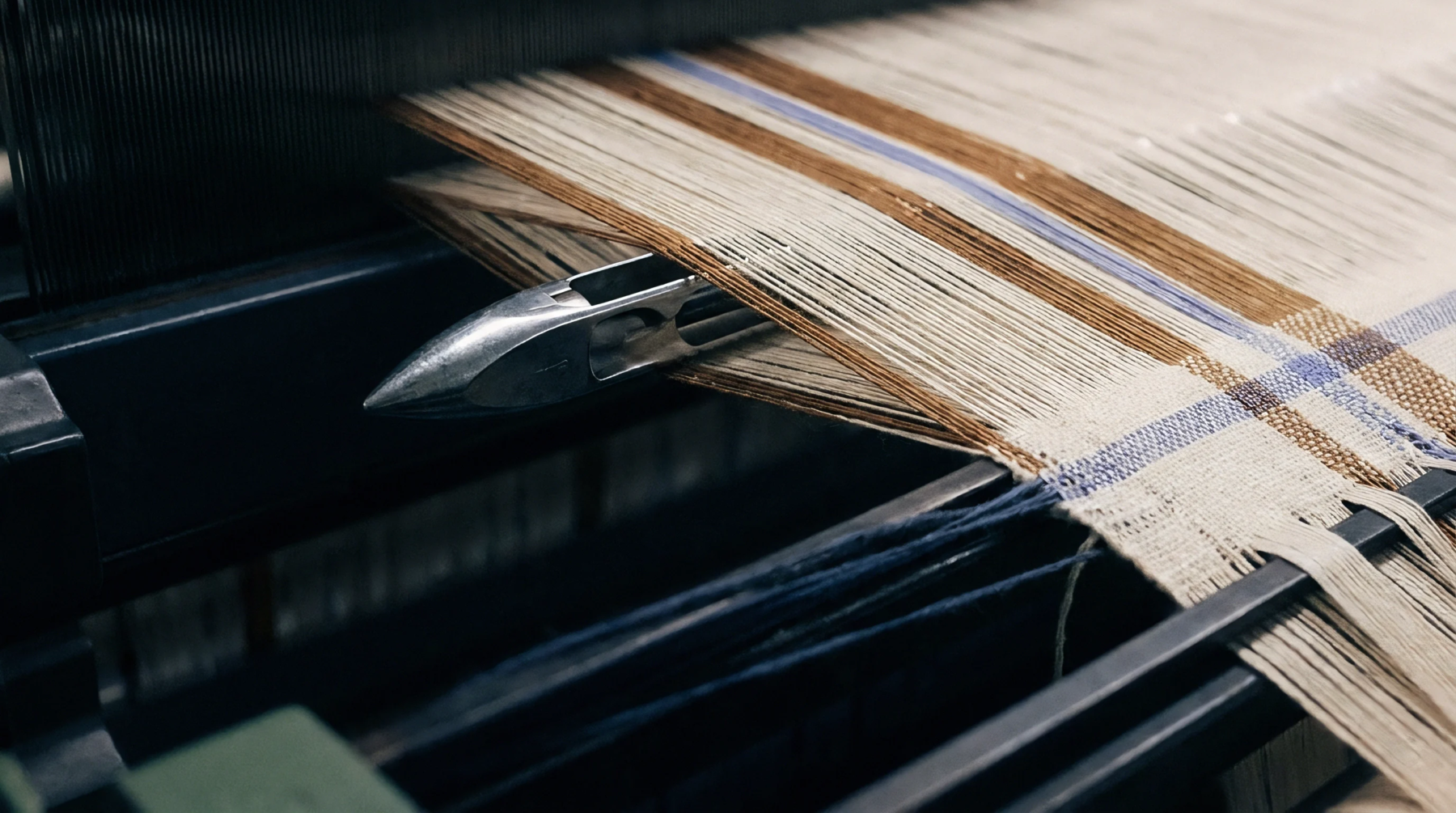
Basic Minimum Warp Set Calculation Principles for Greige Weaving
Greige warp set calculations must integrate reed width contraction, warp crimp, sizing stretch, and setup waste to establish accurate yarn purchase masses.
A treatment tank positioned at the head of a warp sizing machine promotes uniform penetration of starch or synthetic binding agents into individual yarns by pre-saturating them with aqueous fluid before their arrival at the primary size box. This pre wet sizing bath reduces the total duration fibres remain immersed in the viscous sizing solution later in the line. By ensuring fibres reach a state of partial moisture absorption before contact with concentrated adhesive, mills control the depth of migration into the core.
Controlled moisture content prevents surface-only film formation during high speed weaving operations. Lowering the surface tension of the sizing bath mixture allows the fluid to displace trapped air within the yarn bundle immediately. Greater depth of penetration results in increased fibre lay and decreased hairiness for spun yarns.
Consistency within the bath liquid relies upon automated sensors that track and adjust concentration levels during long production runs. Continuous monitoring maintains the chemistry of the bath at specified limits regardless of variations in ambient humidity or production speed.
Fibres enter the chamber and move beneath submerged rollers to ensure complete immersion. Friction losses inside the bath are restricted by the specific geometry of the rod system used to guide the ends. The bath contains pure water or a mixture with wetting agents designed to reduce the hydrophobic character of synthetic fibres.
Excess moisture is removed by squeeze rollers located at the exit point of the unit. These rollers define the pickup percentage before the yarn continues to the sizing box. Sizing compounds achieve better mechanical anchoring when the yarn core is already receptive to the aqueous carrier.
Energy requirements for the final drying cylinders decrease because the yarn arrives with a uniform moisture profile rather than a dry and resistant state.
High viscosity sizing agents require specific bath temperatures to maintain the mobility of the liquid throughout the contact area. Temperature fluctuations disrupt the stability of the bath and lead to uneven pickup across the warp width. Heavy count yarns benefit from an extended residence time inside the unit to allow for full saturation of the inner filament structure.
Light yarns face the risk of excessive swelling if the duration inside the unit is not tightly managed. Technicians calibrate the machine settings based on the chemical composition of the warp yarn and the desired loom efficiency levels.
Improved warp performance stems from the reduction of size migration issues during the final drying phase of the sizing process. Uniform penetration prevents the stiffening of yarn surfaces that causes brittleness during the shed opening movement on a loom. Reduced breakage rates verify the performance of the bath during post-weaving inspection of the fabric.
Abrasion resistance increases when the sizing agent remains anchored deep within the yarn structure. Final cloth quality exhibits fewer imperfections originating from the warp preparation stage. Properly managed aqueous treatment ensures the sizing film resists mechanical stress without peeling away from the fibre surface.
Greige warp set calculations must integrate reed width contraction, warp crimp, sizing stretch, and setup waste to establish accurate yarn purchase masses.
Expertise is a utility, not a secret. sentiention™ publishes its working knowledge as open reference: intelligence layer covering the materials it sources, the markets it enters, and the reference that serves both.