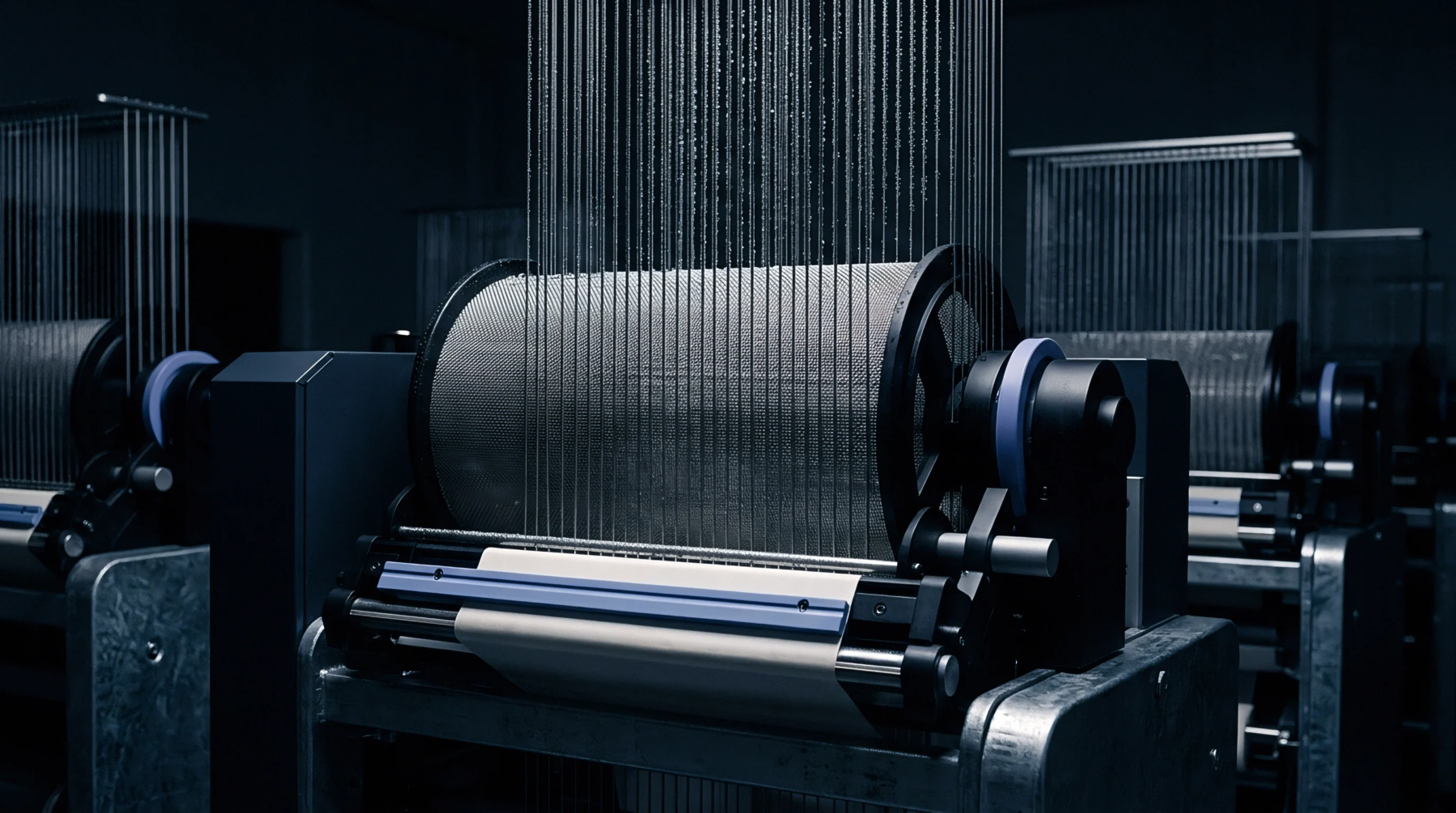
Knitting Cycle Standard
A standardized linear measuring unit in warp knitting defines an operational sequence precisely equal to 480 machine revolutions or completed knit courses. Functioning as the universal production baseline across both tricot and raschel manufacturing sectors, the rack serves as the accounting interval for monitoring yarn consumption, fabric production speed, and mechanical efficiency. Quality metrics evaluate the linear length of yarn pulled from each beam across this fixed cycle to govern the structural yield of the textile.
The unit applies strictly to cyclical operational counts in warp knitting, bearing no relevance to weft knitting structures or weaving reed metrics.
Yield Measurement
Machine operators assess fabric quality by calculating the exact runner length consumed per set interval of needle actions. By measuring the linear millimetres of warp sheet drawn into the knitting zone over one rack, technicians verify that loop depth aligns with targeted fabric weights. This run-in monitoring links beam delivery speeds directly to course counts, enabling quick diagnostic checks without requiring complete fabric rolls to be dismounted.
Mechanical revolution counters or digital computer displays track every completed sequence, notifying operators when to verify structural dimensions. Deviations from target consumption rates per cycle require immediate adjustments to letoff drives or pattern links.
Structural Repeat
Fabric mass per unit area and cross-directional stretch depend completely on maintaining correct run-in lengths per rack. Variations in consumed yarn alter the stitch density, causing finished lots to drift outside contracted tensile or weight specifications. An uncorrected variation across multiple production cycles generates uneven yield, which induces shade deviations and structural banding in downstream dyeing and finishing operations.
Quality protocols mandate measuring run-in lengths at regular production intervals to detect beam tension shifts or mechanical drive slippage early. Verifying these metric intervals secures production stability across extensive production schedules.
Metric Scope
Standard calculation limits production calculations to exactly 480 cycles, though pattern designers scale complex structural repeats as fractions or multiples of this baseline. The measurement accounts strictly for machine revolutions, remaining independent of the physical fabric length gathered on the take-up roller due to varying post-knitting fabric relaxation rates. Dense locknit textiles yield fewer physical linear metres per production unit than open mesh structures due to differential stitch accumulation.
Runner lengths are marked on warp yarn sheets using water-soluble pens to conduct manual quality checks on running frames. Modern digital control systems track this standard unit automatically, coordinating yarn delivery volumes with precise sub-rack dynamic adjustments.