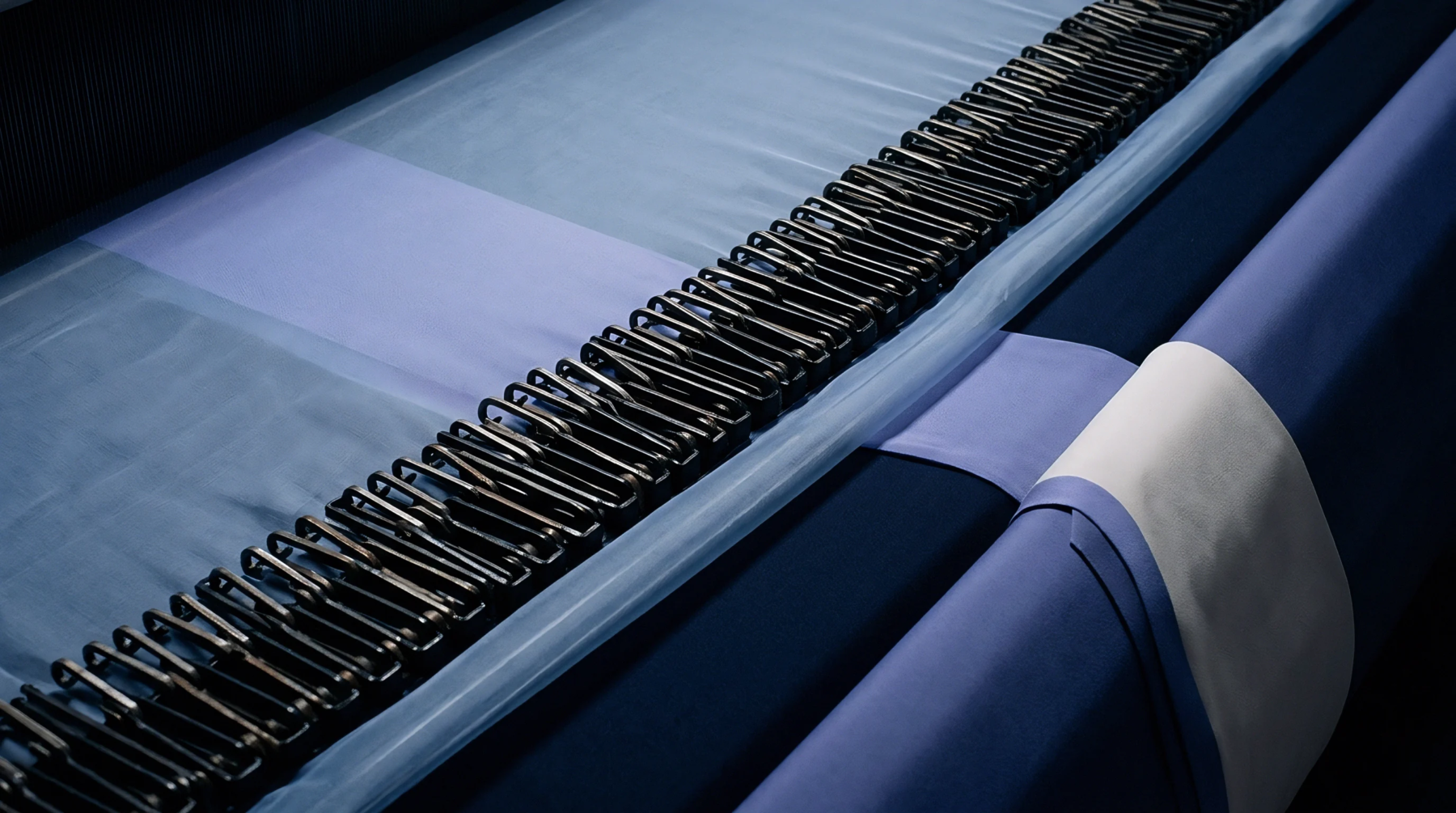
Fabric Density Identification
Loom operators verify the number of dents per inch within a metallic reed to ensure the planned warp distribution aligns with the required cloth width and construction. Reed count determination provides the numerical foundation for calculating total warp ends in a loom set-up, thereby preventing width deviations during the weaving stage. Accurate selection of this component dictates the distribution of yarn spacing across the loom width, which prevents overcrowding or irregular gaps in the grey fabric.
Process Requirement
Mill technicians must select the correct metallic insert based on the specific count of warp threads required for a designated fabric weight. Precise reed count determination prevents uneven stress on individual warp ends, which frequently leads to breakage or streaks during high-speed production. Improper selection forces the production of cloth that fails to meet contracted width specifications, resulting in rejected lots upon inspection.
Failure to calculate this density correctly leaves the warp alignment susceptible to mechanical friction against the reed wire, reducing overall efficiency at the loom.
Calibration Metric
Weavers compare the chosen dent frequency against the total ends per inch needed to maintain uniformity across the entire warp sheet. Reed count determination functions as a strict physical constraint that restricts how much density a single loom can accommodate. Adjusting this density necessitates a change in the physical hardware of the loom rather than a software input, binding the production capability to the specific mechanical inventory on hand.
When the count remains mismatched with the yarn diameter, the resulting fabric exhibits periodic barring or density variations that signal a failure in the initial hardware selection.
Verification Standard
Independent auditors check the physical reed against the specification sheets to confirm the density matches the loom settings for the specific job. Reed count determination serves as a check of mechanical capability before the warp beam enters the loom, ensuring the final output conforms to the quality standards of the client. Accurate hardware selection guarantees the integrity of the warp distribution for the duration of the run.
Physical inspection of the reed wire spacing remains the primary method for confirming the actual dent density on the factory floor.