Polymer Migration
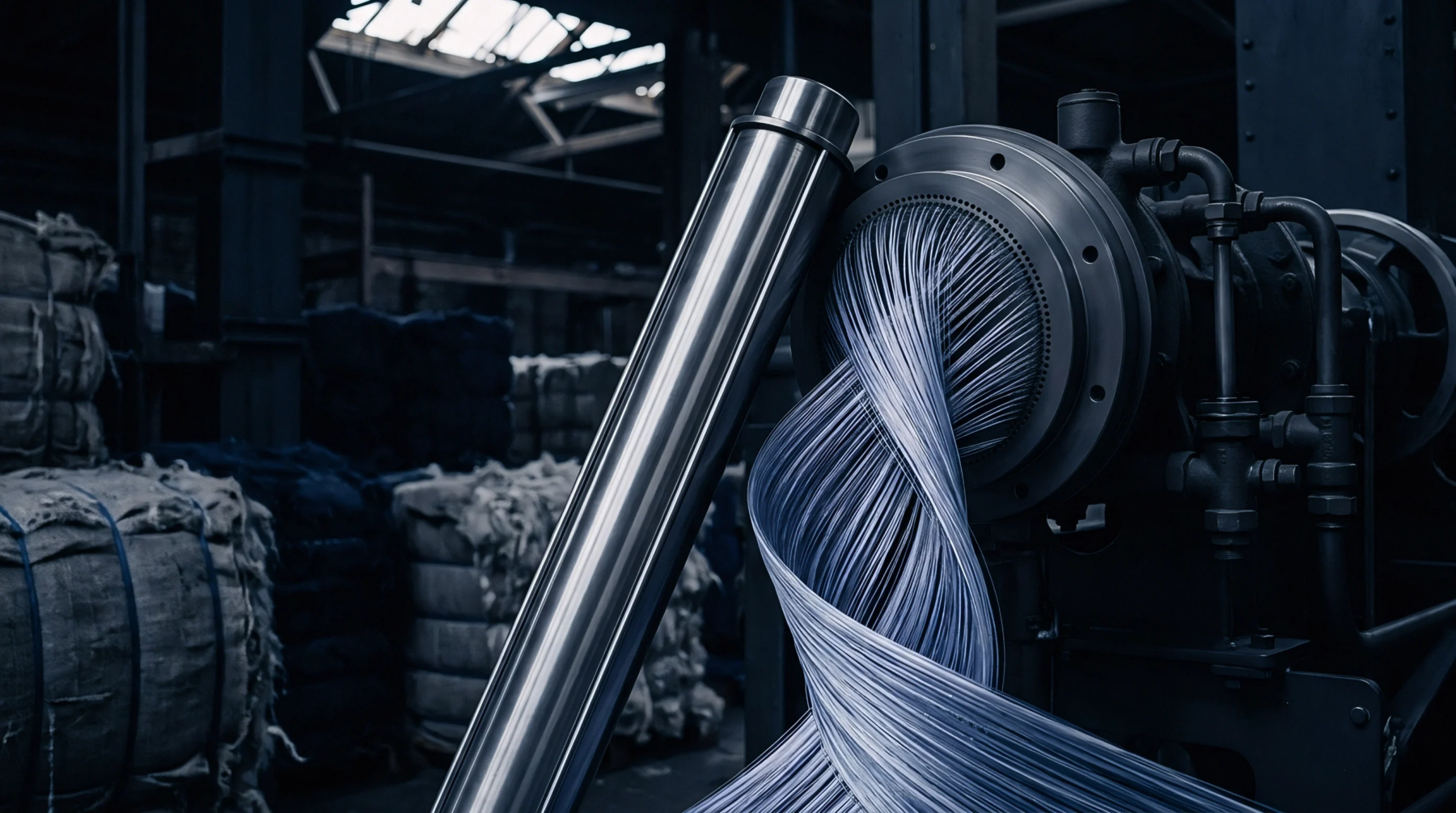
Extrusion mechanics treats slip velocity as the boundary condition where molten polymer detaches from die wall shear stress during synthetic filament production. Polymer chains inside a capillary lose surface adhesion once wall shear rates exceed critical thresholds. Extruder pressure drives the material forward while molecular slip reduces apparent viscosity at the steel interface.
Die Swell
Elastic recovery follows immediately after the extrudate leaves the capillary exit plane. Molecular chains store mechanical energy during transit through the narrowing channel. Sudden release at the die lip allows lateral expansion beyond the orifice diameter.
High shear rates promote flow instabilities that trigger sharkskin surface fracturing on polyester monofilaments.
Shear Rate
Capillary rheometers measure wall shear stress against apparent wall shear rate during quality control audits. Viscosity curves separate adhesive failure from cohesive flow breakdown in polymer melts. Pressure transducer arrays positioned along the barrel record local velocity profiles.
Operators adjust barrel temperature zones to maintain consistent throughput without degrading thermal-sensitive polyamides.
Apparent Viscosity
Friction reduction along metal boundaries prevents melt fracture during high-speed spinning operations. Decreased drag coefficients lower the energy required to force viscous melts through spinneret holes. Molecular slip velocity directly determines maximum extrusion speeds before surface defects ruin the yarn profile.