Quantifying Hydrodynamic Fluid Shear Stress Limits to Prevent Fiber Degradation in High Velocity Jet Dyeing Operations
Maintain jet dyeing fluid shear stress below 28 Pa for lyocell and 45 Pa for microfibers by capping nozzle pressure at 1.2 bar and relative velocity at 2.5 m/s.
Throat
Fluid propulsion in modern jet dyeing machinery concentrates hydraulic energy inside an internal restriction designed to accelerate circulating liquor alongside traveling fabric ropes. That hydrodynamic zone generates intense mechanical friction against passing yarn structures. Critical wall shear stress thresholds dictate whether a filament emerges smooth or structurally abraded: standard filament polyester tolerates up to 110 Pa before surface damage occurs, microdenier polyester degrades above 45 Pa, super 120s wool shows scale damage above 22 Pa, and wet untreated lyocell fibrillates when localized shear stress exceeds 28 Pa. When dyehouse technicians run high-velocity machines without calculating these shear thresholds, the resulting friction strips surface filaments, pulls elastomeric cores, and produces irreversible chafe marks across bulk piece goods.
Nozzle velocity dictates the drag. Machine operators frequently alter liquor pump frequency to adjust fabric transit speeds without calculating the resulting wall shear stress inside the venturi restriction. A standard 140-millimetre main transport tube narrows down to an interchangeable circular or oval restriction between 28 and 65 millimetres in internal diameter.
The liquor pump drives aqueous bath volume through this restricted cross-section at velocities between 3.5 and 8.5 metres per second. Because the fabric rope occupies a substantial fraction of this narrow passage, the effective cross-sectional area available for fluid passage contracts, generating steep velocity profiles across the fluid annulus surrounding the moving textiles.
Hydrodynamic wall shear stress exceeding 28 Pa initiates irreversible microfibril peeling on wet untreated lyocell at 60 degrees Celsius.
Interfacial shear stress between the high-speed fluid and the textile substrate correlates directly with pressure drops across the venturi constriction. That hydraulic drag pulls the fabric rope forward through the transport tube toward the plaiting arm, eliminating the need for high-tension mechanical drive reels. When liquor velocity outpaces the natural travel rate of the rope, excessive shear tears loose fibers from spun yarn assemblies.
Tensile loss follows immediately. The resulting surface fuzz alters light reflectance across finished knitwear and wovens, creating irregular pale streaks that mimic chemical dye unlevelness under standard retail illuminants.
Critical Shear Stress Boundaries across Common Fibers
Different textile polymers exhibit widely divergent tolerances to hydrodynamic forces in high-temperature aqueous baths. Swelling during wet processing lowers polymer yield points, rendering cellulosic and protein structures particularly vulnerable to hydraulic stripping. Untreated lyocell represents the most sensitive commercial substrate because wet transverse cohesion between crystalline microfibrils remains minimal.
Crosslinked lyocell variants tolerate higher hydraulic drag, sustaining up to 55 Pa before developing surface fuzz. Wool fibers experience plasticization above their wet glass transition temperature of 65 degrees Celsius, where cuticular scales lift and snap under fluid forces exceeding 22 Pa.
Synthetic microfibers introduce distinct degradation behaviors under rapid liquor flow. Polyester filaments under 0.8 decitex per filament flex and fracture when fluid forces pull outer filaments away from the bundle axis. Polyamide 6,6 microfibers exhibit similar surface ruptures at 50 Pa, displaying visible frostiness on dark bulk shades.
In contrast, heavy-denier industrial polyester filament survives hydrodynamic loads approaching 140 Pa without altering filament integrity. Elastic core-spun yarns containing unprotected spandex filaments suffer sheath slippage when fluid shear forces strip staple cotton wraps from the synthetic core inside the nozzle constriction.
| Fiber Substrate | Filament Linear Density (dtex) | Bath Temperature (Celsius) | Critical Shear Stress (Pa) | Maximum Fluid Velocity (m/s) | Primary Failure Mode |
|---|---|---|---|---|---|
| Untreated Lyocell | 1.4 | 60 to 80 | 28 | 3.8 | Microfibril fibrillation |
| Crosslinked Lyocell | 1.4 | 60 to 80 | 55 | 5.2 | Pilling precursor formation |
| Fine Merino Wool | 1.8 to 2.2 | 85 to 98 | 22 | 3.2 | Scale breakdown and felting |
| Microdenier Polyester | 0.5 to 0.8 | 125 to 130 | 45 | 4.8 | Loop pullout and filament snap |
| Polyamide 6,6 Microfiber | 0.7 to 0.9 | 98 to 115 | 50 | 5.0 | Surface fuzz and frosting |
| Standard Filament Polyester | 2.2 to 3.3 | 130 | 110 | 7.5 | Surface loop displacement |
| Cotton / Spandex Core-Spun | Spun count Ne 30/1 | 95 to 98 | 35 | 4.1 | Sheath stripping and core grin |
Hydrodynamic Pressure Drops in Venturi Cones
Pumping aqueous liquor through convergent nozzle profiles generates substantial static pressure losses that convert directly into kinetic energy. Differential pressure gauges mounted across the nozzle housing track this energy transformation across commercial production cycles. A pressure drop between 0.4 and 1.8 bar represents the typical operating envelope for soft-flow and hydraulic jet systems.
Exceeding 2.0 bar differential pressure indicates extreme constriction, where fluid velocities reach turbulent thresholds capable of shearing delicate fiber surfaces. The hydraulic balance depends on nozzle diameter, fabric mass per unit length, and machine liquor ratio.
Pump head pressure drops. When the nozzle profile tapers too sharply, flow separation occurs along the divergent exit cone, generating recirculating eddies that batter the exiting fabric rope. These turbulence zones cause random impacts against the stainless-steel transport tube walls.
Cavitation pits the stainless lining. Operating at excessive fluid velocity while attempting to force an oversized rope through a narrow opening accelerates boundary layer separation, driving the local shear stress beyond calculated laminar limits and damaging the outer circumference of the rope.
Ignoring hydrodynamic shear thresholds produces unrecoverable fabric rejections, where entire dyelots fail Martindale abrasion requirements and exhibit cloudy, frosted surface distortions across the full cutting width.
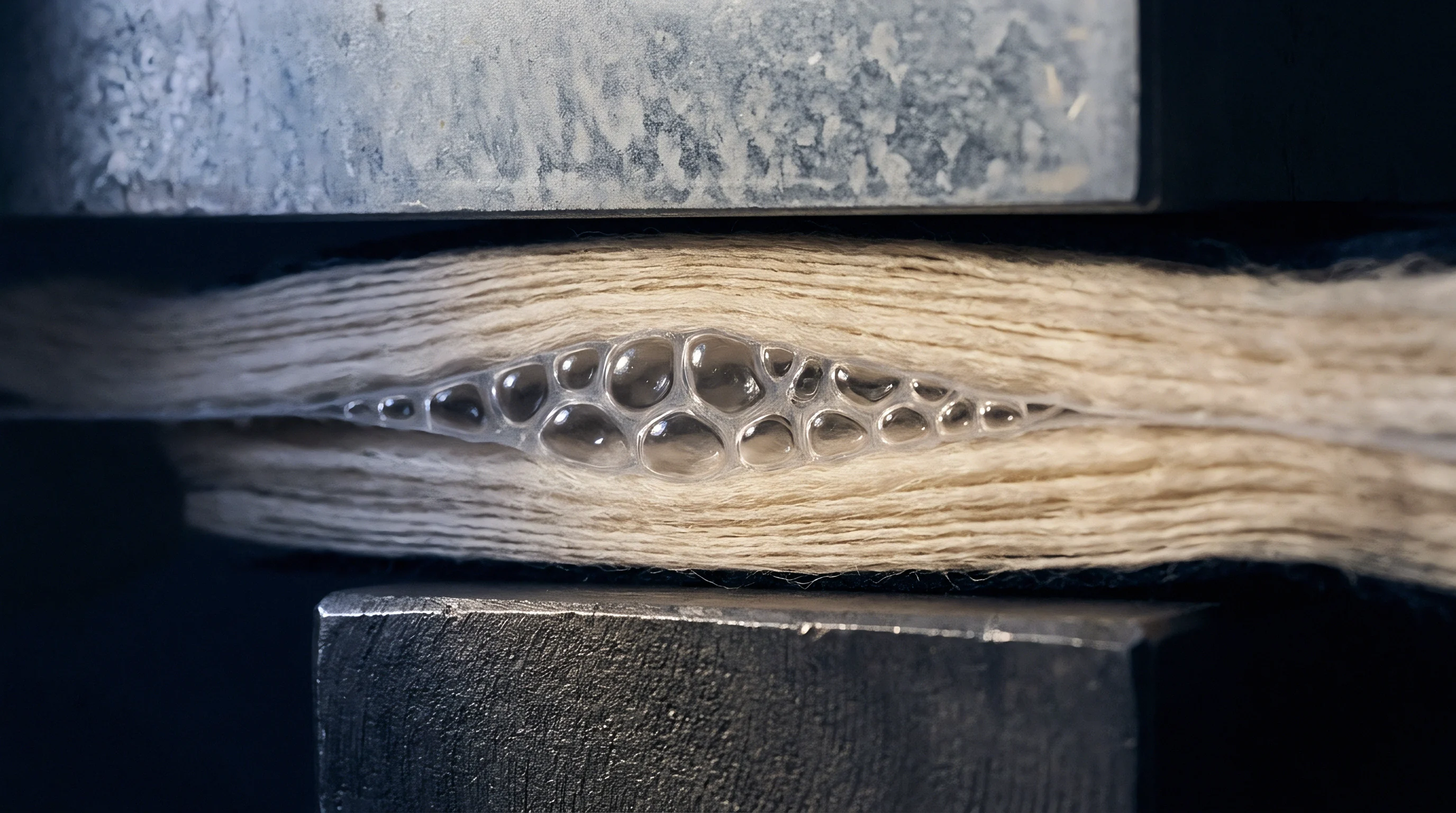
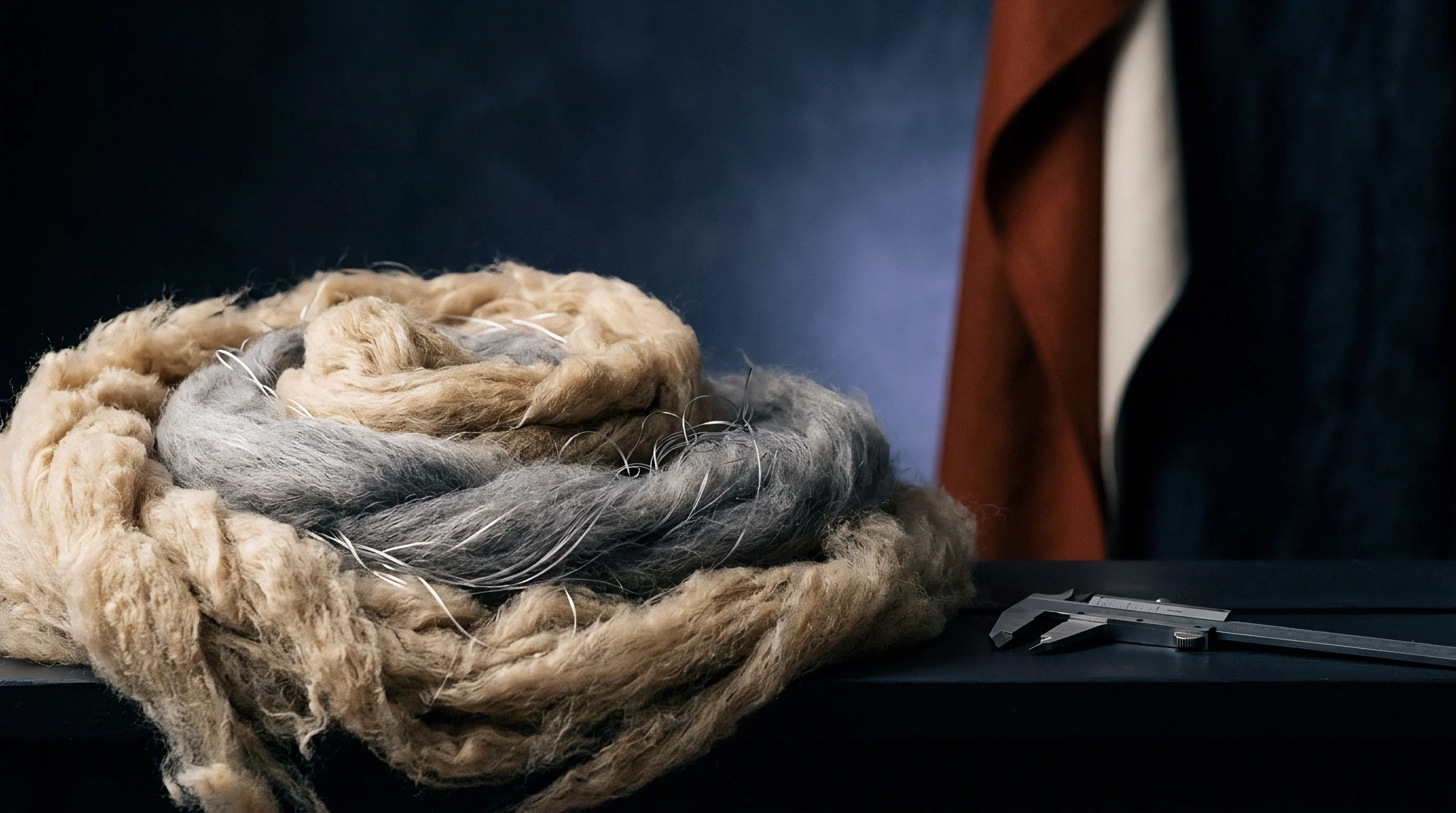
Gradient
Velocity distributions across the fluid passage establish the precise physical forces applied to yarn surfaces during each machine cycle. The fluid velocity profile is non-uniform across the nozzle interior: fluid velocity reaches zero at the stationary nozzle wall and reaches peak velocity within the fluid annulus before dropping slightly at the moving fabric interface. The shear rate represents the spatial derivative of fluid velocity with respect to radial position.
Multiplying this local shear rate by dynamic bath viscosity yields the hydrodynamic shear stress acting on outer yarn fibers. Dynamic water viscosity drops from 1.002 mPa·s at 20 degrees Celsius down to 0.282 mPa·s at 100 degrees Celsius and 0.205 mPa·s at 130 degrees Celsius, fundamentally shifting fluid shear forces across thermal dyeing profiles.
Wall shear stress peaks here. Because viscosity drops by more than seventy percent during high-temperature polyester processing, identical volumetric pump output generates lower viscous shear stress at 130 degrees Celsius than during initial scouring at 40 degrees Celsius. Cellulosic processing around 60 degrees Celsius operates in an intermediate viscosity band near 0.467 mPa·s.
Technicians who maintain constant pump speeds throughout heating cycles unknowingly subject room-temperature fibers to hydraulic forces nearly triple those experienced at peak dyeing temperatures. Bath chemical additives, including leveling agents and lubricating finishes, alter viscosity profiles and modify boundary friction properties.
A moving fabric rope in a liquid venturi suppresses turbulence when its linear travel speed remains within thirty percent of bulk fluid velocity.
Estimating fluid shear requires modeling the gap between the rope and the nozzle as an annular flow conduit. Consider a worked engineering case: take a circular jet nozzle throat with an internal diameter of 42 millimetres and a fabric rope with an effective compressed diameter of 26 millimetres traveling through the center. The cross-sectional area of the empty nozzle equals 0.001385 square metres, while the fabric rope occupies 0.000531 square metres.
The remaining hydraulic cross-sectional area measures 0.000854 square metres. Assume a liquor delivery rate of 18 litres per second (0.018 cubic metres per second) at 80 degrees Celsius, where water density equals 971.8 kg/m³ and dynamic viscosity equals 0.000355 Pa·s.
Calculating mean fluid velocity through this annular gap yields 21.08 metres per second relative to a stationary frame. The fabric rope moves forward at a speed of 300 metres per minute, equivalent to 5.0 metres per second. The relative velocity between fluid and fabric rope equals 16.08 metres per second.
The hydraulic diameter of the annular space corresponds to the difference between nozzle diameter and rope diameter, measuring 0.016 metres. The Reynolds number calculation produces a value of 70,550, confirming fully turbulent flow conditions. Under Blasius pipe approximations for turbulent annular channels, the Fanning friction factor calculates to 0.00486.
Applying these fluid mechanics values generates a hydrodynamic shear stress of 602 Pa acting against the outer yarn perimeter. This exceeds the critical degradation threshold of every known textile fiber by a wide margin, proving that unlubricated narrow nozzles operating at high relative speeds cause immediate mechanical failure.

How Do Nozzle Shear Gradients Trigger Fibrillation?
Intense spatial velocity variations peel microfibrillar elements from cellulosic fiber backbones when shear forces overcome internal polymer cohesion. Untreated lyocell lacks crystalline crosslinks in its amorphous regions, permitting water molecules to penetrate and push microfibrils apart during wet processing. The critical shear stress limit of 28 Pa for standard lyocell rests on rotational rheometer shear-cell data gathered under mild alkaline conditions at 60 degrees Celsius; this threshold shifts downward to 20 Pa if bath alkalinity exceeds pH 10.5.
As the fluid velocity gradient steepens inside the nozzle constriction, tangential drag forces grasp individual microfibrils, bending and cleaving them away from the fiber surface. The dye cycle proceeds.
The mechanical action strips these microfibrils into microscopic filaments between 0.1 and 4.0 micrometres in diameter. These free fibrils tangle into tight surface pills during subsequent bath circulation. Pilling degrades the grade.
When dyeing deep shades, these micro-pills scatter ambient light, causing the dyed fabric to look washed out and abraded. Raising bath temperatures without decreasing pump volume accelerates this degradation because thermal energy softens internal cellulosic hydrogen bonding, lowering the mechanical resistance of the fiber perimeter.

Annular Flow Equations and Temperature Dependencies
Calculating the true shear stress acting on a submerged textile rope requires defining the governing boundary equations for concentric fluid-solid flow. The shear stress equation incorporates fluid density, the relative velocity squared, and the interfacial friction coefficient between liquor and the fibrous surface. The interfacial friction coefficient of 0.014 for textured polyester microfilament rope rests on laser Doppler velocimetry trials in optical nozzle channels with a 1:8 liquor ratio; this friction factor increases up to 0.022 if rope twist falls below 120 turns per metre, exposing loose filament loops to hydraulic drag.
The following variables govern the hydrodynamic shear environment inside the jet restriction:
- Interfacial friction coefficient depends on rope hairiness, twist level, and yarn surface lubrication inside the nozzle passage.
- Relative velocity difference subtracts the forward mechanical rope velocity from the linear velocity of the surrounding liquid medium.
- Kinematic bath viscosity tracks the inverse relationship with processing temperature, falling dramatically between scouring and atmospheric boil.
- Effective hydraulic radius measures the net channel clearance remaining between the compressed textile rope and the metallic nozzle boundary.
- Local fluid density responds to thermal expansion and auxiliary chemical concentrations dissolved throughout the circulating liquor bath.
The relationship between fluid viscosity and shear transmission exhibits complex behavior during heating phases. Lower viscosity reduces shear stress for a fixed fluid velocity profile, yet lower viscosity also permits higher volumetric throughput for a fixed pump motor speed, increasing the bulk velocity. Surface pilling degrades the grade.
Dyehouse controls that hold pump revolutions constant while heating liquor from 40 to 130 degrees Celsius induce substantial shifts in velocity gradients across the nozzle throat.
Whether local shear forces in turbulent eddy fields cause more structural fiber fracture than steady boundary layer drag remains an open question across textile engineering research.

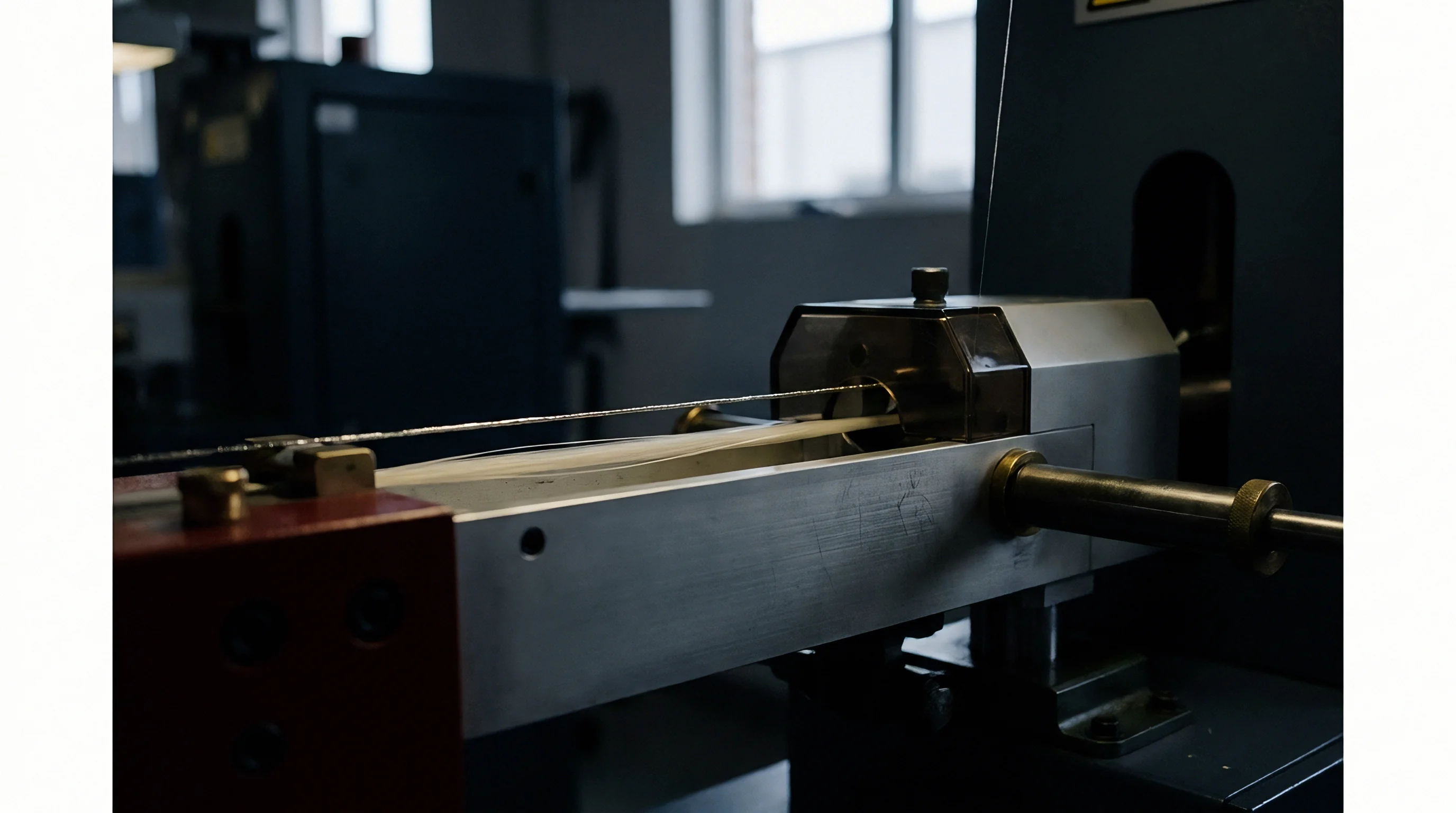
Fibrillation
Surface erosion across wet-processed textiles follows distinct morphological pathways dictated by underlying polymer arrangements and yarn engineering parameters. In spun cellulosic yarns, hydrodynamic drag pulls staple ends outward from the yarn core, creating a dense surface halo before individual fibers fracture. In filament assemblies, fluid shear separates outer filaments from internal bundles, promoting snagging and surface loop development.
Filament hairiness increases rapidly. When shear forces surpass the ultimate tensile threshold of wet single fibers, the individual structural elements snap under localized fatigue, depositing loose lint inside the machine heat exchanger and filter screens.
Greige inspection records the shift. Cotton and rayon fabrics show distinct degradation patterns under mechanical over-processing. Enzymatic bio-polishing processes deliberately induce controlled microfibril cleavage on cellulosic textiles to achieve clean surfaces, but uncontrolled hydrodynamic shear mimics this attack without chemical selectivity, stripping load-bearing structural fibers.
Wool goods experience irreversible felting when hydraulic shear forces interlock lifted cuticular scales. The liquor ratio holds. The resulting fabric stiffens, loses stretch recovery, and shrinks dramatically beyond specified commercial tolerances.
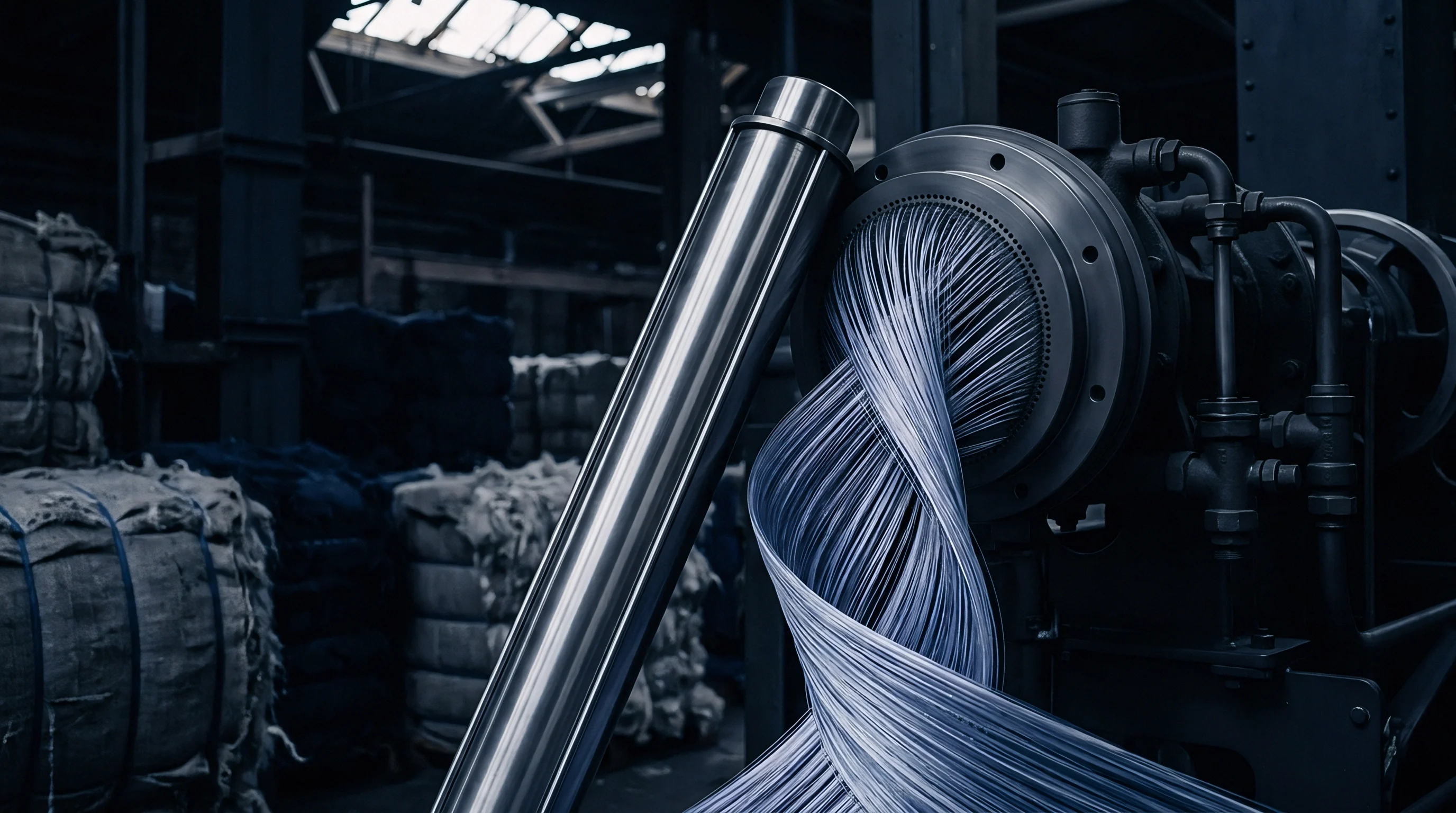
Morphological Failure Modes in Wet Processing
Textile structures exhibit specific mechanical breakdown symptoms when exposed to excessive hydraulic drag during high-velocity rope circulation. Identifying these modes under optical and scanning electron microscopy allows technicians to isolate hydrodynamic damage from loom friction or chemical degradation.
- Microfibril peeling exposes sub-micron cellulose fibrils along lyocell surfaces, producing frosted surface halos and light-scattering defects across dyed goods.
- Cuticular scale fracture damages the outer protective keratin sheath of wool fibers, initiating irreversible fiber interlocking and structural felting.
- Filament loop pullout extracts continuous microfilaments from low-twist textured yarns, generating irregular surface snags and rapid pilling during laundering.
- Elastomeric core exposure occurs when fluid forces slide protective staple cotton wrappers away from bare spandex filaments, causing visible elastomeric grinning.
- Tensile fiber shear shears individual staple fibers transversely under extreme local turbulence, reducing finished fabric bursting and tear strength ratings.
These failure mechanisms correlate with fabric construction density. High-gauge circular knits with short stitch lengths exhibit higher internal resistance to fiber pullout than loose single-jersey constructions. A 28-gauge jersey made from combed cotton resists hydrodynamic fuzzing far better than an open 18-gauge fleece knit processed under identical pump pressures.
Greige yarn twist multiplier directly dictates shear resistance: low-twist hosiery yarns lose structural cohesion under fluid velocities that leave high-twist warp yarns completely intact.
| Evaluation Metric | Standard Test Method | Undamaged Control Value | Shear-Damaged Value | Commercial Acceptance Limit |
|---|---|---|---|---|
| Martindale Pilling Resistance | ISO 12945-2 (2,000 rubs) | Grade 4 to 5 | Grade 2 | Grade 3.5 minimum |
| Diaphragm Bursting Strength | ISO 13938-1 (kPa) | 420 kPa | 290 kPa | 350 kPa minimum |
| Surface Hairiness (Zweigle s3) | Zweigle G566 (protrusions/100m) | 140 | 680 | 250 maximum |
| Cuticular Scale Integrity | Scanning Electron Microscopy | Smooth, intact scale edges | Chipped, lifted margins | Zero visible scale fracture |
| Dimensional Stability to Wash | ISO 6330 / ISO 5077 (3 cycles) | minus 3.5 percent | minus 9.2 percent | minus 5.0 percent maximum |

Laboratory Detection of Surface Fiber Breakage
Standard quality evaluation protocols distinguish between chemical tenderization and hydrodynamic mechanical breakdown. Chemical damage from excessive acid or alkali exposure alters average polymer molecular weight, which laboratory technicians confirm through cupriethylenediamine hydroxide intrinsic viscosity testing for cellulosics or gel permeation chromatography for synthetics. Hydrodynamic degradation leaves bulk polymer molecular weight completely unchanged while severely degrading physical surface morphology and yarn cohesion metrics.
The cutter rejects the roll.
Martindale pilling testing conducted under ISO 12945-2 exposes shear-damaged fibers within the first 500 abrasive cycles. Fabrics subjected to excessive nozzle velocity exhibit rapid pill accumulation because broken surface fibers act as ready pilling anchors. Similarly, Zweigle hairiness testers record large increases in protruding fibers longer than 3 millimetres.
Enzyme polishing cuts loose ends. While downstream cellulase washing can shave off early cellulosic fibrillation, this additional wet step adds processing costs and removes up to five percent of total fabric mass.
When confrontation over ruined surface aesthetics arises, dyehouses routinely claim the greige yarn possessed inadequate structural twist or that the spinner used weak recycled fibers rather than acknowledging extreme nozzle settings.

Boundary
Maintaining a coherent fluid boundary layer around traveling fabric ropes prevents destructive mechanical contact between the textile structure and the metallic machine housing. The fluid film inside the nozzle throat acts as both a propulsion mechanism and a physical cushion. In industrial slurry transport and high-speed marine propulsion, injecting a low-shear fluid boundary layer reduces drag and shields underlying surfaces from erosive particle wear.
Jet dyeing machines apply an analogous fluid boundary principle: when the liquid film between rope and metallic wall collapses, fabric-to-metal friction spikes instantly, generating thermal and mechanical chafe marks that damage outer yarn surfaces.
Lubricating chemicals added directly to the dye bath alter boundary layer dynamics. Special polymeric lubricating agents based on polyacrylamide or modified fatty acid esters migrate to the fiber-water interface, lowering the boundary friction coefficient. These auxiliaries create a slippery hydraulic cushion that shields vulnerable fibers from shear stress spikes during passage through the venturi throat.
The liquor ratio holds. Using specialty lubricants allows dyehouses to run sensitive lyocell and microfilament fabrics at higher linear velocities without inducing premature fibrillation.
What Velocity Boundary Protects Microfiber Surfaces?
Safe processing zones require matching fabric rope speed closely to the surrounding liquor velocity. When liquor velocity outpaces the rope speed by more than forty percent, hydrodynamic shear stress across the fiber boundary layer escalates sharply. The relative velocity difference dictates the drag force: maintaining this differential below 2.5 metres per second ensures that local wall shear stress remains under 35 Pa for microfilament polyester and polyamide goods.
Increasing the reel speed to bring rope velocity closer to liquor velocity suppresses turbulence inside the annular gap and stabilizes the boundary layer.
Excessive rope speeds introduce mechanical tension risks that rival hydrodynamic damage. Running lightweight fabrics above 450 metres per minute causes rope ballooning and severe impact shock as the rope exits the delivery pipe into the main fabric basket. Balancing these forces requires tuning the nozzle diameter to the precise bulk density of the wet rope.
If the nozzle opening is too large, fluid bypasses the fabric, dropping dynamic pressure and causing the rope to stall. If the opening is too small, mechanical compression pinches the rope against the metallic throat, crushing delicate yarns and initiating severe friction abrasions.
| Nozzle Size (mm) | Rope Speed (m/min) | Liquor Flow (L/min) | Relative Velocity (m/s) | Resulting Shear (Pa) | Visual Surface Quality |
|---|---|---|---|---|---|
| 32 | 220 | 850 | 5.8 | 82 | Severe chafe and surface fuzz |
| 38 | 280 | 850 | 3.9 | 44 | Slight frosting on microfibers |
| 42 | 320 | 900 | 2.4 | 23 | Clean surface, zero pilling |
| 50 | 350 | 1050 | 1.8 | 16 | Smooth hand, intact scales |
| 60 | 300 | 1100 | 0.9 | 8 | Flawless, but rope stall risk |

Lubrication Mechanics in Jet Dyeing Chambers
Modifying fluid boundary mechanics requires a deliberate operating sequence to prevent rope stalls while suppressing shear forces during high-temperature cycles.
- Charge specialty polymeric anti-crease lubricant at a minimum concentration of 1.5 grams per litre before loading textile goods into the bath.
- Select an interchangeable nozzle throat diameter that provides between 8 and 12 millimetres of radial clearance around the relaxed wet fabric rope.
- Synchronize pump motor inverter frequencies with the mechanical drive reel to maintain a relative fluid-to-rope velocity differential below 2.0 metres per second.
- Ramp circulation bath temperatures at rates not exceeding 1.5 degrees Celsius per minute to avoid thermal shock and uneven fiber swelling across rope segments.
- Monitor differential pressure transducers across the venturi continuously to verify that hydraulic pressure drops remain below 1.2 bar throughout the cycle.
Peak localized hydrodynamic shear inside the conical contraction zone of asymmetric oval nozzles remains challenging to model with absolute laboratory certainty, frequently ranging between 160 and 220 Pa at 2.2 bar differential pressure. Under this operational uncertainty, prudent dyehouse managers qualify new sensitive constructions by commissioning 150-kilogram pilot lots and performing thorough four-point greige inspections before authorizing full-scale production runs of 10,000 metres. Controlled pilot runs protect both buyer capital and finishing mill allocations from catastrophic fabric downgrades.
Smooth fabric passage relies entirely on maintaining a generous liquid cushion between yarn boundaries and machine walls.
Envelope
Restricting nozzle velocity directly affects dyehouse economics by lengthening batch cycle durations. Jet dyeing machines rely on rope circulation speed to guarantee level dyestuff exhaustion: each point along the textile rope passes through the nozzle bath every 60 to 120 seconds. Lowering rope circulation velocity to protect delicate fibers from shear stress lengthens cycle times to ensure level color delivery.
Extending batch cycle times from four hours to six hours increases the unit cost of steam, electricity, labor, and machine amortization per finished kilogram of fabric.
The dye cycle proceeds. Mill managers operating on narrow conversion margins face commercial pressure to push machine velocities to their mechanical maximums. Running a jet machine at 450 metres per minute achieves rapid shade leveling and permits five dye cycles per machine day, but risks destroying surface aesthetics on sensitive fibers.
Lowering rope speeds to 250 metres per minute eliminates shear-induced pilling and fiber degradation, yet cuts machine productivity down to three dye batches daily. Balancing fluid dynamics against finishing floor economics requires defining explicit operating windows for every specific fabric construction.

Production Speed Tradeoffs against Surface Quality
Production costing models quantify the financial impact of operating within safe hydrodynamic limits. Slower machine cycles decrease factory capacity and increase overhead costs per linear metre. When running high-value microdenier or lyocell fabrics, the cost of fiber degradation completely dwarfs marginal throughput gains.
Downgrading a first-quality finished lot to second-grade goods or paying customer chargebacks for garment pilling consumes the operating margin of an entire production quarter. Finishing mills must incorporate accurate cycle times into their original quotation matrices.
| Operating Regime | Nozzle Pressure (bar) | Rope Velocity (m/min) | Cycle Time (hours) | Batches per Day | Conversion Cost ($/kg) | Defect Rate (percent) |
|---|---|---|---|---|---|---|
| Aggressive High-Velocity | 2.2 | 450 | 3.8 | 5.2 | 0.48 | 8.5 |
| Standard Commercial | 1.5 | 350 | 4.6 | 4.3 | 0.58 | 2.8 |
| Controlled Low-Shear | 0.9 | 260 | 5.8 | 3.4 | 0.74 | 0.4 |
| Ultra-Delicate Cellulosic | 0.5 | 180 | 7.2 | 2.7 | 0.92 | 0.1 |

Contract Specifications for Mechanical Action Limits
Fabric purchase orders must define clear machine processing constraints rather than relying on generic merchant quality clauses. Sourcing agreements that merely specify finished colorfastness and bursting strength leave buyers vulnerable to surface pilling caused by excessive nozzle shear. Technical textile specifications must formally stipulate maximum permissible nozzle pressures, mandatory bath lubricating auxiliaries, and maximum linear rope speeds for sensitive fiber types.
Specifying these production parameters binds the dyehouse to verified operational settings.
A production subcontract that defines maximum nozzle pressure drops below 1.2 bar legally bars the finishing mill from accelerating liquor throughput to cut cycle times.
Clear contractual specifications transform subjective quality disputes into enforceable technical audits. When bulk goods arrive with frosted surfaces, microfibrillar pilling, or diminished tear strength, verified machine data logs reveal whether the dyehouse violated agreed hydrodynamic operating parameters. Integrating fluid shear limits into the fabric technical dossier protects product developers from paying full commercial prices for compromised textile goods.
Purchase contracts incorporating ASTM D3990 defect classifications and strict ISO 12945-2 pilling thresholds after 2,000 cycles compel commission dyers to operate within calibrated low-shear velocity envelopes.