Fibre Index
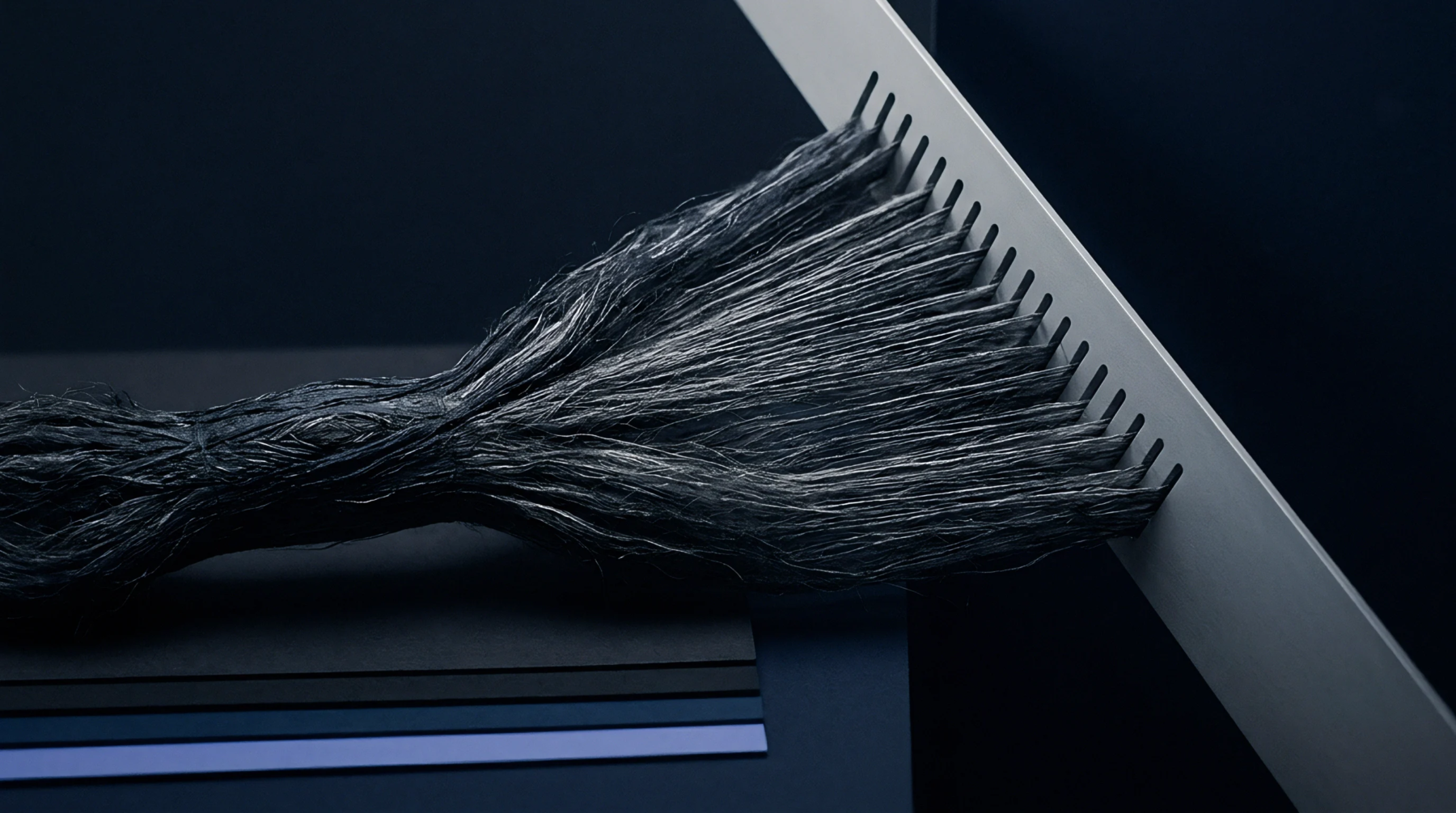
Fibres extracted from raw cotton bolls exhibit a natural variation in length rather than uniform dimensions, and span length measures the distance that a specific percentage of fibres reaches from a clamping point during high volume instrument testing. Technicians load a calibrated beard of parallelized cotton into an optical sensor to record this physical property during raw material grading at commercial ginning facilities and spinning mills. Long staples command premium pricing because superior uniformity directly improves yarn strength and reduces breakage during ring spinning operations.
A shorter reading indicates higher waste percentages and increased processing costs during the subsequent carding and drawing stages.
Staple Distribution
Percentile thresholds standardise the evaluation by capturing the distance exceeded by fifty percent and two point five percent of the fibres within the tested specimen. Instruments scan the randomized beard to establish cumulative mass curves that differentiate between short lint and valuable long fractions. Commercial purchase contracts often stipulate minimum thresholds for these specific percentiles to ensure consistent downstream performance before bales enter the blow room.
Processing machinery requires strict adherence to these dimensional boundaries to prevent roller laps and uneven drafting.
Test Parameter
Controlled atmospheric conditions govern the testing environment because relative humidity alters moisture retention within the cellulose structure and skews optical measurement accuracy. Technicians comb and brush the raw sample into a uniform beard before placing the assembly into the testing head. Optical sensors measure light interception across the comb to calculate the dimensional curve without manual intervention.
Calibration cotton standards verify instrument reliability prior to routine commercial lot evaluations.
Processing Limit
Dimensional variance affects drafting roller settings within the spinning mill because improper distance allocation leads to irregular yarn diameter and excessive neps. Spun yarn quality depends entirely on maintaining tight control over short fibre content derived from this evaluation method. Commercial mills reject cotton lots that fail to meet established minimum thresholds for uniformity index calculations.
Optimal staple alignment determines the highest achievable yarn count and subsequent fabric tensile strength.